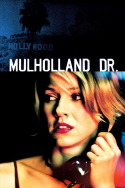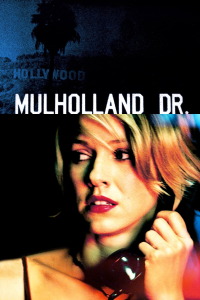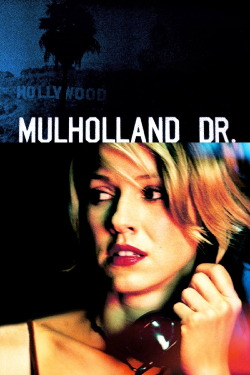
Review of Mulholland Drive (2001) by Martinez R — 20 May 2013
When it was over I thought it through the way I would if I suddenly awoke from a multi-layered dream. The kind that flits on the corners of memory, but you just know it meant everything, a puzzle of life, a story wrapped in messages that cannot be summoned while awake. Then I wanted to see it again. To be able to harness that side world is like contacting the alien being inside us.
No other director for me has been able to actually realize that feeling of dream. There is a reverberating solvable mystery at it's center. This is key. But after one solves this there are other puzzle boxes that beg contemplation, and an obsessive urge to look again, perhaps turning the stories within stories to a new angle to uncover another revelation. Because the details are so clearly deeply forethought, as is the editing, it is easy to be trapped in this world for some time analyzing the secrets.
Lynch plays the viewer like a mark and a true love. The paradox is beguiling.
The sounds of Angelo Badalamanti, Lynch's go-to maestro, are chords to float one into this otherverse, sometimes velvety, other times startlingly inventive.
The camera work is original and alluring, sometimes quite subtle. Notice the movement in Winkie's Diner when the man reveals his dream, Betty and Rita investigating at Diane's apt., etc. Lynch and company labor for the look and it shows.
If you haven't seen the picture, stop reading now.
One clear interpretation is that Diane Selwyn has hired a hit man to kill her ex-lover, Camilla. Camilla has also snatched at least one part in a movie that should have gone to Diane, and cruelly broken her heart. Before the assassination Diane dreams a happier version of events where Camilla and her solve the mystery that she can't see in her dream she herself unleashed. In this dimension behind the scenes powerbrokers manipulate the film industry.
In the dream, Camilla miraculously escapes the assassination, loses her memory, and makes her way by fate to Diane who is wrapped in a different name, her aunt's charming apartment, and just embarking on a quest to make it in the movies. Camilla doesn't even remember her name. Together they work to solve the conundrums, they fall in love. But the truth is a nightmare. And eventually Diane will awaken to reality.
But there are other puzzlers and subtleties I still am not sure I solved. The fact I still care, that I could spend more time meditating on the possiblities, is a testament to the pull this film has on my psyche. It's a netherworld that got hold of me; I hope it gets you too.
Diane takes snippets of data from her life and incorporates them into her dream.
Why is Adam looking to replace the lead actress in dream? Because, in reality Camilla Rhodes is dead.
"This is the girl" is what Diane tells the hit man when she hands him Camilla's picture, and what is repeated by the Castigliano brothers and others in her dream who want to force the director to choose a specific new lead.
The cowboy, the unpleasable espresso drinker (Castigliano boss), etc. are just background people who stuck in her mind when she learned Camilla was marrying the director at the dinner party and were recast in her REM realm.
The name of the waitress in Winkie's who triggers a memory in Camilla is Diane. In reality it is Betty and Diane assumes this name for her dream pesona.
The man in Winkie's Diner who explains his nightmare is the man Diane sees at the register in said Diner when she orders the hit.
The man behind Winkie's who is behind it all, the scuzzy person with the blue box, is the symbol Diane gives the side of herself who orders the killing, the monster.
When Diane sees the director, Adam Kesher, it threatens the fabric in the tale she has constructed. Adam knows her, that she and Camilla were close, that she may be why his lead needs to be recast. This pressure on her fake reworking of the storyline scares Betty (Diane) out of the studio.
The old couple I am less clear on. I think they were a real couple whom Diane talked with on her flight from Canada to L.A. and signify her innocence and dreams of making it big in Hollywood. When Diane kills herself it is this loss of innocence and hope that collapses in an unbearable dichotomy.
I am interested to hear other opinions on this mystery.
In dream Aunt Ruth is working on a movie in Canada while Diane uses her apartment. In reality her aunt has died, leaving Diane a little money, and she lives in an average apartment.
Why did Diane switch apartments? I'm not sure. Perhaps to elude detectives who might tie her to the killing. This still confuses me.
Who is the woman in the balcony of theater Silencio with the blue hair who says the last word "silencio" of the film? Probably no one in particular.
Why are there ghostly images of Diane with the old couple at the beginning of the movie at the jitterbug competition? What is Lynch revealing? Perhaps it is only further identifying them with the innocence and dreams Diane had at that point in her life?
The crux of the idea appeals to me. Undoing the die you cast, wrapping your role in the core of the mystery of your own dream. Hiding your evil from yourself. The dreamworld certainly has advantages....
This review of Mulholland Drive (2001) was written by Martinez R on 20 May 2013.
Mulholland Drive has generally received very positive reviews.
Was this review helpful?