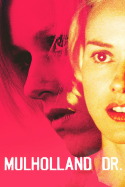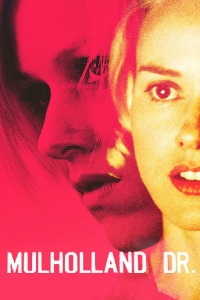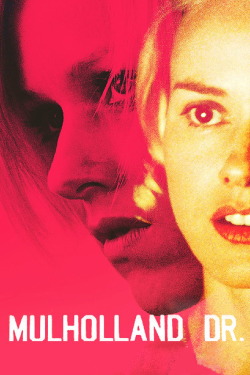
Review of Mulholland Dr. (1999) by Jackson M — 10 Nov 2012
In my review of Lynch's previous "Blue Velvet," my frequent complaint was that while I considered the film a rewarding experience; Lynch's continual interplay between the levels of the artificial and the morbid undercurrents of what looms beneath situated his film, thematically, as being too obvious. Lynch's film was utterly compelling when he entered his internal surrealistic landscape - and by returning to the surface the film ultimately lost its momentum. However, Lynch successfully rectifies such problems with his surrealistic masterpiece "Mulholland Drive." A film that takes us into Lynch's realm of a L.A nightmarish landscape; and rather than continually giving the audiences room to exhale by traveling back to the surface of a normal reality; Lynch just keeps digging until, as an audience, we are stranded in an accumulation of surrealistic imagery with nowhere to go. As with a film that contains such ambiguity; there have been many hypothesis' created to explain its logic - but do films always need a sense of logic? If "Mulholland Drive" contained all the answers, would the experience be better? Would've you and your friends been left in such a bewildering, confused state that you spent the next three days trying to make sense of what you just seen if the answers were viable? The answer is: No. For that sole reason, Lynch's efforts are amazing. To watch such a film you must leave logic at the door and simply immerse yourself in the mesmerizing imagery and music to be treated by an experience like no other.
The story follows as so: A woman is involved in a car wreck. Seemingly delusional, she finds solace within the help of a hopeful Hollywood uprising star as they embark on journey for answers that takes them through the realms of reality/dreams and memories.
Lynch riddles his latest efforts with morbid visuals and humor that revolves around a number of core characters (if they actually exist or not it's difficult to tell). Obviously there is Betty (Watts), the protagonist, who has hopes in becoming the next Hollywood hopeful. Funny enough; Lynch characterizes Betty with peculiar characteristics: she inhabits wooden dialogue that resembles soap-opera principles and evokes the traits of the Hitchcock heroine. Then there's Rita (Harring), a woman who suffers amnesia from her car accident and seems to be constantly transfixed within a delusional/emotional state. Lynch portrays their relationship in an eroticism fashion of two seemingly obsessive persona's to the point where it's difficult to tell whether their relations actual exists or is simply a protection of Watts subconscious. In fact, this train-of-thought fits for many characters: the Cowboy (Montgomery), the director (Theroux), Coco (Miller) and Camilla (George) all seem to have a purpose - and while I do consider to have an answer to their inclusions, an answer would be superfluous due to the fact that the film is simply too ambiguous. Speaking of characters, Naomi Watts performance is simply amazing to watch with the transition of the two separate spheres within dreams and reality. She effortlessly portrays the soap-operish conventions for two-quarters of the film, and then dramatically/disturbingly switches to the emotional wreck that has lost her innocence (wink, wink).
Likewise to "Blue Velvet," it's quite astonishing just how much tension Lynch is able to create, as sense of dread looms around each corner of Hollywood's nightmarish landscape. With the brilliant use of continues POV shots, Lynch is able to create tension within the most subtle moments. Such an atmosphere lends to Lynch's commentary of the modern Hollywood climate: a world that has portrayed its initial values and has cemented individuals with limited autonomy. It sorta works as warped 'Sunset Boulevard.".
However, the most impressive aspect of Lynch's latest efforts is that he portrays -quite possibly the most difficult aspect within all art aesthetics- the subconscious thoughts within the viewer's awareness. Similar to the likes of Bergman and William Faulkner's literature masterpiece "The Sound and Fury," Lynch displays macabre internal thoughts through a visual medium; beautifully displayed through the final forty minutes sequence; a sequence that cements a moment that Lynch's whole career has been moving towards. In relation to my previous statement, "Mulholland Drive" final segments accumulates a sense of surrealism and macabre visuals that simply hypnotizes you within a sequence that resembles the characteristics of a nightmare; and if you are willing to surrender yourself to such sequences, you'll be treated to a transcendent experience like no other.
This review of Mulholland Dr. (1999) was written by Jackson M on 10 Nov 2012.
Mulholland Dr. has generally received very positive reviews.
Was this review helpful?