Review of Mule Skinner Blues (2001) by Robert B — 06 May 2014
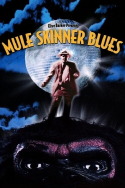
Mule-Skinner Blues (Stephen Earnhart, 2002).
[originally posted 4Feb2002].
I'm wondering who's written the reviews I've been reading, and whether they're plants from the production company. Or I would be if the reviews I've been reading weren't uniformly worse than the one I'm about to give this engaging, twisted little documentary. The film is relentlessly compared to Errol Morris' classic first film, Gates of Heaven. That's a reach, especially when there's another, far more obvious, basis of comparison sitting right in front of the face of any reviewer of documentaries on the planet: American Movie. You'd have to be braindead to have seen American Movie and not catch the similarities here: Mule-Skinner Blues is about a bunch of scary, dysfunctional trailer-park residents who are trying to scrape together the cash to make a no-budget indie short horror film. Sound familiar? Of course it does. Sound like Gates of Heaven? Uh...
The main difference between Mule-Skinner Blues (the title, by the way, is from a Jimmie Vaughn song) and American Movie is that, despite Mark Borchardt being something of an obsessed lunatic, the viewer is always given Borchardt in the most sympathetic of lights, and it's hard not to root for the guy throughout American Movie, even if his finished film is, well, awful. Beany Anderson, the star of Mule-Skinner Blues, on the other hand, is presented in a light that it would be hard to call sympathetic in any way, shape, or form. The camera just kind of wanders along through the trailer park inhabited by Beany and his band of scary men, documenting life in a Jacksonville, FL trailer park in all its Deliverance-esque glory.
This is where Mule-Skinner Blues and American Movie diverge (and, I suspect, it's also the reason so many reviewers seem to have faulted MSB); American Movie keeps its focus solidly on Borchardt and the making of Coven. The actors in Coven and the other players in Borchardt's life, save his best friend, are relegated to the background. The makers of American Movie seem, at times, almost as obsessed as Borchardt with Coven. The makers of Mule-Skinner Blues, on the other hand, seem to be so.
Captivated with trailer park denizens that the making of Turnabout is Fair Play (or, as the title screen of the short film informs us, "Turnabout is Fairplay") takes a back seat to those involved in its making for about half the film. Turnabout becomes the frame; it's important in introducing us to the characters, and it's important at the end, when Turnabout makes its premiere at a small Jacksonville theater (in a scene that's so similar to the premiere scene in American Movie that they CAN'T be coincidental). In the middle, though, what's important is a trailer park in Jacksonville and how its inhabitants get on from day to day. Perhaps it's just a way to say that the viewer can look into the Jerry Springer mentality without having to watch Jerry Springer, but there's something to be said, certainly, for not having to watch Jerry Springer.
This brings us to the final, and most important, question. Is this in fact a real documentary? Do these people really exist, or is Mule-Skinner Blues a sick joke thought up one night by Clive Barker (whose name is at the beginning as "Clive Barker Presents," and gets a thank-you at the end, but his name appears nowhere else in the credits. One wonders what connection he actually has to the film) and Stephen Earnhardt? It's billed as a straight documentary, and Sundance is touting it as such; that's how.
It will be billed in its April 2002 theatrical premiere. But there are just too many times, watching this movie, when I found myself saying "these people just can't be real." I have to give Earnhardt the benefit of the doubt with this one, but I won't be surprised if it's all revealed to be a big joke at some point down the line. Either way, if you liked American Movie, you'll probably get a kick out of this. ***.
This review of Mule Skinner Blues (2001) was written by Robert B on 06 May 2014.
Mule Skinner Blues has generally received very positive reviews.
Was this review helpful?