Review of Mr. Turner (2014) by Thomas B — 01 Feb 2015
Anyone who has seen anything from Mike Leigh will know that if the term auteur applied to anyone, it would be him. His films are entirely singular, dwelling in moments that others would overlook or brush past, relishing the minutiae and the mundane. It's not easy to love. With Mr. Turner, Leigh turns his attention to the biopic genre after a fashion, in that he is focussing on a real, historical figure rather than a creation of his own. Biopics are often fairly predictable affairs and are usually seen as sort of a cheat to gain awards recognition. But there are filmmakers who can make the genre their own, rather than a lifetime movie, and Mike Leigh has created something that is truly his, despite depicting a real individual. But it's still not easy to love.
Renowned artist J.M.W Turner is moving steadily towards the end of his life, and in the time it's taking to get there, he finds the chance to reflect, to question and to dream, even as age tightens its grip.
Leigh is 71 now, and with that kind of age it would be easy for a filmmaker to lose their way or to slip into irrelevancy. With Mr. Turner, however, Leigh seems to be more energised than he has been for a while. His typical static framing and depictions are still intact, but the movement which he adds to various scenes gives those moments a vitality that belies his age. One shot in particular feels like a dance as we're lead through an art gallery with Turner spouting greetings and guffaws. It's a strange reflection in a way, from filmmaker to subject, as we see the revitalisation of the both of them in their advanced years, as if determined to mine everything they can from the ones they still have available to them. But that's reading a little too far into it; Leigh's work here is frequently beautiful, always restrained and occasionally amazing. Working with cinematographer Dick Pope, the two of them create a beautiful, honey-hued world for Turner to inhabit and occasionally recreate on the canvas. Pope received one of the film's few nominations and it's no wonder, as the film looks stunning from beginning to end. But the way Leigh chooses to shoot his subjects inside the palette he's been given is what defines the film even more as a Mike Leigh endeavour. There's no bombast, barely even flash to the way he directs, rather just an intensely perceptive eye which picks out the moments which we'd never see otherwise. To say it's restrained is an understatement, but to say it's boring is a lie. What Leigh chooses to show, and more importantly what he lets fall by the wayside, enhances the content almost imperceptibly at times, as well as letting the film speak for itself.
And when the film does speak, it's even more enigmatic. The script doesn't take us from one plot point to another, rather deposits us inside the world that's been constructed and comes back when our lead has died. That's not a spoiler by the way; the entire movie is based around the final days of Turner, so naturally that finality has to occur before the film's end. But it's all about experiencing this man and his existence for a little while, inhabiting a space that few other films would find it necessary to show. But Leigh is able to find plenty to say within these few years, ruminating deeply on death, the importance of existence, the futility of our efforts during it, the desire to create a legacy, the desire for immortality. It's difficult, dense stuff, and it's tougher still to find an easy answer within Leigh's script. The screenplay is kept almost completely opaque in terms of its intentions and ideas, preferring instead to highlight a series of moments that often have little or nothing to do with each other at first glance. The actual diction on display here is astounding, with scenes and sequences sounding almost as if they had been ripped from an Elizabethan playwright's fingers in their rhythm and their vernacular. But in terms of their relation to each other, it won't be clear upon first viewing what exactly that is. There is a through-line of sorts, with various sections of the film playing out complete stories. One of the best examples is Turner's late-life romance with a kindly widow, but the fragments that are stirred through these sections make the viewing disjointed and confusing, most likely intentionally so.
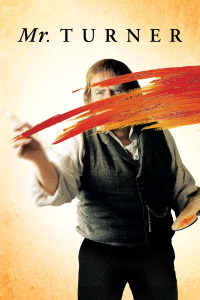
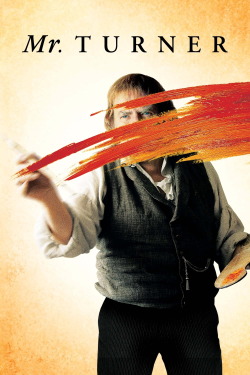
Bringing us through all of this is Timothy Spall, playing the film's title character. His Turner is an impressive creation, almost bestial in his mannerisms, every word breaking gutturally through his never-ending frown. Spall is able to convey huge sentences of emotion with single grunts, barking out the occasional phrase when a simple growl will not suffice. Seeing Turner's paintings; so soft, almost dreamlike in a way, compared to this boar of a man is a huge point of contrast which the film focusses on for a time. The way that Turner's art captures beauty and light in a way that the man behind them simply does not is a fascinating tension between the art and the artist. Seeing him hack up wads of spit to finish a painting or violently attacking his work with a brush to complete an effect, we're able to see the visceral nature of this individual in service of something beautiful and almost fragile. Spall nails this tension between the two and is completely fearless when it comes to pushing his character further into disgust.
The movie isn't perfect, underusing a wonderful Lesley Manville, overusing a cartoonish Ruth Sheen and dwelling for inordinate amounts of time on some moments which could've been left alone. But in the same way that Turner made his art the way he felt it should be made, Leigh has created a film which is defiantly his own, without falling into cliche or losing sight of his own unique vision for film. And if that's not worth commending, then what is?
Defining Scene:
The one that stuck with me was seeing Turner having his photo taken for the first time. Seeing his future through this piece of technology was a major emotional beat for the movie, and one of the thematic points that almost immediately landed with me.
This review of Mr. Turner (2014) was written by Thomas B on 01 Feb 2015.
Mr. Turner has generally received positive reviews.
Was this review helpful?