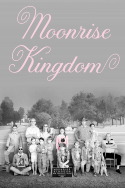
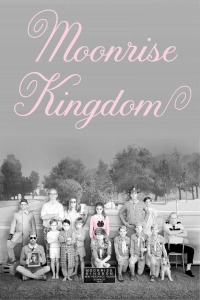
Review of Moonrise Kingdom (2012) by Tiberio S — 13 Jul 2016
Wes Anderson has never been afraid to give a swift kick in the ass to realism and all naysayers - he's interested in art and he's sticking to it, because he does it so well.
Anderson-verse is a shared universe, a world of connectivity where people and things that seem sparse are more connected than they appear. Just as so, they are divided. This is an honest reflection of anyone's mind, and an artist who is given the freedom and reign to find that will almost certainly present satisfying results. I wouldn't have expected at first that Captain Sharp and Mrs. Bishop knew anything of each other, but to realize they're in an affair gives this world some juice. Each artist is the god over their domain, and in Moonrise KINGDOM, Anderson takes some inspiration from the Holy Bible. Unlike so many modern filmmakers who use this as a source of political upheaval, spewing hatred and paranoia at the church, Anderson makes no such criticism. He rather acknowledges it as a story that can reflect his own imagination, and godliness as an artist. There's at least Noah's Ark and a subsequent sacrifice made by the local sheriff, Captain Sharp (Bruce Willis), to save two children atop a church during the 'flood.'.
Anderson films have such sweet tenderness to them, some personal touch and situations that draw out my inner-child. It may make some uncomfortable, but I like stories of young romance, as long as they don't become graphic. It speaks to the heart of adventure, this film's certain genre.
Worlds within worlds, a microcosm that easily shares a macro - it says something about a family when they hang a painting of their home in their home. They're trying to be a family and put some emphasis on that. Anderson's opening shot shows us the exterior in a dreamy painting, then maps out the upstairs floor, and ultimately pulls out of our main female protagonist's (Suzy) window to reveal an equally dreamy shot of the home itself in rain, surrealist quality, almost looks like a toy.
Anderson will stage things very obvious, literal, as you'd see in a play. I think the closest any director comes to squaring off the frame and putting it's viewer into a theater box is this auteur. Just in the opening credits, in the upstairs of the house, he frames Bill Murray and Frances McDormand, a married couple called the Bishops, on two separate points of the z-axis, implying a distance between them which foreshadows greater revelations - Murray is furthest, most in the dark about anything, especially McDormand's affair. But the camera pulls back to the foreground where Suzy continues looking out the window through her binoculars - she has her own mission, she'll be a missing child soon. But her parents' neglect, largely stemming from their marital dissonance, contributes to their ignorance of what's going on in her life. That's a lot to say in one shot; that's genius. Only wish it were in 3D to make those layers come to fruition. This whole opening is a visual/auditory essay that I could write about forever. All along he's dropping these hints about separation, distance. Multiple times in this montage, Murray and McDormand are clearly seen in separate rooms doing separate activities, divided by walls. In the aforementioned shot, Murray sits down to read with some wine at a table divided, which he collides so he can rest his elbows down - as the camera pulls back, McDormand notices him from the other room, refrains from going in and opts to smoke her cigarette at the doorway. And what do we hear all along? An orchestra broken into parts, narrated by a kid who talks about the separate parts which make musical harmony - an omen to this family's mission.
I happen to be amidst a production of Our Town and noticed Bob Balaban's Narrator is directly out of Thorton Wilder's pages, giving us a history and geography lesson of the fictitious setting, telling us about the delivery man and town/island functions, and informing us of act three's fateful storm. Unlike Wilder's Stage Manager, he doesn't take over the story, and remains SEPARATE rather than interactive. That he's a scientist combines him with Wilder's Professor Willard, whose lines Stage Manager could've done anyway.
Themes of separation continue throughout, as if each frame is intended to be this microcosm of that larger idea. Tents separated by a gap in the middle, a zipper opening straight down the middle separating either side of tent, distant radio communication between Sharp and Scout Master Ward (Ed Norton), cut to telecommunication in a priceless scene where Sharp tries to tell Sam's foster parents that their kid is missing - SPLITSCREEN and the foster dad informs he doesn't want Sam back.
This review of Moonrise Kingdom (2012) was written by Tiberio S on 13 Jul 2016.
Moonrise Kingdom has generally received very positive reviews.
Was this review helpful?