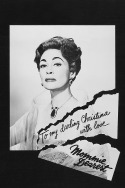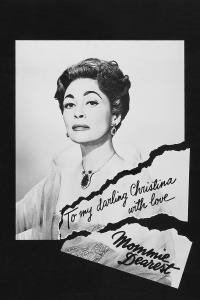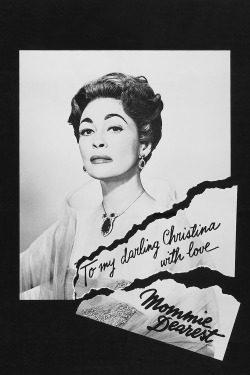
Review of Mommie Dearest (1981) by Paul Z — 07 Jul 2008
Mommie Dearest is a film with absolutely no energy. It has scenes of raging tempers and even disturbing scenes of Faye Dunaway's Joan Crawford abusing her daughter in despicably psychotic ways, but the film is completely devoid of any recognizable pace, and if a pace is not recognizable, then what good is it? It's not a story. It's an anthology of scenes, but in chronological order, I guess. I speculated that it was perhaps directed with Raging Bull's brooding style in mind, but the fundamental element of a troubled portrait like Raging Bull is the consistency of the gradual psychological self-destruction of its portrayed character. Mommie Dearest tells the story of a woman who adopts a girl, loves her, abuses her, treats her well, abuses her again, treats her well, has an affair, treats her well, hates her, loves her, etc. There is nothing shown to be driving Joan Crawford to be this way. It's a psychological drama without the psychology.
The story is given no background. Only scenes of face value that don't elude to anything underneath. This backfires so badly upon the story that we're given the very incorrect feeling that Crawford led a very insulated life with her daughter, son, nanny, and occasional husband. If Christina Crawford's book is written anything like this, the ambiguity of it that has been commented on to no end---is it fact or fiction---is very clear: It's fiction. The least the story could do would be to show Joan Crawford doing what she did: Having lavish balls at her mansion constantly, scores of affairs, making several movies and having several arguments. These additions would not be gratuitous because having them would fill in her character's blanks perhaps. It would give us more to go on. Are we to believe her character only acts like this because she grew up poor? That could easily be part of it if she did in fact torture her daughter, but there is no possible way that could be the punctuation of her doings.
The film's lack of vibe doesn't only come from the story's incomplete condition. It also comes from what I could easily consider to be literally the most stilted and unnatural acting I've ever seen. Faye Dunaway is passionate, temperamental, overdriven wild animal by the numbers. She is not terrible like nearly every male member of the cast, but a truly effective performance, once again like in Raging Bull, or any other docudrama, would be one that does not simply rely on enacting the documented losses of temper or any other external facet of the character but understands the internal intentions, whether they be intellectualized or simply felt. Aside from her, the cast is full of actors who seem scripted with every nuance of their performances. They are bad. Bad. For instance, one scene involves a fight between Crawford and the first of her lovers that the film cites, and as Dunaway recalls her lines and juxtaposes them with almost rhythmic gesticulation with no feeling, her lover delivers lines with the worst, most clearly scripted and transparently directed inflection. You see, when I write a review here, and I'm talking about the actors, I shouldn't even have to say words like "inflection," "gesticulation," "recalling her lines," etc. A good performance from an actor uses those things the way a writer uses "the." The film's high point is the infamous wire-hanger scene. It truly is scary. But as the film continues, it seem to forget about this scene, just as it forgets about every scene that precedes another. When the film reaches its dramatic closing line, fades out, and rolls the credits with quietly dramatic music, we're wondering what hit us.
This review of Mommie Dearest (1981) was written by Paul Z on 07 Jul 2008.
Mommie Dearest has generally received positive reviews.
Was this review helpful?