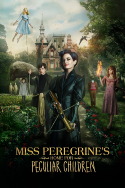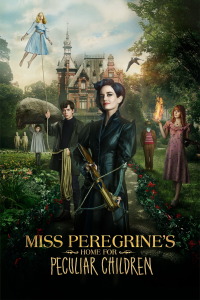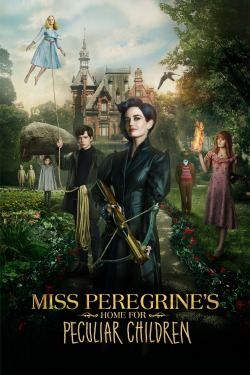
Review of Miss Peregrine's Home for Peculiar Children (2016) by Igor K — 11 Oct 2016
There are more than a few great moments in Miss Pergrine's Home For Peculiar Children that help disguise the film's flaws and make it a worthy adaptaion. Burton brings his familiar trademark style to the table, and it is a perfect fit for the materials darkly whimsical background and visual prose. The first visit to the house, the dropping of the bomb/resetting of the loop, and the boat scene are imagined on screen in a series of beautiful cinematic sequences, giving us much to look at along the journey.
However, the flaws of the film follow the book's lead and revolve around the characters themselves, who remain surprisingly one dimensional for a film that is supposed to celebrate our peculiarities.
Given the jump from page to screen, I actually think the screenwriters did a decent job with what they had to work with. Choices like the one to leave out the best friend in the beginning of the story, or the way it connects the psychiatrist to the developing story, help to avoid too much clutter. But the push to clean up the narrative also results in one that moves too quickly. The choice to streamline the character of Emma (my least favorite character in the book) away from the monotonous back and forth tween-age banter of the novel actually helps make her character intriguing as one who struggles with loss, rejection and belonging, but the way the film avoids exploring the more mature elements of Jake that we find in the book (my favorite character) seems to diminish his depth on-screen. All of this also creates a sensitive dance between the books rather complicated theories and formulas (surrounding the loops and the threat of the Hollows), something that the film does it's best to explain without overly dwelling or talking us through it.
And all of the sideshow that emulates from the peculiar children themselves simply ends up lacking in any significant backstory at all. We know that they are unique, but we really aren't given much of a chance to know who they are underneath. This was the whole idea of building a story around unknown, antique pictures, giving a story to untold stories. They remain largely untold here, as they did in the book as well.
The best part of the book is the tension that develops between Jake's persistent struggle with understanding the fantastical stories of his grandfather and struggling with what's real on the other side of these stories allure. It is out of this that we find the wonderful mundanity of his present but distant father who continues to struggle with his own demons and the absence of his father in his own life. The film is attentive enough to narrow its focus towards these dynamics, but for every time this narrative has an opportunity to move forward it ends up cutting to the next scene. This is equally unfortunate as Burton's attention to design and set gives us all the more reason to linger on the scenes for just a little bit longer as well.
Eva Green does do a great job of letting us into her character with her limited screen time. She uses her visual presence and facial expressions to turn Miss Peregrine into likely the most interesting and layered character in the story. Jackson also does a decent job of balancing the dark with the whimsical, not going too over the top but giving us just enough of a sense of danger as well to keep the story's good versus evil motif's relevant and important. And the much more subdued relationship between Jake and Emma retains enough chemistry to allow the final moments of the film to emotionally resonate. The actors as a whole are all good, but just aren't given enough time to tell the whole story.
There was opportunity for the film to really explore the setting of the war as the backdrop to the story of the children themselves. This whole dynamic was one of the more intuitive themes of the book, one that bridges the struggles of the grandson and the grandfather across a generation. It is also the element that allows the loop itself to distinguish itself from the modern world, even as it is intended to remind us that our struggles remain much the same across the barriers of time. But Burton just doesn't give this time to develop in a serious way, instead leaving it to linger in the visuals. As I said, this works well enough to make this a worthwhile film, but it's hard not to bemoan missed potential.
This review of Miss Peregrine's Home for Peculiar Children (2016) was written by Igor K on 11 Oct 2016.
Miss Peregrine's Home for Peculiar Children has generally received positive reviews.
Was this review helpful?