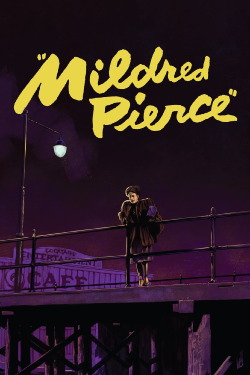
Review of Mildred Pierce (1945) by Josè M — 24 Mar 2010
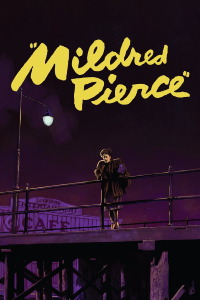
"Casablanca" director Michael Curtiz made another classic melodrama with "Mildred Pierce," and actress Joan Crawford scored a major comeback with this tour-de-force soap opera about the rise and fall of a woman as an entrepreneur. Crawford had been dumped by Metro-Goldwyn-Mayer and picked up by Warner Brothers where she loitered for a couple of years before she found precisely the kind of role that she felt was ideal for her. Initially, Curtiz wanted nothing to do with the high-handed Crawford with her padded shoulders. The Hungarian-born workalcoholic Curtiz originally sought Barbara Stanwyck for the lead role, but he changed his mind about Crawford when he observed her aggressive work ethic. Indeed, "Mildred Pierce" represents Crawford at her zenith, and she won her one and only Best Actress Oscar. Warner Brothers surrounded Crawford with a sterling cast including Anne Blyth as her snotty, stuck-up daughter Veda, Jack Carson as the fast-talking Wally Fay, and Zachary Scott as a dissolute womanizer with a closet filled with swim suits belonging to his many sisters. The theme of mother versus daughter stands above all others in this woman's film that depicts a woman struggling to succeed in life without a man and raise two daughters. At the same time, the theme of women versus men hovers in the background. Just as Mildred seems doomed to be a bad mother because she indulges her arrogant daughter's every whim, Mildred achieves no success with the men in her life. Zachary Scott is simply brilliant as a worthless playboy type who preys on Mildred like a leech and eventually robs her of every dime. Cast as Monte Beragon, Scott not only takes Mildred to the cleaners, he takes advantage of Veda. Hollywood made several movies about tempestuous mother and daughter relationships, among them the Bette Davis soaper "Now, Voyager," but "Mildred Pierce" ranks as the most memorable. Producer Jerry Wald convinced studio boss Jack Warner to buy the rights to James M. Cain's novel, but the writers had to eliminate much of the sexual content because the Production Code Administration prohibited the kind of behavior that Cain portrayed in his book. Such had been the case with previous cinematic adaptations of Cain's work, including "Double Indemnity" (1944) and later "The Postman Always Rings Twice" (1946).
Warner Brothers released "Mildred Pierce" in 1945, less than a year after World War II ended. Although there are many references to the war in the film, such as Monte's crack about nylons being out when he pays a spot inspection visit to Mildred's diner, the filmmakers never make any overt references to the war. The setting is clearly in the early 1940s while the Allies were fighting the Axis Powers. Never do we see any servicemen in uniform wander through the mise-en-scene. Essentially, "Mildred Pierce" qualifies as a film noir. Curtiz shoots virtually everything with shadows and the plot focuses on the death of a major character at the outset of the action. Curtiz loved to tell stories in flashback and his Humphrey Bogart World War II thriller "Passage to Marseille" is related in flashbacks within flashbacks within flashbacks. "Mildred Pierce" isn't as convoluted as the Bogart film and the mystery about who murdered Monte Beragon is what drives this black & white film forward. After the opening sequence when unsavory Monte is shot and killed in cold blood at his house, the plot reverts to the past as Mildred recounts her life story to a detective. We learn that the marriage between Mildred and her real estate salesman husband Bert (for U.S. Olympic shot-put champ Bruce Bennett) is not congenial. Mildred lives and breathes to please her two daughters, Kay (Jo Ann Marlowe of "Dangerous Intruder") and Veda (Ann Blyth of "Brute Force"), but she concentrates on Veda, at the expense of Kay. Sadly, nothing that Mildred does for Veda ever pleases Veda and Veda winds up making life hell for Mildred. Mildred usurps her role as a wife and Bert grows sick of her and has an affair with Mrs. Maggie Biederhof (Lee Patrick of "The Maltese Falcon") that leads to his divorce from Mildred. Mildred strikes out on her own, reflecting the success that women achieved in the workplace since most men had been mobilized for the work effort. Indeed, Mildred becomes a seeming success story over night, owning and managing a franchise of restaurants with the help of her right-hand girl, Ida Corwin (Eva Arden of "The Doughgirls"), who delivers the choicest wisecracks. At one point, Ida observes about her relationships with men: "When men get around me, they get allergic to wedding rings." Later, she adds about the opposite sex: "Oh, men. I never yet met one of them that didn't have the instincts of a heel. Sometimes I wish I could get along without them.".
Altogether, Mildred tries to act as the mother and the father and she winds up failing miserably. Daughter Veda emerges as a villainous of the worst sort and her comeuppance is something that you enjoy watching her get. "Mildred Pierce" emerges as a very atmospheric movie and Curtiz never wears out his welcome, even when he shifts back and forth in time. For the record, there was no murder in the novel, but it occupies the centerpiece of "Mildred Pierce" and all the characters swirl around it. "Mildred Pierce" is a brilliant example of top-notch filmmaking. Don't miss it.
This review of Mildred Pierce (1945) was written by Josè M on 24 Mar 2010.
Mildred Pierce has generally received very positive reviews.
Was this review helpful?