Review of Midnight's Children (2012) by Amit K — 12 Aug 2014
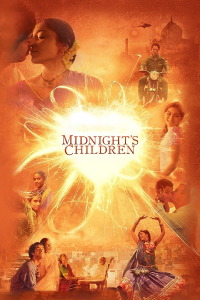
Saleem Sinai was born on the midnight when India got free from the British i.e. midnight of 14th August 1947. It seems that all children born on the same day between 12 A.M. and 1 A.M. are having some kind of power with which they are able to converse with each other irrespective of their actual locations. That kind of fantasy in 1947 seems too much to imagine. But keeping that apart, Midnight's Children takes us to the events that happened before the independence, after the independence and the time where India was getting its freedom.
Based on the novels of same name written by Salman Rushdie, Indian author who is known for taking serious topics and telling them in the most vivid ways possible, which worked for him until now. In this book also, he expresses most of the themes and emotions in the fantasy that the midnight boys live in. And while reading the book, it seems very intelligent and appealing, but when it comes to filming those fantasies, which is done in the best possible way here, it seems very unimaginative and weird. But I think we can manage with this problem when we know no better option was available.
The storyline is very complex yet it is very simple. A guy, named Saleem Sinai (Satya Bhabha), realises that he is having that power and he starts conversing with other children born on the same time as Saleem i.e. midnight of 14th August 1947. He is very poor and, that is because of a mistake committed by Mary, a house-maid, which I'll tell after sometime. Ultimately he gets to meet the children in person when he gets to be in other regions of India. He meets Parvati (Shriya Saran), who is a witch and has a magic-box with her and once someone is inside that box -- he becomes invisible. He also meets the man whose life he was living. Events take turns and after sometime he finds himself in a big problem. What that problem is and how Saleem deals with it or how the system deals with Saleem is pretty much to look forward to in the film after the first 90-minutes.
There are many cultural references in the movie. Like the opening scene in the movie when Ghani (Anupam Kher)'s daughter requires a doctor for curing some infection and the doctor is not allowed to see her face. He sees her anyway because he marries her. There are many others like these which tell us about the hidden culture of India, which indeed is a very fascinating thing.
This movie also tells us about human emotions and decision-making. Mary (Seema Biswas) switches the name-plate on the babies and that results in a highborn boy living a poor person's life and a lowborn boy living a rich person's life. She does it only for the pride of her socialist lover Joseph D'Costa. She curses herself for that mistake years after the deed was done.
The movie comprises of many brilliant actors and most of them in a blink-and-miss role like Anupam Kher, Shabana Azmi, Vinay Pathak, Shahana Goswami and many others. The lead actors are amateurs though. Satya Bhabha is a newcomer and he was cast for the role when some experienced and good actors refused the part because they thought the film would not create the same sensation as the book created back in 1980's, and as it turned out, they were right. The female lead Parvati is played by Shriya Saran, who also doesn't have much experience of doing such serious roles. There is then one more character of consideration in the movie, Mary. Mary is played by Seema Biswas, who undoubtedly is a great actress, and she plays every emotion and action with much understanding and excellance. I first saw her in Bandit Queen (1993) and since then, I have not been able to forget her.
Though there are many other characters in the movie which seemed of some importance but their screentime was reduced so much that you just get to know their names and faces and nothing else. Of course when there are so many characters, it becomes very difficult for the director to provide proper development to all the characters. Like there is Shiva (Siddharth Narayan) the person who stole Saleem's life, and I thought this character would be of some importance but no, not in the movie.
Veteran director Deepa Mehta tries her best to take care of the matter-at-hand but with so many characters and so many stories to tell, she definitely loses track and in the end movie seems like a two-and-a-half hour of mindless journey with so many subplots and none ending satisfactorily. Through the first hour of the movie, this seems no less than Mehta's earlier films, The Elements Trilogy, but as the movie progresses and characters continue pouring in, you lose interest. All I can say is it was very much difficult to make a 500 p. novel into a 150 minutes movie but the effort put forth by the director, Deepa Mehta, is worth praising.
The book was great of course as it got the Man Booker Prize but the film-adaption is not satisfying. Though there are some good things about the movie also like Rushdie's voiceover throughout the movie, the locations are very impressive and the dialogues are praiseworthy but a lot of missing points as well as a lack of character development repulses the viewers. The fantasies seem childish in the movie. The attempt was not bad and this is definitely better than our typical Bollywood movies but there was much scope in the movie to make it better.
This review of Midnight's Children (2012) was written by Amit K on 12 Aug 2014.
Midnight's Children has generally received mixed reviews.
Was this review helpful?