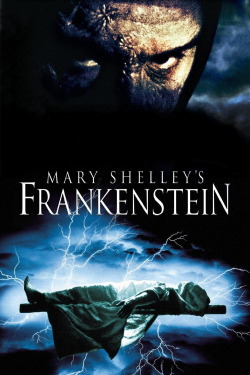
Review of Mary Shelley's Frankenstein (1994) by Conner R — 19 Nov 2009
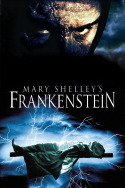
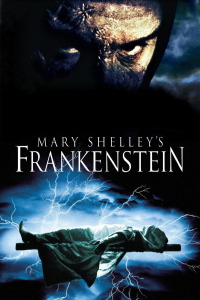
Since the invention of the motion picture, Hollywood has turned to the classics to inspire some of its greatest work. As the art of film has developed over time, the fundamental principles of how it tells a story have grown to differ greatly from those of the printed novel. Hence, the best film versions of great books are rarely able to adhere to the original works without adaptation. Mary Shelley?s Frankenstein, directed by and starring Kenneth Branagh, is a product of this dilemma, in which its attempts to remain faithful to Shelley make it stylized but uninteresting, and the parts of the story which have been subject to adaptation happen too late in the film to save it.
The plot of the film follows the life of Dr. Victor Frankenstein (Branagh), a young man with a ferocious hunger for knowledge. Events in his life lead to his ambition to conquer death, and as he attends medical college, he enlists the help of a professor (John Cleese) and a fellow student (Tom Hulce) to fulfill his dream and bring the dead back to life. After he succeeds in ?making a man,? he realizes the seriousness of what he?s done and knows that science is not ready for his work. The grotesque-looking creature which has resulted (Robert DeNiro) is left to die in a cholera epidemic; instead, the creature survives, learns of his past, and seeks revenge on his creator. The plot also involves Frankenstein?s relationship with his fiancee, Elizabeth (Helena Bonham Carter), and how she is often placed second behind his experimental work.
Branagh (Henry V, Peter?s Friends, Much Ado About Nothing) directs the film with beautifully composed shots, interesting lighting, and sweeping camera movements. His sequences are particularly well done, especially the film?s North Pole scenes, the experiments, and the love scenes. There isn?t one weak performance in the film, and Cleese is a pleasant surprise in his small but memorable role as Professor Waldman. Hulce (looking like he just stepped out of Amadeus) carries the film?s comic relief with ease. And the beautiful Carter (Hamlet, Howard?s End) is excellent as Elizabeth, walking the delicate balance between the meek subordinate lady of the 1790?s, and appealing female heroine of the 1990?s. The film?s core, however, is Branagh. His portrayal of Frankenstein?s maniacal desire to advance medical study never goes over the edge into out-and-out insanity or caricature. We are always rooting for this distasteful and overzealous character, because we know he believes wholeheartedly in his own misplaced ambitions.
Viewers expecting to see the square-skulled bolts-in-the-neck Boris Karloff incarnation of the Frankenstein monster will be disappointed. In fact, the creature itself is the one focal problem with the film. As written by Shelley, the creature does learn to speak, read, and form its own thoughts, keeping the novel?s themes on parenting and tampering with nature very much alive. But in spite of fine acting on DeNiro?s part, the film never quite links the tender, human side of the creature with his vengeful and violent capabilities. The film could have made him more sympathetic by focusing on his great physical strength - perhaps making his murders unintentional, as in Of Mice and Men. But this monster is ultimately unsympathetic and difficult to believe - especially as he vows revenge when he doesn?t yet seem smart enough to do, and at the film?s end, when the suddenly remorseful creature weeps over Frankenstein?s body and cries, ?He was my father.?
It is no surprise that this film comes from producer Francis Ford Coppola. This is his second attempt to bring the horror classics to the screen. Mary Shelley?s Frankenstein is the unquestionable cousin to Coppola?s Bram Stoker?s Dracula. They are both brilliantly directed, acted and photographed versions of bland screenplays that lose themselves trying to be too faithful to the original classics. The only satisfaction that can be felt at the end of Mary Shelley?s Frankenstein is that there is no opening for a sequel, and Francis Ford Coppola?s Bride of Frankenstein will never come to fruition.
[from The Watermark, 1994-11-05].
This review of Mary Shelley's Frankenstein (1994) was written by Conner R on 19 Nov 2009.
Mary Shelley's Frankenstein has generally received mixed reviews.
Was this review helpful?