Review of Mary and Max (2009) by Marshal A — 02 Jun 2011
Misfits Find One Another.
There is an epigraph at the end of the film. I couldn't read it, though, so if anyone can tell me what it said, I'd be much obliged. I even rewound and got right up next to the TV and squinted. I really think it should be required for any type displayed onscreen which is intended to be read by the audience to be visible on the average television, and mine is larger than average. Every once in a while, I think people miss what the fate of their film will be. This is one of those films which was not much seen on the big screen by Americans, certainly, and I suspect the only chance I would have had to see it there myself would have been to see it at the Olympia Film Society. Don't get me wrong; I don't expect all of the film world to consider American standards. It's just that, these days, more people see most films at home than they do on the big screen. There are people who have given up going to theatres altogether, after all.
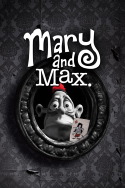
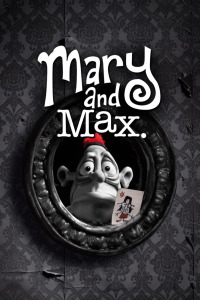
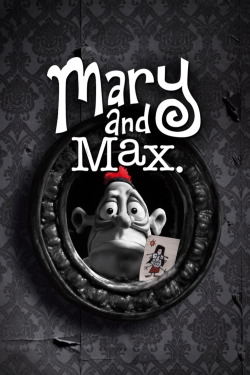
Mary Daisy Dinkle (Bethany Whitmore and then Toni Collette) is a lonely young girl growing up in Australia. One day, she picks a name at random from the New York phone book and sends a letter to the person at that address, hoping to make a friend. She reaches Max Jerry Horovitz (Philip Seymour Hoffman), a middle-aged misanthrope. Well, no; he doesn't dislike people so much as not at all understand them. For one thing, he doesn't really seem to understand that you don't write to an eight-year-old the same way you would to an adult, so he tells her things which, when her mother (Renée Geyer) reads his first letter, cause her to freak out and forbid Mary to write him. So Mary quite cheerfully tells Max to send letters to a neighbour's instead. They write letters back and forth for years, though Max eventually gets hospitalized and doesn't respond for eight months. It turns out he has Asperger's Syndrome, and this before it was cool.
The final conflict between Mary and Max comes, interestingly enough, from Mary's not understanding Max. He doesn't want to be cured. He's content with who he is. Mary, never at home in her own skin, fails to understand the very concept. She has gone to school to study mental illness, and she writes a book wherein, among other things, she expresses confidence that she will be able to find a cure for Asperger's. After Max has told her that he has no problem with who he is. Mary's by-then-husband, Damien (Eric Bana, ye Gods), tells her that she cannot save everyone, but I doubt that's her motivation. No, she isn't listening to what Max says, but on the other hand, she arguably is. She is trying to make his life better, and she knows the problems he's having. She thinks she can improve his life, and she thinks--and I can't argue--that curing his Asperger's will do that. To be sure, there's a lot more to his problems than that, and the manslaughter charge, dismissed though it may have been, will always be in the background.
Let us make one thing clear--this isn't Claymation. Contrary to what a lot of other people will call it. Claymation is a registered trademark of the Will Vinton Studios. It appears to be used as a generic here; in the making-of clips, filmmaker Adam Elliot refers to his own work as Claymation. However, this is still hand-animated stop-motion work, which is what Claymation is as well. It's extremely complicated work, and some of it is exquisite. There are cityscapes, including an extraordinary one where New York slowly lights up. There's a lot of water--apparently, they used the kind of material Max shouldn't talk to Mary about to stand in for it--which is not easy, either. It's not as flashy as [i]Coraline[/i], which came out the same year, but it's quite good, and the colour palette is worthy of note. These people do not lead colourful lives, and so their worlds are grey and sepia. Yes, the sculpting style is a little crude, but it works.
I should note at this point that the DSM-V, due out in a couple of years, will apparently be eliminating Asperger's Syndrome as a separate disease. It will just be part of the autism spectrum. I don't know if this will make the fashionable nature of the disease go away. I hope so. I think a lot of self-diagnosed "Aspies" are just looking for an excuse to be rude when they want to, and I don't think most of them realize that there are people out there like Max. Max wants to get along better with people, and it's only the relief of diagnosis which makes him stop trying to figure it all out. His case also seems to be pretty severe, given it's said that he's deemed incompetent to stand trial because of it. (I think the case would have gotten thrown out on other grounds, but they're less funny.) However, neither Elliot nor Hoffman ever slip into the easy way of portraying the character. He has a real problem, and if the results of it can be a bit funny sometimes, well, isn't that true of all real problems?
This review of Mary and Max (2009) was written by Marshal A on 02 Jun 2011.
Mary and Max has generally received very positive reviews.
Was this review helpful?