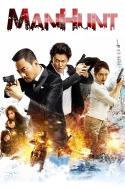
Review of Manhunt (2017) by Clemence Y — 11 May 2018
After Red Cliff and The Crossing, the director had clearly decided to make a less demanding film. Red Cliff was a phenomenal box office success in Japan; released in two parts, it grossed over US$100m in 2008/2009. It makes John Woo one of the most revered foreign directors in Japan. A Better Tomorrow apart, The Crossing is perhaps the most personal film that the director has made to date. (The name of the Kuomintang General in the film bears the name of the director's son.) If it had been released as a three-hour epic, it would have been a truly breathtaking cinematic piece. But even as a two-parter, the film more than deserves to be mentioned in the same breath as Doctor Zhivago, a film which the director has said he admires. If it had had available to it a Hollywood budget, the film would have stood shoulder to shoulder with the David Lean classic.
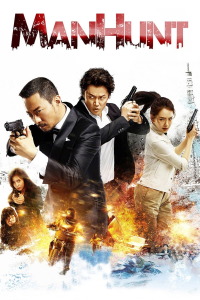
Manhunt doesn't look like a US$60m production, but is very well made. It is more like a Bond film, but without its fanfare and the money to burn. It has a Bond-like finale, which one probably would not see in a real John Woo film. The last scene in the film was sweetly humorous - many John Woo fans may be unaware that in the earliest days of the director's career in Hong Kong, his most notable box office successes were comedies and a film version of one of the best loved Cantonese operas.
Manhunt has not achieved box office success in China or Japan, which is a shame. The reason has to be the script. It seems that the writers were so concerned with making the story believable that they had thrown suspense completely out of the window. Viewers would have been able to identify the villain of the piece - the murderer - almost from the start.
John Woo, on the other hand, appears to have been content to showcase his prowess - truly peerless - for staging actions. The set piece in the farmhouse with the two heroes of the film handcuffed to each other is certain to be plagiarized in other action films. The balletic shootout at the start of the film - straight from one of the most memorable scenes in A Better Tomorrow - is a patented John Woo sequence. It also sets the tone for the rest of the film in which the director revisits many of the great moments in his early films. This was not laziness. The film has a true nostalgic undertone.
I am not at all bothered by the fact that some of the cast struggled with their lines in English. In any event, their characters were either Chinese or Japanese, so even if one really had to dwell on it one shouldn't be surprised to find that they were not fluent English speakers.
As is true of Red Cliff and The Crossing, the cast in Manhunt puts in a very, very strong performance. Interestingly the performers who shine the most in the film are not the two lead men - good as they were. The best performances were delivered by Jun Kunimura (of Hard-Boiled and Kill Bill fame) and Mamoru Ito (the corrupt cop who orchestrated the set-up). Ha ji-won was brilliant throughout. Angeles Woo was utterly convincing as the more combative (and committed) female assassin, despite probably having no martial arts background. Sakuraba Nanami truly impressed as Masaharu Fukuyama's adorable sidekick. Qi Wei, who would be little known to viewers outside of mainland China, holds her own. She is yet more proof of the abundance of female talents in the mainland cinema today.
Manhunt was not as great as the other John Woo films in his "China years". It is not an ambitious film but is solid entertainment - and a lot of fun. The cinematography of the film is worthy of Osaka and the other locations in the Kansai area of beautiful Japan where shooting took place.
I.
This review of Manhunt (2017) was written by Clemence Y on 11 May 2018.
Manhunt has generally received mixed reviews.
Was this review helpful?