Review of Manhattan (1979) by Edward R — 14 Feb 2011
Creepy Excellence from the Maestro of NYC Humor & Pathos.
Wow. It's good, really good. Not quite his absolute best, but damn close. It just barely misses being Woody Allen's overall finest achievement by only the slimmest of faults. It does boast some of his wittiest, most astute quips on every preposterous aspect of that ubiquitous domestic tragedy, the modern romantic relationship. And it features the most graceful, most impressive blending of his inexorable comedic and tragic impulses. I do, however, have a complaint with the apparent oblivion Woody shows for a very disturbing element of his story, but on all other counts, it's a soaring triumph.
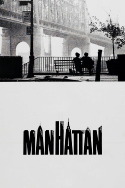
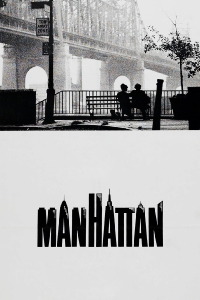
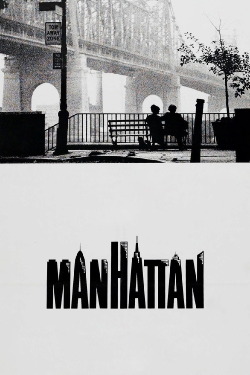
Gordon Willis' widescreen cinematography is absolutely stunning. The use of black and white effectively unmoors New York from its modern (1979?!) berth, setting it adrift in time to freely conjure a deep nostalgia. Profoundly evocative monochromatic contours, contrasts and textures propel our thoughts back through the city's fabled heritage. There's such divine grandeur and majesty in these meticulously rendered, jaw dropping, sparkling skyline panoramas and sumptuous, bristling, street level vistas - impeccably lit and framed, creating the compelling illusion that it's only by divine prescience that all of this has been brought into existence expressly, exclusively, for this exact cinematic moment. By right of these astonishingly masterful city portraits, Woody Allen lays claim to full and absolute ownership of his cherished Manhattan.
Like a supremely proud deed holder, the camera confidently surveys patinated brownstone doorways and gleaming plate glass facades. That's his spirit and soul we see in the billowing, contorting steam clouds that shroud the evening boulevards and garnish weather beaten rooftops. The sudden flashes of eyes and teeth and hands in an infinite array of furtive, frantic, and facile gesticulations; the cacophonous clunk and clink of one hundred thousand smartly coordinated restaurants, trattorias, cafés, delis, grills, bistros, bars, burger joints and soda shops; the intricately synchronized ballet of the herky jerky taxicabs, delivery trucks, cars, buses, scooters, bikes, and people, so very many people; these are the basic units, the irreducible atoms, that compose Woody's private universe. This intimidating borough, this impossibly evolved metropolis - so tastefully raw, so elegantly primal. These gorgeous images are his most heartfelt homage to this most unique, remarkable, bewildering urban habitat that so thrills him, so nurtures him, so comforts him. It's wonderfully clear just exactly who is the deserving star of this film.
Not quite so pristine is the unsavory predicament that's paraded onto this sumptuous stage. It's more than a little creepy to witness the statutory molestation of the divinely cherubic Mariel Hemingway character, Tracy. Yes, as a red blooded, often virile, usually horny, standard issue male, I was viscerally moved by her angelic porcelain beauty, but my "inappropriate" desire was sharply chastened by a pious inner voice. That imagined voice was resonant with every virtuously minded father, brother, aunt, uncle, coach, counselor, friend, foe, judge and jury who's ever deigned to remind some poor sorry slob of just how heinous a moral, ethical, and legal transgression is this sort of liaison - "She's too damn young!!" I was being cock blocked by my own vigilant conscience, but Woody - disturbingly - was vigorously proceeding with his assault. His Issac is unfettered in spite of the tentative recognition he has of his vice. He in fact argues his reservations to her, repeatedly, but only as a self-serving ploy to escape commitment. It's excruciating to experience Tracy's understated heartbreak, Mariel's innate gentle-as-a-lamb meekness only heightens the outrageous pathos.
Tracy is a tender 17 years old, and relative to Isaac's 42, she might as well be 10. I'm being hyperbolic, I know, but that's the thing with our morality - it doesn't make any accommodations for art (or reason). It is a very risky gamble, this ambivalence about something so potentially alienating. In daring to so frankly portray this carnal attraction for the naive and innocent teen Woody apparently is abiding by his personal mandate for authenticity in all aspects of his art. Just as he commands that his sultry town fully expose herself to his unblinking lens, he demands the utmost candor of himself. On display is a full frontal view of an engorged, determined, but fickle lust. It's almost sinister, how cavalier is this lechery.
However, by the anesthetizing splendor of the oh-so-seductive city scapes we are partly deflected from this deeply repulsive discomfort elicited by Isaac's sexual folly. In spite if his lofty aspirations for impeccable integrity, Woody intentionally exploits the tremendous allure of his mesmerizing visuals to gain approval for his character's reprobate behavior. Just as someone who has squandered an absurd sum of cash in Las Vegas wrangles for a modicum of pity - "It happens to everyone who goes there!" - so too is Woody petitioning our sympathy by having his ignoble erotic conundrum play out in such an irresistibly provocative locale. The expression "When in Rome..." comes to mind, and Woody's "Rome" is indeed a haven for some very unconventional, odd, illicit, destructive, depraved and neurotic lifestyles. I was almost expecting Isaac, at any point, to face the camera and say "Look folks, I know you don't approve of me shtupping this sweet kid, but c'mon, this is New York..." And, it's precisely this subtle but deliberate manipulation which undermines this masterpiece's claim to supremacy in the Allen canon.
If Woody was counting on me to identify with an aging, nebbishy, self obsessed, overly critical cradle robber, then he really set a monumental task for himself. What's so remarkable is just how much of that daunting mission he actually accomplishes, just how very far he's pulled me along on this morally tenuous trek. I first thought that I'd only be taken the whole way kicking and clawing, but eventually, somehow, I had surrendered my resistance. So, by the moment of its semi-tragic finale my better angels were all but exhausted from their relentless harangue, and I was lo longer so pinned down by petty bourgeoisie notions of propriety. In the end, I had reluctantly excused Woody of his mortal sin. But yet, I still can't help thinking that screwing the underage shiksa is just so sad and gross. I'm from Philadelphia...
It's a forgone point, at this late stage of his career, to describe Woody as desperate to comprehend our infuriatingly complex experience of love. He has never had the slightest doubts that we all share his tortured devotion to the enterprise of intimacy, and that we all are just so humanly incompetent at it. True enough. And so, quite reasonably, has he lavished his deepest, most enduring, most romantic sentiments upon his most available, most responsive, most faithful mistress - Manhattan. This amazing film often plays like a snide, sarcastic reaction to a public reading of the explicit poetry of an extremely eloquent schmuck - anything but simple. That may sound like an invitation to a ridiculously awkward affair, and "Manhattan" sometimes is exactly that, but what most prevails, towering above all else, and largely thanks to the inspired soundtrack of gorgeous Gershwin classics, is a glowing sense of awe and admiration for this meticulously lavish valentine to his most adored island oasis.
This review of Manhattan (1979) was written by Edward R on 14 Feb 2011.
Manhattan has generally received very positive reviews.
Was this review helpful?