Review of Man with a Movie Camera (1929) by Gareth J — 09 Jul 2007
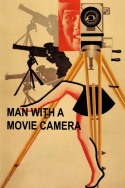
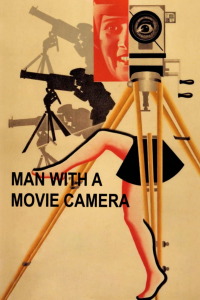
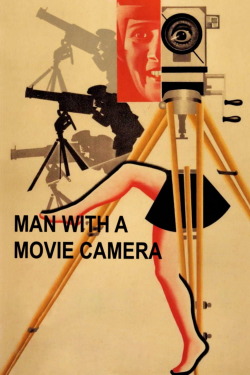
And so we come to yet another classic example of genre documentary. This time the subject is that of Dziga Vertov in his 1929 life-on-display story Man With a Movie Camera. The big question of course is how best to review a film that is for all intensive purposes nothing more than a selection of randomly filmed footage randomly edited together, when one considers such a premise the answer becomes self evident.
In actuality, the shots are not randomly edited at all. Rather, Vertov arranges them to to form a plethora of thinly connected avant guarde mini-narratives, each reflecting the lives and trials of people living in Communist Russia.
Of particular note is the funeral footage which is juxtaposed by disgustingly graphic shots of a birth and the poetry of the films climax in containing not only Soviet montage and flash montages but even a stop motion section where the camera and tripod take on lives of their own.
Despite this, critics and theorists best cite Man With a Movie Camera for its relevance as the first example of the reflexive documentary, standing as the first film to explore the risks, efforts and techniques needed to create even a film that seems as rudimentary as the one painted by Vertov.
For a silent era film, this is a crucial piece of history and though others have trumped Vertov on many an occasion, one can not deny the artistic power of Man with a Movie Camera.
This review of Man with a Movie Camera (1929) was written by Gareth J on 09 Jul 2007.
Man with a Movie Camera has generally received very positive reviews.
Was this review helpful?