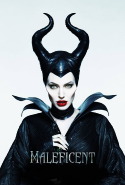
Review of Maleficent (2014) by Jack F — 03 Mar 2016
What a strange film this is.
On the one hand, I'm not particularly on board with the Disney company's ideas to recreate their animated classics as live action films (as they've already done with "Cinderella" and are reportedly planning on doing with "The Jungle Book," "Beauty and the Beast," and "The Little Mermaid," amongst others), so I have to credit "Maleficent" with doing something different rather than simply adapting the exact same story. But on the other, the story they ended up telling is odd, a little morose, and even contradictory at times.
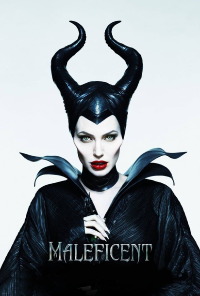
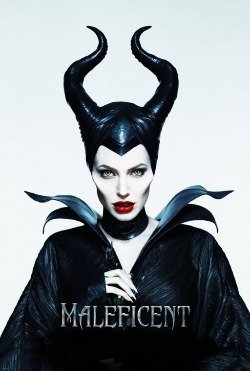
There's a sound premise here, and the movie could've worked. Like Gregory Maguire's "Wicked" (later adapted into a Broadway musical), the film poses the question of what if the villain in a popular and iconic piece of work was actually just misunderstood, a victim of circumstance? In this case, we're talking about Maleficent, the antagonist of Disney's "Sleeping Beauty" (1959). In the movie, Maleficent is unquestionably evil; from her sinister appearance to her throaty cackles (provided indelibly by Eleanor Audley, who also voiced the evil stepmother in Disney's "Cinderella"), the dark fairy was nightmare fuel for children everywhere. But what if there's more to her? WHY is she such a nasty piece of work?
That's where "Maleficent" comes in, serving as something of an origin story for the title character as well as an alternate-universe version of "Sleeping Beauty." The film tells us that the world of man has long been at odds with the world of fairies; Maleficent (Angelina Jolie) is a prominent denizen of the fairy realm, quashing an attempt by an unsavory human king and his army to conquer her world. However, at heart, she is a peaceful creature and does not seek out conflict with other beings. It is only when she is betrayed by a human named Stefan (Sharlto Copley), whom she was previously friends with when they were young, that her outlook on life becomes dour.
Years roll by and Stefan becomes king of the human world. He and his wife have a child, a girl named Aurora. Those who've seen "Sleeping Beauty" know what happens next. Maleficent, still bitter at Stefan's betrayal, crashes the child's Christening and places a terrible curse on her: on the night of her sixteenth birthday, Aurora will prick her finger on the needle of a sewing wheel and fall into a deep, eternal sleep. (Unlike the animated movie, it's Maleficent herself who adds the true love's first kiss stipulation; i.e., only a true love kiss will awaken the princess.) Fearing for their daughter's safety, Stefan and the queen entrust her in the care of three kindly but bumbling fairies (Imelda Staunton, Lesley Manville and Juno Temple), who will keep her sheltered until the day after her sixteenth birthday, so that the curse will not come to pass.
Now this is where things begin to deviate sharply from the original movie. Maleficent knows exactly where Aurora is being held, and frequently observes her throughout her life, watching her grow into a beautiful young woman (Elle Fanning). Eventually, she even begins to interact with her, and Aurora comes to believe that the dark fairy is her "fairy godmother." It's not particularly clear exactly what Maleficent's intentions are-that's a problem, right there-but she begins to find herself growing fond of Aurora, and soon she begins to regret the irrevocable curse she laid upon her.
This is where the story gets problematic. I just mentioned Maleficent's murky motivations, but let's take a look at the other fairies-named Knotgrass, Flittle, and Thistlewit, as opposed to Flora, Fauna, and Merryweather--for a minute. Where exactly do their loyalties lie? At the very beginning of the movie, they appear to be underlings of Maleficent, residing in the fairy realm (which makes sense seeing as, well, they're fairies). But fast forward a few years and they're attending Aurora's Christening, bestowing gifts upon her, and then suddenly end up as her guardians. Why have they turned their backs on Maleficent and their brethren? What's driving them?
And while we're on this topic, here's an even more nagging question: why were they invited to Aurora's Christening in the first place? We're told in the beginning of the movie that the humans and fairies have always been enemies, and presumably Stefan must know of their connection to the bigger, horned fairy he stabbed in the back years prior. Why exactly would he choose to trust these blundering pixies?
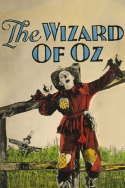
I feel like most of these problems stem from the film's approach. This isn't "Sleeping Beauty" from Maleficent's point of view; this is an entirely different story, more akin to a reboot. (And yet the film also clearly wants to be ASSOCIATED with the animated film, as is evident by such things as Maleficent's appearance, the color schemes of the friendly pixies' clothing, and the aforementioned Christening scene which, as mentioned above, plays out very similar to its 1959 predecessor.) Part of what made "Wicked" so much fun was seeing how it fit into the original "Wizard of Oz" movie; it told its own story, but it still meshed together with the Judy Garland film. It served as an effective companion piece. "Maleficent" is more of a re-telling as opposed to a side story within the same universe, and while that's not a bad thing in and of itself, the changes made to the story take it in bizarre and unsatisfactory directions.
Case in point: the character of Stefan. "Maleficent" seems uncertain as to how the audience is supposed to feel about him. The movie posits that he is the true villain of the story, but are we supposed to outright despise him, or are we supposed to feel some sympathy for him? In the early proceedings, we get the sense that he's weak-willed, but not a truly evil man. But somewhere around the middle portion of the movie, he essentially goes into full-blown crazy, teeth-gnashing villain mode, and this brings the film to some strange, dark places.
It's worth noting that the movie looks great, from the dank, dark castle of the human world to the colorful forest of the fairy realm. And Jolie is pitch-perfect, bringing a memorable animated character to life and effectively infusing her with just the right amounts of both grandiosity and nuance. But she's the only stand-out in the talented cast, and that's a disappointment. Truthfully, I think the blame falls more on screenwriter Linda Woolverton than the performers, as Maleficent is really the only character with any kind of dimension. You can see that an effort was made with Stefan, but it's so scattered all over the map that I get the sense that Sharlto Copley didn't really know how to play him, oscillating wildly between somber and cartoonish. Fanning is appropriately charming and sweet, but Aurora comes off more as a plot device than a character, nothing more than a tool for Maleficent and Stefan. As the three bumbling fairies, Staunton, Temple and Manville provide a little comic relief, but their incompetence is exaggerated to staggering heights. It stops being funny when you consider that the life of young Aurora is supposed to be in their hands, and they're completely botching the job.
Watching "Maleficent," I couldn't help but wonder if the movie would've played out better if the filmmakers had gone with the "Wicked" approach. At least that way the movie wouldn't have felt like such a strange, tonally confused offshoot of the original product. "Wicked" and "The Wizard of Oz" can feasibly co-exist. The former was like an expansion of the latter. I never felt like "Maleficent" was a part of "Sleeping Beauty's" world. And while that's not a problem on the surface--I don't think it was the filmmakers' intent--it does become an issue when the viewer realizes how much better "Sleeping Beauty" works over this offbeat excursion...and that he/she'd rather be watching that.
This review of Maleficent (2014) was written by Jack F on 03 Mar 2016.
Maleficent has generally received positive reviews.
Was this review helpful?