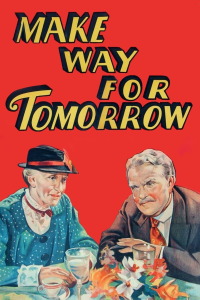
Review of Make Way for Tomorrow (1937) by Rosco B — 09 Apr 2013
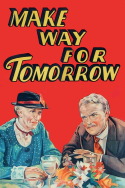
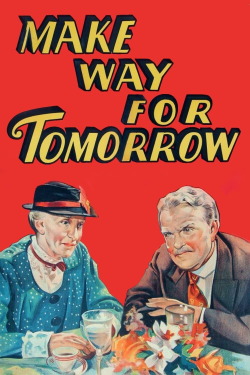
"Oh my God! That's the saddest movie ever made!" exclaimed Orson Welles in an interview with Peter Bogdanovich. Leo McCarey's once neglected, now somewhat rediscovered essay on aging love and the family unit may or may not be the saddest movie ever made, but it is a masterpiece. "If I really have any talent, that is where it appears" he said retrospectively of this - a personal favourite of his - to Cahiers du Cinema in 1965.
The ensemble family cast is uniformly immaculate - introduced early en masse and subsequently shown in various settings and lights throughout the picture - but central couple Victor Moore and Beulah Bondi take the main acting plaudits, acting well above their respective, actual ages and drawing the viewer into a touching and credible love affair in their characters twilight years.
Everything is nuanced, subtle in pace and tone, and very evenhandedly played by McCarey and the cast: you get the impression that even the most charming of characters have their foibles, and the closest to villainy have sparks of redemption. Even the lesser participants are multi-tiered; the script, direction and acting never allows them to slip into bland, stock characters.
McCarey was - and is - best known for his comedies and the title "Make Way For Tomorrow" sounds like it could fit in snugly with the myriad screwball efforts of the era. Indeed, the viewer could imagine several of these scenes easily working in such a format if they were played strictly for laughs: Bondi interrupting her well-to-do daughter-in-law's bridge game with an audible phone conversation stands out as one such example. Yet though the humour is vital in preventing the film from sinking into the depressive: McCarey walks the thin tightrope of the comedic and the dramatic unerringly, with a cutting, naked emotional truth that could easily trade blows with Cassavetes.
'Make Way For Tomorrow' reaches its greatest heights towards the final third, in a scene where the beleaguered son George (Thomas Mitchell) must tell his mother (Bondi) he can no longer look after her and he has a rest home already planned. It is at once truthful, understandable, and heartbreaking.
Leo McCarey had an exceptional Hollywood career, from cutting his teeth on the earliest of Laurel and Hardy's silents to classics such as 'Love Affair' and 'Going My Way'. Yet this film - perhaps too downbeat, unfashionable in its subject matter and downright extraordinary for commercial success - stakes a strong argument for being his finest moment. The subject and pacing certainly forbear another cast-iron masterwork: Ozu's 'Tokyo Story'.
As a postscript, McCarey did win the best director Oscar in 1937, but for 'The Awful Truth': a screwball comedy. Upon collecting the statue, he politely remarked "Thanks, but you've given it to me for the wrong movie.".
As graceful and even-handed as this movie.
This review of Make Way for Tomorrow (1937) was written by Rosco B on 09 Apr 2013.
Make Way for Tomorrow has generally received very positive reviews.
Was this review helpful?