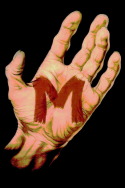
Review of M (1931) by Manuel M — 24 Feb 2010
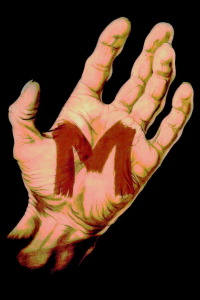
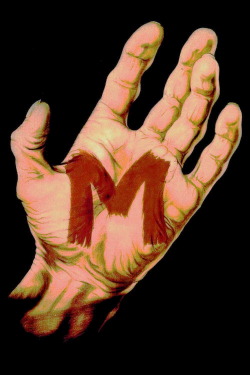
More social commentary than straight noir. One of the earliest talkies, 1931's "M" kicks off the film noir subgenre in pre-Hitler Germany with a stylistic tale of Peter Lorre's child-murdering psychopath.
Fritz Lang's genius for building suspense and using uncomplicated visuals to leave the horror to the audience's imagination is in full effect here. Where a modern film would take us painstakingly through the capture, torture and dispatching of the eight or nine girls Lorre's character goes through before the villagers with pitchforks catch up with him, Lang uses the lingering shot of a balloon caught in electric wires or an empty place-setting to let us figure out that the deed is done.
Lang instead focuses his attention on the reaction of society to the killings: people accuse one another wildly, politicians use the events to gain power and police try the nothing-to-see-here tact until Lorre sends a confession note to the local paper.
Lorre is the standout performance here eschewing more modern minimalist acting style for one with broad facial expressions, wild gestures and scenery (to the extent the minimalist Lang uses it) chewing soliloquies.
These lack of modern touches do make some scenes difficult to comprehend for the modern viewer unacquainted with things that probably made a lot of sense in 1930s Berlin. Also the films unsatisfying ending and noir-ish moral ambiguity (sorry but pointing out that Lorre's accusers also have committed crimes in no way puts them on the same moral depth as someone who has killed eight children) are also points against it.
However, if you a fan of "Basic Instinct", "Double Indemnity", "DOA" or other noirs, this is required viewing.
This review of M (1931) was written by Manuel M on 24 Feb 2010.
M has generally received very positive reviews.
Was this review helpful?