Review of Lorna's Silence (2008) by John K — 26 Aug 2009
As a group, the films of the Dardenne brothers are so thematically and stylistically consistent they essentially constitute their own genre. Yet, this body of work is also clearly within another cinematic lineage: social realism. The Dardenne brothers are indebted to Italian neorealism, and their films frequently look and sound like those of Kiarostami, Hou, and more recently, Jia Zhang-ke and Fatih Akin. However, unlike those other directors, the Dardennes have made only subtle variations in their approach to narrative filmmaking, at least since "La promesse" catapulted them to the forefront of international art cinema in 1996. As a result, I find myself preferring the first film of theirs that I saw, "The Son," which I still consider one of this decade's best movies. But I suspect that any of the feature films they've made in the past 15 years would have had the same galvanizing effect on me if it were my introduction to their singular work. By the time I saw "L'Enfant," though, I began to worry that the Dardenne brothers would need to do something dramatically different in order to really capture my attention again.
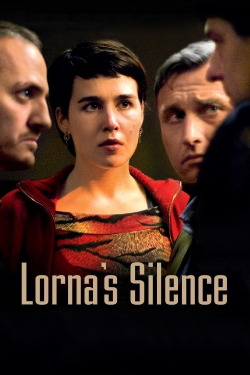
"Lorna's Silence" doesn't do anything radically different; however, there are enough minor but effective changes to keep anyone familiar with their work sufficiently intrigued. The signature camera style--exclusively hand held, long takes, over-the-shoulder compositions, and rapid movement--has been toned down considerably. For anyone who found their earlier work dizzying, this film is more visually accessible. It's also more superficially beautiful, with some especially wonderful night work. The milieu remains the same--characters who exist at the margins of mainstream society, often breaking the law merely to survive--but this film finds the Dardenne brothers investigating sexuality in new and interesting ways. The film is anchored, as always, by sterling performances, none better than Dobroshi's, who appears in nearly every frame.
The most substantial change centers on the question of grace, which is, I think, at the very heart of the Dardenne's worldview. Since "La promesse," their films have investigated, often in excruciating detail, the lives of intersecting characters who grapple desperately with guilt and the pursuit of forgiveness. Typically, each of their films plays out as a rigorous explication of man's shortcomings, followed, finally but powerfully, by a touch of grace. Needless to say, there's something decidedly Christian about these films. "Lorna's Silence" moves the location of that epiphanic moment from the end of the narrative to its midpoint, which, it could be argued, makes this film their most depressing. That moment, though, remains just as powerful and life-affirming here as it is any of their previous efforts. It is a small gesture--Dobroshi playfully chases after Renier's recovering addict--that wants to say so much. It announces that Lorna is now willing to meet Claudy in the fullness of his humanity.
"Lorna's Silence" may ultimately be the most bleak entry in the Dardenne's oeuvre; but it's also an invigorating film, one that finds the brothers tentatively wading into uncharted territory. Frankly, I feel wholly inadequate at the moment in meeting the challenge of discussing this film, and their work writ large.
This review of Lorna's Silence (2008) was written by John K on 26 Aug 2009.
Lorna's Silence has generally received positive reviews.
Was this review helpful?