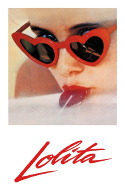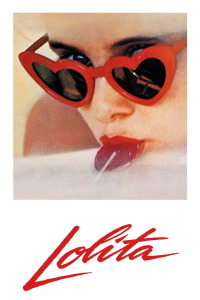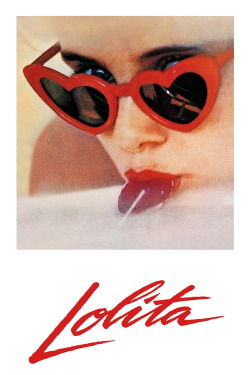
Review of Lolita (1962) by Tiberio S — 18 Jul 2016
So testy for its time, and even now can make the average audience a little uncomfortable! But it speaks truth, as with most Kubrick pictures. I've often said that any Kubrick film is about him and stars him; it's in the camera, he's the voyeur who sees this all. Throughout the early part of the film, a Kubrick fanatic could easily identify all the declarations he's making to solidify himself as a major independent filmmaker. One of Clair Quilty's (Peter Sellers) earliest lines is, "I'm Spartacus, are you here to set the slaves free or something?" Shortly after, he puts on boxing gloves to try and settle the conflict without a gun - Day of the Fight or Killer's Kiss. And then as Humbert (James Mason) takes down Shelly Winters' number, he notes that the last four digits are 1776, declaration of independence, which is what this film is for Kubrick. It most certainly stamps the mark that while this may be sourced from Nabokov, it is most certainly Kubrick's story now, despite the credited writer. Whether he finds this material in the sources he adapts, or adds them in himself, it's a mark Kubrick goes on to use in all his films. I immediately think of the red beetle being crushed by an 18-wheeler in Shining - in the book, Jack drives a red beetle, but the movie is yellow, and the only trace of a red one is seen destroyed. It's a mark of a bolstering ego, one that feels righteous in making these declarations, and I agree with him. Why should we see the pages turning? It should be a personalized interpretation. Stories mean something to the people who read them, and I am far more interested in that personal experience than seeing someone try to simply capture what's written. Did you perceive the book as a pure drama? You won't here, right off the bat Sellers is doing his comic schtick with funny accents and near slapstick getting shot at.
Because of limitations this age of cinema set, Kubrick was restricted to implications regarding taboo matters. Though Kubrick says he would never have made the film if he knew there'd be such restrictions, I say it was a thankful thing because it made the experience more fun. Our imaginations need to do the work in many dark areas that films tend to exploit, and when we're given that opportunity, it usually serves to better the film. At the end of his career, Kubrick would go on to portray one of the most sexually explicit and vivid scenes in Eyes Wide Shut. This works in context because a) the characters are wearing masks, who are they? b) what is really happening here, do men and women really gather this way for a good ol' time? If so, how can I get in? Or maybe they're filming a movie! There's several mystery boxes that lie behind the explicit sexuality, something I don't believe we would've had in Lolita - anything more explicit would've spoiled the fun. I suppose we could've been asking how Lolita feels about all this if we got to see her face in any of the acts, that may have been valid. It's not much though, not like Eyes Wide Shut, whose mystery deepens the story and eventually those questions unfold further into the film; we are not abandoned to our thoughts as though they were invalid imaginings. Kubrick is a genius, pure and simple.
Broad minded, fill her cavities, it was the cherry pie, show you my garden, Camp Climax for Girls!... I'd like to eventually list all of these. Sometimes the innuendos and suggestions are too bold, but they evoke laughter nonetheless. Mona isn't the kind of girl you think she is, she was out till 4am...
In any Kubrick film you can observe the production design and see how it tells the story. After Lolita leaves for camp, Humbert cries in her bedroom, and hanging nearby is a picture of Claire Quilty - no cut to closeup, unnecessary, picture plays a subtle foreshadow, haunting Humbert and the viewer. Kubrick knows how pictures haunt; his photograph of the news vendor saddened at the headline of Roosevelt's death won him tremendous accolade when he was a teenager, capturing the feeling of a nation haunted by a lingering presidential death. In The Shining, he sums his entire film up with a mysterious picture of Jack from another era, raising hundreds more questions than answers to that giant mystery box (or hedge maze). And throughout, pictures of what we know are slaughtered Natives linger around the hotel, possibly the cause of the hauntings themselves. His wife Christiane's paintings have always done great service to filling space significantly in his pictures.
Kubrick claimed to always not know anything about acting, thus he was humble to letting actors explore their craft and bring the most out in their performances. Kubrick demanded the best, and so he'd shoot over and over again until he got the most sincere performance. Note his patience in exploring Humbert's subtleties, his suffering, angst, discomfort with Shelly Winter's advances, trying not to be noticed admiring Lolita. Kubrick allows every little beat to unfold, never cutting unless it's the most choice cut to something like a closeup, or another angle - think of how he does this when Lolita encounters Humbert in his room while he writes about her, feeding him eggs. Most of it is one shot, but then it cuts to her in CU when she talks about ______. He's so sensitive this way, conscious of the effect on viewer's raising suspicions, asking questions. But usually a cut means it's the next scene, preferring to widen out and capture his story in a master, a really quality master with each detail meticulously painted in lighting, design, and staging -- the ultimate mise en scene.
This review of Lolita (1962) was written by Tiberio S on 18 Jul 2016.
Lolita has generally received very positive reviews.
Was this review helpful?