Review of Lincoln (2012) by Tiberio S — 14 Mar 2017
Drawn out and preachy, Lincoln still manages to find captivating dramatic beats amidst known history while steering clear of the kind of graphic violence we've come to know in Spielberg's wartime films. Some parts, like the opening delivery of his Gettysburg Address repeated to him, are far too stagy to be accepted as anything besides too bold a statement.
The screenplay reads wonderfully. The photography looks great. The music is fine. And yet none of it works for me - the assemblage sucks. Music isolated, fine, but with picture, these contrived momentous movements, it just felt too stagey. The words read nice on paper, but performed on camera, again, too theatrical. The laughs are based on small quips, some are nice, like Lincoln's story about "nothing makes a Brit shit quicker than the sight of George Washington," others make for awkward space.
Glorifies reverse discriminatory violence as "brave.".
Lincoln is a figure of glorification, worship, something we get right from the get go. There's no critical examination of his presidency. The Democrats and Confederacy are treated with scorn, their point about Lincoln forcing war is unheard. Even his own party members seek negotiated peace to end the war, but the weight of their argument is not given any strength with gut-wrenching visuals. The film instead justifies his every move and lie by staying focused on him and giving him the floor he demands. It's a classic propagandist piece.
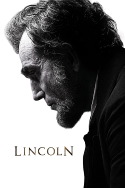
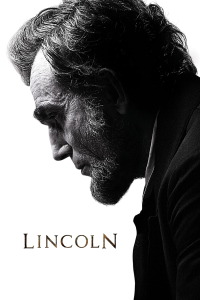
Magnificent profile, slightly angled from behind so as not to have the tacky appearance of a penny, framed against company tents, smoke and harsh flood lights create almost a screen against which Lincoln is photographed sharp but with so little light as to almost be a silhouette. It's iconic, if not slightly annoying in its desperation to move us.
The dream sequence is out of place, inconsistent and not intercut enough into the movie. It tells us no information and does nothing to enhance the story.
Seeing Lincoln talking to his wife naturally in the bedroom is pleasantly awkward, giving him a humanity we never get to see. The way he leans back with his foot up reading, twirling his wife's dress around flirtatiously. They are talking about attempted assassination.
Once Mary reveals the dream is about the amendment to abolish slavery, the dialogue falls to completely unnatural, obvious, annoying. She talks about it as though this is the revelation - I don't know whether to blame performance or writing, maybe a little bit of both.
To call this film Lincoln is pretentious; the amendment to abolish slavery does not reflect the scope of the man. The title of the book is far more suiting, which loses my confidence that Spielberg cares for more than anything besides the marketability of this film. We stay isolated to his view of the political arena, not watching the other side of battle and getting a sense of his responsibility in it.
We know Lincoln from a few photographs and mostly paintings, drawings, cartoonists, etc. Kaminski uses a sharply contrasted lighting to highlight specific features and darken others, like his eyes, creases on the face. His contrast with the elements around him make the moving portrait we always dreamed about. It's just so cool to see a moving Lincoln, and Kaminski had that exact understanding. Most the film is blue and grey, the two sides in opposition, with stark whites and dark shadows, also some firelight.
Tommy Lee Jones' Thaddeus Stevens is the standout performance. Next is James Spader as Bilbo. And then Hal Holbrook as Preston Blair. Shoutout to Michael Stuhlbarg as George Yeaman, charismatic, flavorful, conflicted.
I don't understand the scornful dialogue of Mary with Stevens. What has he done so wrong? He seems quite noble trying to end slavery. It's not given enough context, and just seems cruel and stubborn.
Strong laugh, most inherent humor is around Lincoln's stories and the annoyance they become. It gets preachy, but at least there's some awareness of this. "I don't believe I can bear to hear another one of your stories right now" exclaimed by Edwin Stanton. The shit story. And Seward reacting to Lincoln's seed story, "oh I suppose so... Actually I don't know what you're talking about.".
It is honest in that it's reflective of Spielberg whose using this subject as a mirror for his own authoritative grip over the countries that are his film productions. His struggle, his fight to achieve what he knows is right by any means necessary.
A perfect example of music not meshing well with picture and performance is Williams oboe or clarinet, breaking into string as Stevens gives his "equality" speech, which would've been better served without any music at all. The phoniness as he walks away of opposing senators running up to each other in quarrel is a bit too much. What Stevens has to say is entertaining and it's a good moment tainted with poor add-ons.
Sally Field's melodramatic ranting is some of her weakest work and in this movie.
First scene at theatre is key foreshadow for Lincoln's ultimate demise. It's contextual placement supports my theory of karma and sins that he is going to suffer, immediately after his justification of letting Robert go to war and telling his wife she belongs in the madhouse. Here, people are lit warm in a theater of yellowish gold and red, but that hardly reflects on Lincoln, who is and always will be a ghost here. We know him to be a ghost at the Ford theater here in the year 2012 when this was released, therefore it is our only association of him. That this lighting treats him amongst the dead is a brilliant artistic choice, unnatural, and yet goes unnoticed without taking a closer look.
I like the idea that these political pundits are getting a visit from Lincoln in their drafty cabin at night around a lamp. These cheap bums meeting the president up close and personal. Who doesn't want that? Fulfills a childhood fantasy. And Bilbo's first line is, "well I'll be fucked!".
Coffroth scene is silly, over-the-top, but welcomingly refreshing and entertaining.
They are determined to get every yay and nay across, cleverly handling it by cutting to results via telegraph.
Iconic shot, Lincoln and Tad on a rocking chair as he looks at a book, silhouette lighting through window.
119 to 56, why was there any suspense? The shot of Mary as she counts, then tilts up to her stunned makes no sense at all.
As the Union song plays, Stevens walks home amidst celebration, pure Union-blue as he's separated in white. He walks into a yellow lit home. These single color tones preserve the history.
The war itself becomes a footnote to the final pages. As Lincoln rides through the dead bodies, again I wonder if it'd be better served without music. Stopping on Confederate flag, such a film student thing to do.
Lewis treats silences with such delicacy, he has as much command as an actor as Lincoln did as a president.
The most warm sunlight and full face we see of Lincoln, not looking the way he would on a historical depiction is the carriage ride he takes right before his assassination. We see the most life in him before he dies. He wears a joyful expression.
"The President has been shot at Ford's theater." Horribly done.
Lincoln's preaching at the end with the music is just tacky.
This review of Lincoln (2012) was written by Tiberio S on 14 Mar 2017.
Lincoln has generally received very positive reviews.
Was this review helpful?