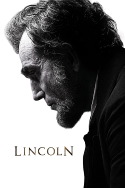
Review of Lincoln (2012) by Jeremy P — 23 Jun 2017
In the early part of my viewing of Steven Spielberg's "Lincoln" I wondered why this movie hadn't been made yet.
As time passes, we naturally understand things more and more, and this two-and-a-half-hour epic comes 147 years after the death of Abraham Lincoln. Still, Lincoln is possibly the most iconic president in the history of the United States of America, so the question remains.
Obviously this movie wouldn't be possible without the book it was based on - "Team of Rivals" by Doris Kearns Goodwin - which was published in 2005, so this exact detailing of Lincoln couldn't have come before that.
Yet it is the most specific cinematic retelling of Lincoln I have ever heard of, and it is being celebrated as such among many film critics and film historians, so the question remains: Why has it taken so long for this to reach audiences?
I wondered this nary a half hour into the movie. But as the minutes passed in the theater I didn't care anymore, because I realized that this movie couldn't have come at a better time than the present.
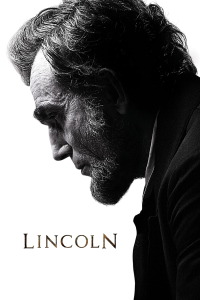
"Lincoln" chronicles the final months of Lincoln's presidency. As the Civil War dwindles to a close, a recently re-elected Lincoln (Daniel-Day Lewis) battles with Congress over an amendment abolishing slavery, as he tries to get the bill passed before the end of his first term.
With slavery a main sticking point on the southern side of the war, many congressmen believe the amendment is an unnecessary risk with what seems like an imminent, peaceful end to the fighting. Everyone wants the war to end, and no one wants to compromise the possibility of peace. However, Lincoln envisions a new kind of peace. He sees the waning months of the war as an opportunity to not only reunite the country but to thrust it into a new age: an age without slavery.
So he sets out to rally enough votes in the House of Representatives (the bill had already been voted through by the Senate) for the amendment to pass. It is not an easy task.
The Republicans, Lincoln's party, control the majority in the House but only by a small margin and not the two-thirds it would take to pass the bill on party lines alone. So, he needs representatives from across the aisle, Democrats, to deviate from their party and support the bill.
His methods of getting these swing votes are not always ethical - he employs a three-man team to do his dirty work - but they are often comical. Others are awe-inspiring.
Lincoln attempts to work within the confines of the governmental establishment, trying to persuade men on humanitarian reasoning alone. When that doesn't work, though, he does not hesitate to wield his presidency as the ultimate trump card. And as the towering, convincing figure that he is, this often works.
He does what he must to get done what he believes in his soul - and what time has proven - to be the right thing.
In a way, "Lincoln" is a race-against-the-clock thriller, as the president tries to accomplish abolition. The South is all but beaten, and the war will eventually end. And once peace is achieved, any hopes of abolishing slavery may dissolve as Americans try to move on from that hot-button issue and the bloodshed that had gripped the country for four years.
Facing off against Lincoln's pursuit is an endless number of politicians set in their ways, rigid to the idea of freed slaves. There are also Lincoln's own internal stresses as a husband and father of two children, one of which (Joseph Gordon-Levitt) wants to enlist and fight in the war. While history may have elevated Lincoln, he is still a man, and this movie paints him as such.
This is a fine film and one that will go down as one of Spielberg's greatest achievements. It's also a master class in acting, with so many great actors - Day-Lewis, Sally Field, Tommy Lee Jones, Gordon-Levitt, Jackie Earle Haley, Hal Holbrook, James Spader - all giving tremendous performances. But the movie's greatest quality is the time in which has been brought to audiences.
Just as the House floor (and country) was split in two in 1865, so too is ours in 2012. Politicians rigidly war over differing beliefs now, just as they did then. Only the issues have changed.
Watching "Lincoln," and knowing the side that would historically and rightfully prevail, I amazed at those individuals that fervently opposed the idea of abolition, even to Lincoln's face.
I wonder how history will frame the outcome of our current political and economic struggles, which side will prevail and which will be historically regarded as right. I hope, for our sake, they are one in the same.
All that said, "Lincoln" is an engrossing historical experience and a humbling one as well. When placed in the present context, it's also educational and inspiring. The country must uphold hope that there are individuals out there - politicians and otherwise - who so earnestly fight for causes that are not in their best interests but the best interests of the people.
I could've sat there and watched "Lincoln" for another two hours. Some, however, weren't as heartened by the movie.
As I left the theater, I overheard one man say "I understand why some people said they didn't like it. It's too long.".
I'm not sure what this man was expecting when he sat down to watch a movie about one of the most influential American presidents ever fighting to accomplish one of the single-greatest achievements in the history of this country, but I thought the running time to be well within the requirements established by the subject matter.
All men are created equal, yes, but I'm glad, as "Lincoln" helps illustrate, that there have been and are better men out there.
This review of Lincoln (2012) was written by Jeremy P on 23 Jun 2017.
Lincoln has generally received very positive reviews.
Was this review helpful?