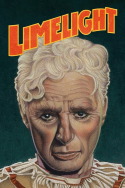
Review of Limelight (1952) by Michael M — 22 Nov 2010
The Tragedy of Age.
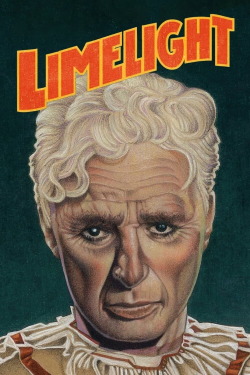
This was not Charlie Chaplin's last film, but it feels as though it was intended to be. This is what everyone says about the movie, but that's because it's true. Chaplin was one of the greatest box-office draws in the history of cinema, but his only movie since [i]The Great Dictator[/i] was a flop. [i]The Great Dictator[/i] was twelve years earlier; [i]Monsieur Verdoux[/i] was five. And, indeed, another twenty years passed before Chaplin was able to see this film screened before most American audiences. Chaplin won his only competitive Oscar for it--for Best Original Score. (At that, there's no knowing how much it has to do with the confusion over the withdrawn nomination for [i]The Godfather[/i].) Chaplin swore the film wasn't autobiographical. It wasn't about his father, either, he said. However, it doesn't take much knowledge about the Chaplin clan to understand why people have thought for more than half a century that it was.
It is 1910. Calvero (Chaplin) was once the greatest music hall star of them all, but now, he's a drunken has-been struggling to make rent. And then he smells gas coming from behind the locked door of the lovely Tereza (Claire Bloom). He breaks the door down and saves her life, but she weeps over it. She wanted to die, because she was a dancer but now, after a bout of rheumatic fever, cannot even walk. Except the doctor (Wheeler Dryden) says she never actually had rheumatic fever. Her paralysis is psychosomatic. And, indeed, Calvero gets her talking, and he gets her walking, and he gets her dancing. Her career is on its way up. His has nowhere further down to go. He imagines great performances in his head, but when he actually takes the stage, people walk out on him. He cannot even stay on the bill through a solid week. He is box-office poison, so much so that he can't even get a job under his own name. And she is willing to marry him, which he's not at all sure is a good idea.
I really do think the movie could have stood trimming in a few places. Honestly, I really am willing to take their word for it that Tereza is a great dancer. I'm sure most of us are. Honestly, most of the story having to do with her dancing is just trimming. It's important that she's good at it. It's important that she gets back to it with help from Calvero. Without those two facts, we don't have a story. It's also important that there be a younger man who is another factor in Calvero's worries about the whole thing. (More on that anon.) However, I'm not sure most of what we know about their relationship matters. I'm wondering if perhaps Chaplin himself was certain he would never make a movie again and wanted to get as much in as possible. It would explain a great deal about the movie as a whole, I think.
Another thing worth noting, however, is exactly who played that young man in love with Tereza. She tells Calvero the story of their relationship while she is convalescing, and Calvero rightly deduces that she had herself fallen in love with the man, even though she didn't even really know him. He is a talented young composer; she lost her job by lying so she could give him sixpence. (Well, it was 1910; sixpence went further.) And when, after regaining use of her legs, she goes in for her audition, she discovers that she is to dance in front of the composer for the production. The composer she loved. Neville, played by Sydney Chaplin. In a very real sense, Neville is the next generation of artist. Oh, Sydney was never as famous as his father. Well, who is? He wasn't even as famous as his half-sister Geraldine. However, Sydney and Geraldine could get work--actually, she's in this, too, in the first few minutes--and Charlie couldn't even get back into the country after going to the UK to promote this movie.
It's possibly worth noting that this film is most famous for one sequence only a few minutes long. This marks the only time in their careers that Chaplin played opposite Buster Keaton, considered probably his greatest rival from the silent era. Chaplin had invested wisely. Probably had some pretty good contracts, too, if you think about that. In short, wasn't hurting for money. It should be noted, though, that Keaton himself thought he was happier than Chaplin. All concerned also flatly deny the rumour that Chaplin trimmed Keaton's performance so his own looked better. There is, if nothing else, the inherent ludicrousness of a secondary character's being allowed to outshine the Last Great Comeback of the main character. And there is that, apparently, Chaplin allowed Keaton to improvise more than he ever allowed anyone in his movies to any other time. The only person who didn't think Chaplin was a perfect gentleman about it was Keaton's business partner, who may have just said it for the publicity or to make Keaton look better at Chaplin's expense.
This review of Limelight (1952) was written by Michael M on 22 Nov 2010.
Limelight has generally received very positive reviews.
Was this review helpful?