Review of Like Father, Like Son (2013) by Harry W — 27 Apr 2014
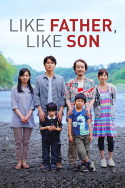
Since Like Father, Like Son presented an emotionally complex story and is a piece of Japanese cinema, it sounded like a versatile film which was worth checking out.
I was glad I did that. A film containing a story of a nature similar to Like Father, Like Son can easily be done wrong since the plot can be very emotionally manipulative if done wrong, and if the story attempts to fit too many characters into its narrative then its focus can become easily scattered. Luckily enough, director Hirokazu Kore-eda's handling of the subject matter ensures that all the importance of the story remains intact. While the consistently slow pace of Like Father, Like Son may leave some viewers feeling dull, the audiences that can appreciate the natural pace of its movement and its atmosphere will truly feel the full effect of Like Father, Like Son. Admittedly even I felt it was a bit slow at times and that there were a few moments where not much happened, but eventually I grew settled and found that the mood of the tale was just right. It established the emotional tension of the atmosphere and its focus on the characters, and from there it just progressed very well.
Like Father, Like Son is a touching and complex story, and it is handled excellently by director Hirokazu Kore-eda's talents for maintaining the importance of the story consistently from start to finish. The story is told perfectly, a tale of family which is fractured by the sudden realisation of a lack of biological relationship as well as revealing the nature of a father's relationship with the boy he presumed to be his son. The situations that the story encounters establishes a complicated main character who faces trouble when the world around him changes. The thing that makes it so strong and complicated is Hirokazu Kore-eda's script and the way that he handles it. It creates a lot of thoughtful concepts for the characters to discuss and characterises the main character Nonomiya Ryota very well, making him the source of interest in the story. It is interesting to see everything unfold around him because of who he is, what he believes and what his culture dictates that he must do. And he isn't always likable or easy to sympathise for. The story in Like Father, Like Son is largely focused on how he develops as a person as he must come to terms with the values of family as well as loss and appreciation, and the way that he gradually develops over the course of the 120 minute running time is excellent.
The mood of Like Father, Like Son is constantly enhanced by the addition of a strong musical score which is gentle and slightly subtle, hitting the appropriate emotional mood for the scene dead on every time. It reminds us when things are facing a new kind of light and becoming optimistic, so the musical score of Like Father, Like Son makes it easier for viewers to tune themselves into the mood of the film well enough. There are many beneficial technical qualities in Like Father, Like Son such as the fine cinematography which moves smoothly along the plane as it captures the faces of its actors and all of the appealing Japanese scenery. Like Father, Like Son is a nice and gentle visual experience and depicts Japanese culture and society without resorting to excessive stereotypes.
And one of the most important aspects of Like Father, Like Son's success as a piece of dramatic cinematic entertainment is the dedicated efforts of every cast member.
Of every cast member in Like Father, Like Son, none is more effective than lead actor Masaharu Fukuyama. As the entire story revolves around him as he comes to term with the real relationship he shared with the young boy he presumed to be his son for 6 years, he reveals elements of the character Nonomiya Ryota which make him a less than sympathetic figure. It is hard to know what the character is facing because few viewers will actually know of what it is to realise that your son is not actually yours, but in his wisdom as an actor Masaharu Fukuyama steps into the role easily and conveys the complicated nature of the character with his natural acting talents. He consistently sticks to his values throughout the film without ever breaking character until a certain point where he comes to the realisation of what family actually is. The transition he makes is terrific because over the course of the running time in Like Father, Like Son, viewers are waiting for him to realise just what he is throwing away for the sake of his pride. Masaharu Fukuyama's characterisation of Nonomiya Ryota is constantly strong and benefits from his strength for smooth line delivery and tense facial emotions, so he works the lead role in Like Father, Like Son perfectly, and his skill at interacting with the surrounding cast members and child actors is impressive.
Lily Franky also gives a great performance. Characterising Saiki Yudai as a man very different to Nonomiya Ryota, Lily Franky's performance is a lot more of a friendly one and when you contrast the two characters and their approaches to fatherhood, it is easy to see just how complicated being a father is because there is no single right way to do it. And the way that he interacts with the juvenile cast members makes the mood of the story a lot lighter and adds a friendly tone to it when it is naturally so dramatic. Lily Franky is a genial presence in Like Father, Like Son, and it lightens the mood of things without degrading it below its natural dramatic level.
Yoko Maki and Machiko Ono also give fine supporting efforts as the wives and mothers in the story who face the effects of Nonomiya's decisions from both sides of the relationships between the children, and as the reveals more about them and how they feel about the situations, a lot of things become more clear to viewers. Both actresses deal with the material in Like Father, Like Son very well.
And the performances of the young Keita Nonomiya and Shogen Hwang are full of a lot of sweet childish charm, and they deal with the material in the script very realistically and make the entire experience feel all the more natural. They interact with the adult cast members in the film very well.
So despite its consistently slow pace and the fact that audiences not familiar with Japanese culture may not understand every little aspect of the story, Like Father, Like Son is a touching triumph of family drama which truthfully examines the nature of fatherhood while facing a complicated situations, and it tackles familiar themes in an all new way with serious heart and a strong script which makes it another addition to director Hirokazu Kore-eda's long string of successful dramati films which tackle the complicated nature of being a child in contemporary society.
This review of Like Father, Like Son (2013) was written by Harry W on 27 Apr 2014.
Like Father, Like Son has generally received very positive reviews.
Was this review helpful?