Review of Life Is Beautiful (1997) by Gregory G — 01 Mar 2014
Roberto Benigni's acclaimed fable reduces the events of the Holocaust into a life-affirming, triumph of the human spirit comedy. The movie is calculated to make audiences weep but its earnestness becomes embarrassingly saccharine.
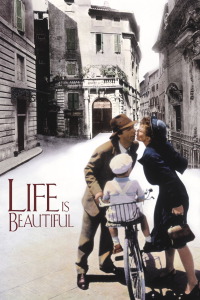
Set at the outset of World War II, the film begins promisingly as an Italian Jew, Guido (Benigni), works as a waiter in fascist Italy with dreams of opening a bookstore and wooing over a schoolteacher (Nicoletta Braschi).
This segment combines slapstick elements of Chaplin and Keaton as Benigni flouts the Fascist authority. There is real charm and light humor as Guido wins over the schoolteacher, but the film's comic rhythms are uneven.
The farcical structure eventually descends into sentimental tragedy. Five years later, Guido and his young son are deported to a concentration camp so Guido concocts a plan to convince his son that the camp is a game where he accumulates points to win a tank.
The conception is incredibly naive. Guido's attempts to shield his son from the harsh reality of the Holocaust result in a movie that minimizes the everyday horrors that happened. Benigni expects us to believe children are better off when they don't know what really goes on in the world.
Unintentionally, it demeans what Anne Frank represents. You would think, feeling terrified, just one frustrated prisoner would object to Guido's interpretation that the camp is a game. Is a Holocaust movie that supplies reassuring messages really necessary? Inexplicably the movie was a surprise hit.
It won the Grand Prix at the Cannes Film Festival and Oscars for Best Actor (Benigni), Nicola Piovani's sappy score, and Best Foreign Language Film. In Italian with English subtitles.
This review of Life Is Beautiful (1997) was written by Gregory G on 01 Mar 2014.
Life Is Beautiful has generally received very positive reviews.
Was this review helpful?