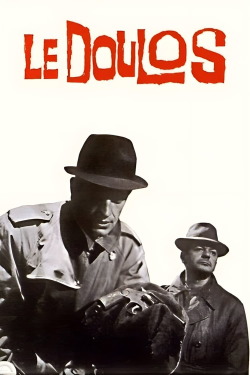
Review of Le Doulos (1962) by Cael M — 15 Aug 2013
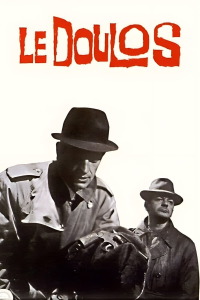
Le Doulos is my second Jean-Pierre Melville film after Le Samourai, and although it's nowhere near the same level of quality as Le Samourai (which is among my favorite films of all time), I'm still discovering the rest of his career and the way things are looking, I can tell that his career is certainly something special. "Le doulos" has a double meaning, referring to both a kind of hat and a police informant, and the film follows both meanings through the intricate plot. What I can tell based on a first viewing of this film is that the plot was quite overwhelming, and it's certainly a complex film that I found somewhat hard to follow at times, but I never found myself looking way. If you're a fan of film noir, this film is an essential viewing, and there's no doubt that his trademark style is utilized, but if you're planning on watching this film, just know that it requires full attention if you really want to get down every plot point. Even missing a few plot points may frustrate you because the plot never slows down when it comes to twists and turns. I went into this film with very high expectations and I wasn't disappointed, but I didn't quite catch everything, so I may have to re-visit this film later. For now, however, Le Doulos is still one entertaining and fascinating noir with depth uncommonly found in the rest of the genre.
Le Doulos opens up by introducing us to a criminal known as Maurice Faugel (Serge Reggiani) who had just been released from prison when he decides to kill his friend Gilbert Varnone (Rene Lefevre), stealing his jewels of a presumably recent heist, and then proceeds to commit a robbery and tells his friend Silien (Jean-Paul Belmondo) about his plans. Silien is rumored to be a police informant, and Maurice may have possibly risked his life and landed himself in jail again by telling him his plans. I'll stop right there because it's never fun to have a plot spoiled for you, especially when it's backed up by intricate plot twists and exploration of deep themes including loyalty and friendship. One of the main highlights of this film is the opening, and right from the opening credits and the opening scene afterwards that sets up the plot, I knew I was in for a special ride. The opening credits shows Maurice walking with his trench coat and his fedora in the dark, shady streets and tunnels, with perfectly matching jazz music. It's most likely some sort of homage to American noirs considering Jean-Pierre Melville was a lover of American culture and cinema, even going as far as changing his last name to his role model's last name, Herman Melville.
What makes directors like Jean-Pierre Melville when it comes to style so special is his attention to detail and his use of lighting and music, with simple scenes like a man walking through the rough streets in the shadows being very engaging and exciting. He further shows his attention to detail with the opening scene, depicting the murder of Gilbert by Maurice. Those are the kinds of scenes where even the smallest, least important details and sounds can build suspense and tension, and it truly is a talent for a director to achieve something like that. The cinematography and camera work is truly stunning stuff, and those alone make the film worth watching. There's one brutal scene a few minutes into the movie, and by today's standards, the scene might not quite have the same impact, but I oddly still found it disturbing and quite hard to watch. The scene shows Silien tying a woman, Therese (Monique Hennessy), often slapping and hitting her brutally, but I found it to be a fitting scene for such a cynical noir. What makes these scenes larger than life is not only the insanely great atmosphere built up by Melville, but the characters also contribute a whole lot. Serge Reggiani and Jean-Paul Belmondo are brilliant here precisely because they fit and embody their role perfectly, nailing down the dark, mysterious personality that keeps you guessing for the whole time. Unfortunately, Reggiani's performance does get overshadowed by Belmondo at times, but that's not to say that he wasn't great. Practically everyone here delivers something memorable, and the performances are the best of their kind here.
My biggest problem is the plot, which is very complicated, and as I said is quite overwhelming for a first viewing. One of the main reasons I was a little perplexed by the plot was the fact that I didn't quite expect anything like it, but one of the main reasons I admired the plot was the fact that it constantly had you thinking. There are barely moments where you aren't guessing what happens next, given the constant paranoia of deception and manipulation, often leading to wrong assumptions. There are plenty of backstabbings of characters and framing for crimes that characters never committed, as well as the exploration of fascinating themes of loyalty and betrayal. There is also neither an exact hero nor villain, leaving the audience to grasp for a certain character or assume both Silien and Maurice as anti-heroes. Dialogue is the certainly the most important part of this plot, and even missing a few lines or actions could lead to confusion and frustration. It's important to not have any real distractions during the film or you may have an unpleasant experience. I was honestly surprised by how complex and deep Melville decided to make his characters, while still paying strong attention to the gritty, cynical, and dark atmosphere, and both mesh and pay off well. Many elements are ambiguous, and the explosive ending is made all the better by the fact that only at the end do characters' motivations become more clear and the viewer must re-evaluate prior scenes, and as a result you can appreciate the film more.
Le Doulos is one of those films that get better by the viewing, and I certainly have to revisit this film at one point or another because I can't say I fully understood everything. However, I want to fully understand everything because this was such a rewarding experience, and I can re-watch it now knowing how everything is going to play out, enabling myself to evaluate the film better. It certainly is a complex film, but knowing that without knowing much of the plot going in makes for a better experience. It's an essential, great noir that should be seen by those that have no trouble following a complex plot that keeps you guessing, but in the best way possible. Even if you don't find yourself liking the experience, it's very hard not to like Melville's utilization of cinematography in order to build an atmosphere, and with both Le Samourai and this (considering Le Doulos is only my second film by him), it's clear that style is certainly an important aspect of his. However, for now, Le Doulos is still a one-of-a-kind, gritty, and complex noir that can't be missed, especially by those who love equal attention to both style and substance.
This review of Le Doulos (1962) was written by Cael M on 15 Aug 2013.
Le Doulos has generally received very positive reviews.
Was this review helpful?