Review of Le Doulos (1962) by Dax D — 02 May 2014
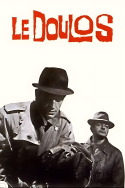
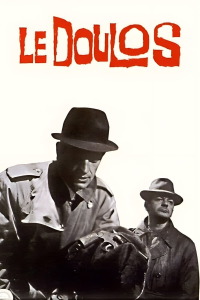
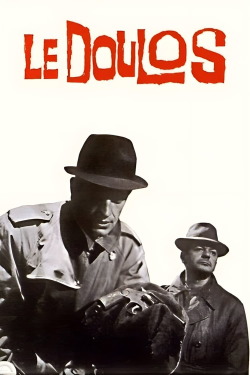
Le Doulos (The Informant) (Jean-Pierre Melville, 1962).
I have been under the impression for years that I can't stand Jean-Luc Godard. Every movie of his I've tried to watch I've hated. Now, however, I have a possible alternate theory to work with (probably a good thing, as I have both Vivre sa Vie and Contempt waiting here for me to watch them)-maybe I just can't stand Jean-Paul Belmondo. Because now I've seen him in a movie by another filmmaker, Jean-Pierre Melville, whom I like a whole heck of a lot better than I do Godard, and Belmondo-the male lead-struck me as the weakest link in this particular chain.
We open with Maurice (Army of Shadows' Serge Reggiani), a burglar, recently out of prison, going to see one of his old contacts, Nuttheccio (Belle de Jour's Michel Piccioli). By the time their short meeting is over, Maurice has killed Nuttheccio and stolen a cache of jewels he was in the process of getting ready for fencing. Disturbed while cleaning up, Maurice escapes out the window and buries the ill-gotten loot at the base of a nearby lamppost, intending to come back for it later. Buried jewels do not allow one to buy food, however, and thus Maurice gets back into the game, planning a robbery with Silien (Belmondo) and Gilbert (Le Million's René Lefèvre). Maurice learns that Silien is the titular informant; his lady Therese (Two Men in Manhattan's Monique Hennessy in her final screen appearance) discovered same while she was casing the joint the trio are robbing, but Maurice isn't going to let a little thing like that get in the way of a good heist. That turns out to be a bad idea, and Murphy's law ensues for the entire crew.
Much of my admittedly casual reading about Melville has portrayed him as obsessed with American films, especially noir, and Le Doulos reinforces that in my head. This is a movie straight out of the Tourneur stable, though perhaps not as cynical as, say, Nick Carter, Master Detective or Out of the Past. (One is tempted to postulate that this is because Melville never had Val Lewton breathing down his neck.) As a noir, it's serviceable, and Melville has studied the form and internalized it pretty well. But while noir is a good complement to Melville's work, it's not what he does best; noir, by definition, is missing even the suggestion of light at the end of the tunnel that drives the central characters in Melville's earlier flicks (think Bob le Flambeur here). Actually, I'll qualify that. In a good noir, the characters believe they're seeing a light at the end of the tunnel somewhere; part of the fun is that the director knows that light doesn't really exist, and doesn't conceal that fact from the audience. (Two words: Sunset Blvd.) Melville, bless his black little heart, is too bloody optimistic to make a film with as much nihilism as Le Doulos commands.
None of this should be construed as me saying "don't watch this." Obviously, Belmondo fans will eat it up, but even for those of us who don't fall on that side of the coin, there are tasty performances by some of the rest of the cast. Lefèvre, especially, is a great deal of fun here. It's an intriguing experiment, if ultimately a failed one. For established Melville fans, but once you've ingested a few of his better-known films (start with Army of Shadows), you'll circle round to this one. ***.
This review of Le Doulos (1962) was written by Dax D on 02 May 2014.
Le Doulos has generally received very positive reviews.
Was this review helpful?