Review of Late Spring (1949) by Edith N — 29 Mar 2011
Where Duty Lies.
When I was a junior in college, I attended a school which doesn't have classes in the traditional sense. It has "programs." Instead of signing up for a math class, a history class, and a science class, you sign up for a single sixteen-credit course. That year, about half the girls in my dorm signed up for a program called Alternative Calendars. Whatever they thought the program was going to teach them, it didn't. This I know, because they spent a heck of a lot of time complaining to me that they didn't know why they were studying anything they were studying. They went on not one but two trips to the Makah Indian Reservation up in Neah Bay, apparently to discuss the whaling the Makah had just gotten permission to resume. At any rate, they read something like three books about Japanese women in arranged marriages, and they were done. So I won't be suggesting to Cara that she should watch this.
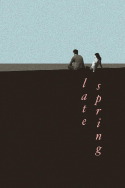
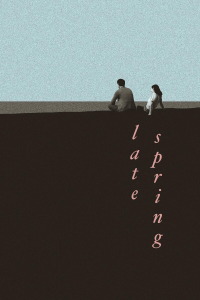
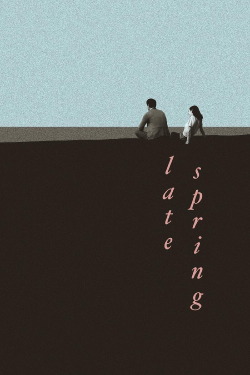
Because Noriko Sumiya (Setsuko Hara) doesn't much want to get married. She's content as she is, taking care of her widowed father, Shukichi (Chishû Ryû). The war ended just a few short years before, and they're finally getting their lives back together. There is finally enough food. Noriko and her father lead a quiet life together, and that's enough for both of them. But his sister, Masa Taguchi (Haruko Sugimura), is of the opinion that now is the time for Noriko to get married. She's not getting any younger, after all. What's more, his brother, Onodera (Masao Mishima), has remarried after himself being widowed, which Noriko finds wrong. But Masa finally prevails on Noriko to let Masa fix her up with someone. Noriko is only so inclined, but she goes along with it for the sake of family peace. And then her father tells her that he will himself be remarrying, so Noriko must marry in order to have a home for herself. Only Shukichi doesn't really want to, doesn't really want Noriko to go.
Really, you'd think it would be in Japan's best interests to have a woman or two who wasn't interested in marriage. After all, the number of eligible men in Japan was reduced by quite a lot in 1949. Women like Noriko, women willing to spend their lives taking care of their elders, were helpful in a Japan so devastated. (Remember that, at this point, Kurosawa was making gritty films like [i]Drunken Angel[/i]. There's also that one with the prostitutes, the name of which I cannot currently remember.) The life the Somiya family leads is relatively peaceful. They seem to have gotten much of their own back since the war. Somiya is able to work on translations in the peace of his own home, which is in pretty good shape. They are happy until they are led to believe that they aren't, basically. Having a Japanese woman of Noriko's age who is content being single is better than having her unhappily married while another woman is single against her will, don't you think?
But no. Masa is trying to make things as they were before the war, and that simply isn't possible. She is upset that a bride ate heartily at her wedding feast, and she will not accept the explanation that it's hard for people to say no to food now. (She is also clearly upset that the bride was wearing lipstick.) When Noriko accepts the arrangement and gets married, she is not wearing Western clothing. Indeed, she is willing to accept an arranged marriage, something which was falling off even before the war. Then again, since she has no interest in getting married in the first place, I suppose that's the only kind of marriage she's likely to have. And the thing is, that's just another shape of her duty. She likes the duty of taking care of her father. Filial piety is not quite as enshrined in Japan as in China, but it's still a big thing. It also seems to be what makes both of them happy; father and daughter genuinely like each other. But her staying in his house until he dies isn't what used to be normal.
And through all of it, there is the slow Ozu style. Ozu did not use as many cuts as many other directors. He did not tend to use close-ups. Events unfold in their own time, as much character study as story. Father and daughter are doing what each think is best for the other, which means both father and daughter are miserable. Ozu lets this develop. Slowly, yes, and with little more than talk. We learn more about Masa by the fact that she picks up a change purse at a shrine and keeps it because "it is a good omen" than by much of anything else about her. She says, yes, yes, she will turn it in, but so far as we know, she never does. She arranges events to her own tastes, but Ozu does not make her a villain. There are no villains here. There are only people who are living their lives the way people always have. There are no great adventures here. Most of what happened in the war is in a past as distant as the days when their city was called Edo.
This review of Late Spring (1949) was written by Edith N on 29 Mar 2011.
Late Spring has generally received very positive reviews.
Was this review helpful?