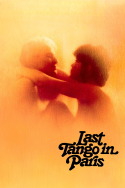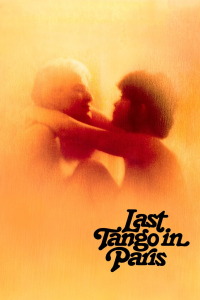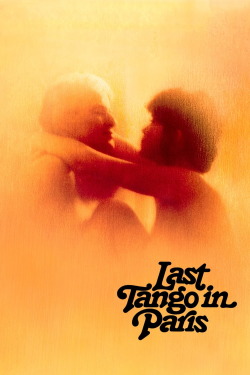
Review of Last Tango in Paris (1972) by Jake R — 13 Jul 2008
Perhaps modern cynicism over the much-banned 'explicitness' of the film has clouded many people's initial expectancy of it as something of an uninteresting, ordinary drama spiced up with some raunchy sex scenes. But watching 'Last Tango In Paris' without any previous prejudices or criticism simply as cinema and it becomes something else. Aside from the subplot parodying (or attemtping to parody) the pretentious ambitiousness of wannabe filmmakers, this is a penetrating psychological drama examining not only sex and love but life itself.
Marlon Brando gives one of his best performances, drawing on his own life to imbue Paul with a genuine sense of confusion and misery, mimicking his own disillusionment with his own life. This is also probably Brando's most unusual role, given that his character seems to fit into the atmosphere of pretensious 1970s European culture more comfortably than than Jeanne. As for Schneider, she gives a performance almost as intense as Brando's, detailing a character more complex than Paul. She masterly conveys the uncertainty and growing sadness as Jeanne discovers the man of her dreams isn't Paul and ultimately has set herself up for a confrontation her naivety has caused. Schneider also seems to suffer the most out of the entire production, as her breakdowns and agonising screams to end it all appear painfully real.
Of course, this is all director Bernardo Bertolucci's craft, with the basic premise itself coming from his own sexual fantasies. But instead of making a voyeuristic drama, he has created a complex essay on the nature of human relationships. The examination of love and its connection, or disconnection, with sex are given a sensitive and passionate treatment, going so far as to portray sex itself as something that can be positive, rather than the cliched stereotypes of it either being negative, lustful or rapacious (though all of those colour the physical conduct as well.).
With a lush, soulful score by Gato Barbieri and gorgeous cinematography by the legendary Vittorio Storaro, it's a wonder to appreciate visually, making the whole affair seem dreamy and to replicate its damaged, sorrowful state in the light and locations around the two lovers. This is not just an 'art film', but a cool and delicately handled study in humanity and the nature of love and life.
This review of Last Tango in Paris (1972) was written by Jake R on 13 Jul 2008.
Last Tango in Paris has generally received positive reviews.
Was this review helpful?