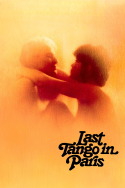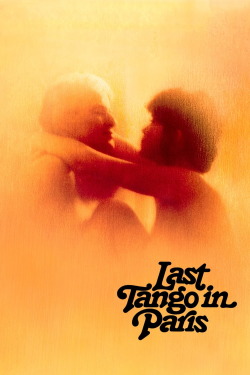
Review of Last Tango in Paris (1972) by Ian T — 08 Sep 2008
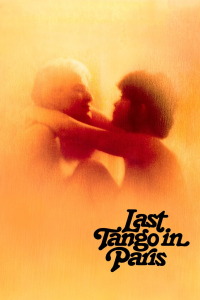
It has been 35 years since this film was released and it still contains every raw piece of itself: the acting, the sex, the direction, Paris, and yes, butter. We are inclined, as humans, to be slightly curious about a film that has garnered such rejection- and objection- for its brutally honest display of a quite normal human function. In American society, at least, it is just not acceptable to see a film where two characters cannot communicate through diction, but only angry passion.
"Last Tango in Paris" is a wonderful example of Bertolucci's style. While I prefer the cinephile-sexual nature of his 2004 masterpiece, something is to be said of his abilities to craft such an interestingly debateable film so long ago. While nearly everyone concludes that this film belongs to Marlon Brando, I personally felt a stronger connection to Maria Schneider. We never fully come to know or understand either character, nor do they, but there is still an emotional intimacy attached to nearly every quiet scene of dialogue. Schneider's Jeanne doesn't fully understand, at their initial physical encounter, why Brando's Paul is so violent with her; still, she accepts his needs for her body.
In this film, sex fulfills two character's needs, but those needs never overlap. Paul is bitter and angry at his wife's suicide, but also at himself for not really having a life outside of the cheap hotel she ran. Jeanne is fascinated with the nature of Paul's suffering, and though he refuses to personally know her, she feels connected through their intercourse. On a personal level, I did not find the sex to be erotic or visually stimulating, but purely circumstantial and, almost, necessary. As far as "the butter scene" is concerned, Paul was testing Jeanne's unofficial commitment to their imaginary relationship knowing that, if she endured it, perhaps he really had found someone to help put his life back together.
Bertolucci does not end the film resolutely, necessarily, but allows desperation and uncertainty to trump possibility and hopeful passion. We understand, by the film's end, that everything has happened exactly as it should have. Right? Wrong? Crude? Banal? Immoral?... Unimportant!
Friends, just as art has the potential to change people's lives, it can certainly make them equally uncomfortable. Each and every cinematic experience simply requires of its audience an open and unbiased mind, ready to experience the prepared journey. Each of us, then, reflects on the filmmaker's intent and must consider what was MEANT to be said, then what we think. In the case of "Last Tango," Bertolucci makes painful acclaimations at the possibilities of a detached, yet intimately torrid relationship. Two people, both infused in a sexual liaison they don't fully understand, but cannot- would not- be anywhere else in the world.
That is the rudimentary basis of filmmaking.
This review of Last Tango in Paris (1972) was written by Ian T on 08 Sep 2008.
Last Tango in Paris has generally received positive reviews.
Was this review helpful?