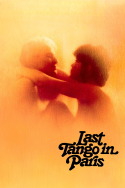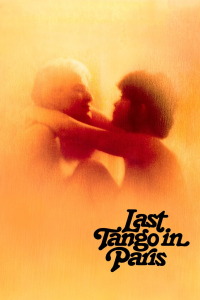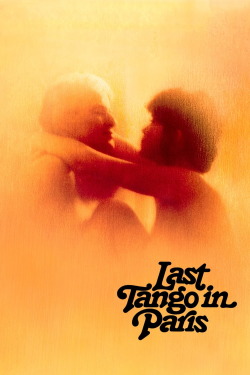
Review of Last Tango in Paris (1972) by Leonardo - Malacay - S — 07 Feb 2009
Like a dream or a sexual fantasy, Bernardo Bertolucci's historically scandalous drama exists so resolutely on the level of emotion that the only actor living at the time who could've played the lead was Marlon Brando. No one else was so immediate, or asserted such vulnerable honesty and compulsion. This grievous tragedy is set in the everyday world of Paris, which is out of focus to Brando's character, whose heed is preoccupied by his continuous sorrow. Maria Schneider's Jeanne happens into his life, and he uses her presence as a receiver of his suffering. He forces himself on her and then tells her that they will continue meeting there, in the forsaken apartment, and she concedes. From her naive perspective, why not? One of the several things Bertolucci's story happens upon, capricious as it seems, is how one person, who may be uncommitted and indifferent, nevertheless can wind up of pivotal significance to somebody else. The overall film's narrative strength is the destructive disproportion between Brando's longing and Schneider's virtually inattentive partaking in it, where through Brando's impulse for them both to remain anonymous he seems the aloof one and she the bewildered one provoked to try to understand him. Their antithesis creates more dramaturgical force than if both were inflamed with romantic ardor.
Another inviting view of the premise is that their rendezvouses in the apartment have an irreducible primitive force, not a connection of two social identities. It's like a cleansing of the outside world from their systems. Yet the man and the girl inexorably do learn about each other. What began as thoroughly fleshly and somatic sex grows into a more complicated relationship as if to harass him. He's imploded with grief since his wife inexplicably committed suicide. We are never given a reason, but by the end of the movie we have some bleak hints. The girl is young, fully aware of her allure and the peak of her feminine assets, and is going to marry a young and seriously annoying filmmaker. A camera crew follows them around when they're together, and she's unsure if he's more passionate about her or his movie.
The familiarity of her life has prepared her to badly want the substitute canvas exacted for her by Brando. She doesn't know anything about him, but when he has sex with her it is nothing but real. There is a life in that empty room that her fiance, with all of his French-born cinema verite, is probably incapable of imagining.
She finds it difficult, too, because she hasn't lived or lost enough to know yet what a hard luck story the world is. Schneider doesn't play her role so much as she emanates it. Actually, in this film's case, it's hard to see whether or not she's a good actress, but Bertolucci directs her as a character who after all doesn't grasp the story she finds herself in, because what she does at the end has to seem beyond her grasp. However, it's also beyond the spectator's. The purely emotional existence of the movie flies a bit far off the hinges in that last scene.
Overall, what I admire about this erotic European work isn't so much the story but how it's visually told. The look and feel are so evocative, atmospheric and phantasmally antiquated. Gato Barbieri's swollen jazz score comes very close to disconnecting me, stumbling into any given few seconds of a scene to shatter one's absorption in the story in a self-conscious attempt to contrast what is happening or what just happened, but Vittorio Storaro's slow, evocative tracking shots, the expressive mise-en-scene, the phantasmally antiquated sets, even the elderly film stock, compose the technical makings of a masterpiece.
Brando, who can be the most mannered of actors, is here often affectless. He talks, he observes, he states things. He allows himself bursts of anger and that remarkable outpouring of grief, and then at the end he is wonderful in the way he lets all of the air out of Paul's character by turning commonplace with the speech where he says he likes her. The moment is wonderful because it releases the tension, it shows what was happening in that apartment, and we can feel the difference when it stops.
Confronted by that level, our adjustments vary. Some hide and disregard it, some try to ignore it via transient escapes, some are strong enough to face it, but some turn to the most primal proclivities of the body. Without the mind to brace troubles, they switch on the sexual appliances, which can usually be trsuted to work.
The film is not great. The filmmaker fiance is a cheesy lampoon that only halts the action and tries our patience. Jean-Pierre Leaud performs not like a movie director, but like a musical theater student playing one. His scenes feel affected and contrived, particularly when he finds himself in the apartment.
But what does the movie mean? No measure of dissection could exact a level-headed point, because there is a level of the soul that's apart from reason or description. Perhaps if it were not so abstract, the Italian Supreme Court wouldn't have sentenced all copies to be destroyed, and Bertolucci wouldn't have been deprived of voting rights for five years. But on the other hand, there are few films that are this coherent when trying to portray the overpowering of unadulterated feeling.
This review of Last Tango in Paris (1972) was written by Leonardo - Malacay - S on 07 Feb 2009.
Last Tango in Paris has generally received positive reviews.
Was this review helpful?