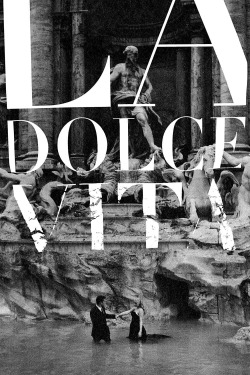
Review of La Dolce Vita (1960) by Nix V — 16 Apr 2010
***SPOLIER ALERT***.
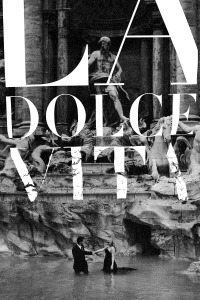
Shot primarily in Rome in 1959, La dolce vita follows the adventures of Marcello, a gossip columnist as he navigates cafés and nightclubs. Shot in an episodic manner, the film consists of a prologue, seven episodes, an intermezzo, and an epilogue. Marcello, though drawn into the thrills, vanity, and superficiality of "la dolce vita" yearns to become a serious writer. He is a womanizer, juggling encounters with a jaded socialite and his suicidal fiancé. Additionally, Marcello is mentored by and admires Steiner, a wealthy intellectual who advises Marcello to follow his desire to become a serious writer. Steiner warns Marcello:
Don't be like me. Salvation doesn't lie within four walls. I'm too serious to be a dilettante and too much a dabbler to be a professional. Even the most miserable life is better than a sheltered existence in an organized society where everything is calculated and perfected.
Essentially, Steiner is torn between his desire for materialistic comforts and a more spiritual though more insecure way of life. He fears that in a society where everything is "calculated and perfected" love and true sentiments will be smothered and fears that this will soon come to pass. Eventually, Steiner's fears overwhelm him and he murders his two children before ending shooting himself in the head.
Steiner's tragic demise traumatizes Marcello and he no longer seeks to escape from his meaningless existence but to accept what is easy in place of what he had felt was right. Towards the end of the film, Marcello is completely lost in the empty glamour of his "sweet life." He attempts to provoke a drunken orgy with a group of partygoers, but the party becomes chaotic as Marcello feathers and rides a woman around a room. He no longer seeks a deeper meaning in his life and although Marcello acts as if he is happy, Fellini allows the viewer to understand that he truly is not. In the epilogue, Marcello and the revelers make their way to a beach the next morning where they find a lifeless sea monster. Marcello remarks on how its eyes still stare, even in death. Ironically, he comments on his own condition- Marcello is alive, but because he has abandoned his dreams and chance at any real meaning in life: he is in many ways, as dead as that creature rotting in the sand.
Additionally, the early rise of this new system was chronicled in La dolce vita young stars and the fading aristocracy in the Via Veneto. Marcello along with his photographer friend, Paparazzo follow, photograph, and write about these stars. Fellini is able to create the feeling of an American-style star-obsessed culture most effectively in the episode in which Sylvia-the half Swedish, half American star played by Anita Ekberg arrives in Rome. She leaves and reenters the plane upon her landing so that the paparazzi can get more photographs of her. Additional American star-styled influence is seen in the dance seen later in the episode. Sylvia dances to an Italian singing American-style rock and roll. By showing an American dancing to an American-style of music sung in Rome, by an Italian, Fellini brilliantly comments on how American culture has shaped postwar Italian society.
This review of La Dolce Vita (1960) was written by Nix V on 16 Apr 2010.
La Dolce Vita has generally received very positive reviews.
Was this review helpful?