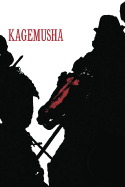
Review of Kagemusha (1980) by Roger T — 24 Feb 2010
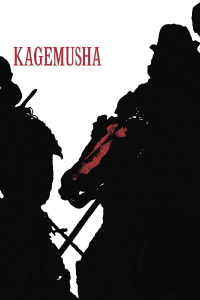
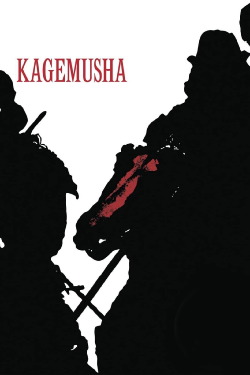
Kagemusha is director Akira Kurosawa's 3-hour epic historical drama surrounding the events of, and leading up to, the Battle of Nagashino. The warlord Shingen sits on his throne of power, using his brother Nobukado as a stand-in, or body double in case of assassins.
Nobukado finds a thief who's been sentenced to death who bears an uncanny resemblance to the lord and spares his life in order to recruit him for the job of stand-in. The thief refuses at first, but later, but later, when Shingen is struck by a sniper's bullet, he steps in to become the "kagemusha" or "shadow warrior" (the shadow image of the fallen warlord).
With the aid of Nobukado, he learns the protocol necessary to fool the friends and family of the ruler. Kurosawa takes a Robert Bresson approach to Kagemusha, in that he never shows the key events actually transpiring: when the sniper shoots Shingen, we only hear the sound of it, and the subsequent aftermath; when the final climactic battle takes place, we only see the aftermath of the gunfight, not the actual gunfight itself; when Kagemusha falls from the horse, we only see him laying on the ground, not the fall itself.
Kurosawa's usual visual approach has been muted a little as well, instead of the shockingly contrasting black and white visual style of earlier works (or the absolute fascination on display in the follow-up film, "Ran"), we get large, cutting swathes of outdoor shots.
Armies with their colorful flags, on the march against the backdrop of the sea. His stand-out visuals here consist of cutting the screen in two or three sections and giving us contrasting colors between them (such as in Kagemusha's dream sequence).
But what about the story? At three hours, it's spread a little thin, but then again, so do most films of this genre. The way Kagemusha treats his role in all this is a little ambigious: is he an actor trying to portray a ruler or does he really come to believe he is the warlord? In the context of historical dramas, it ranks among the best.
In the world of Kurosawa, it's somewhat less. It's a film though, that took alot for Kurosawa to make. After running out of financial backing, american directors George Lucas and Frances Ford Coppola convinced 20th Century Fox to back the completion of the film.
It's a great story of the kind of respect Kurosawa garners in film community.
This review of Kagemusha (1980) was written by Roger T on 24 Feb 2010.
Kagemusha has generally received very positive reviews.
Was this review helpful?