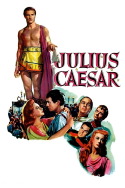
Review of Julius Caesar (1953) by Zachary B — 22 May 2013
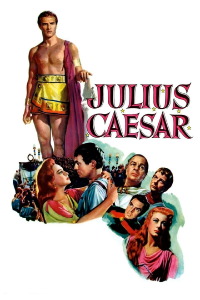
Although, arguably, the best of all Shakespeare screen adaptations, and certainly the best acted of them all, 1953's Julius Caesar leaves much to be desired. Heresy or not, I blame the bard. I have always found that Shakespeare's work unfolds with a promising beginning, followed by lengthy middle that both astounds and mystifies, only to bring forth an ending that fails to deliver on any and all promises presented by the first two acts.
So, the problems that I have with the film Julius Caesar is not at the fault of the filmmakers involved, rather I have my own qualms with the source material. That said, the film is incredibly well acted, and just happens to star the greatest actor of all time: Marlon Brando.
Brando remains an unlikely choice to play the part of Mark Antony, but what Brando did for modern acting, the renaissance and revolution he inspired therein, Brando had done for classical acting in 1953.
The man who single-handedly changed acting forever in 1951 with A Streetcar Named Desire donned his toga proud and reestablished classical theater acting as an art form full of emotion, raw energy, truth, and grace.
With Julius Caesar, I believe that Brando proved once and for all that the massively popular but often stiff and ludicrous acting style of the 30s and 40s was of a weaker method, a more primitive and impersonal style, and that this new naturalistic approach was to define the decade and beyond.
The previous style, although universally accepted and unchallenged, had met its match in one man, and that one man changed everything forever. Oh, and believe me, Brando was gooooood here. If you have never had to privilege to see Marlon Brando himself putting his own spin on Shakespeare, then I urge you to seek this film out immediately.
James Mason and John Gielgud also cash in noteworthy performances, Mason is an actor that I will be more aware of in the future, seeing as how his portrayal of Brutus was nearly impeccable. Still, Brando was immaculate in this one, in one of his most unlikely roles, he amazed me.
Technically, there is very little to praise, but at the same time there is absolutely nothing to deride, which is all too usual with the films of Joseph Mankiewicz. Then again, Mankiewicz knew the really didn't have to do very much, he only had to make sure the camera was on his actors at the right time.
Which he did, perhaps even skillfully so.
This review of Julius Caesar (1953) was written by Zachary B on 22 May 2013.
Julius Caesar has generally received positive reviews.
Was this review helpful?