Review of Juliet of the Spirits (1965) by Scott S — 28 Jul 2014
Review In A Nutshell:
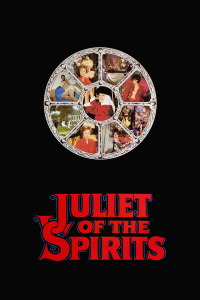
Juliet of the Spirits is the story of a woman who suspects that her husband may be having an affair.
The film featured a strong premise but sadly its plot and direction was a bit of a mess. The film's story explores ideas of infidelity, which was the main key that kept me engaged throughout; scenes are delivered to emphasise this but Federico Fellini, the director, restrains it too heavily and instead pushed forward the protagonist's psychological and spiritual conundrums. I am all for a deep character study but for me to engage a film in that way, the film's story should be much simpler and letting the film's ambiguity be only found internally rather than both; Fellini's style overwhelms both the story and the character development, leaving me at times too distant from the film's heart. In a positive note, I was at least able to care for enough about our protagonist that I was curious enough to finish her journey, and Fellini succeeded this through strong establishment of the character early on in the film.
I was quite impressed with the film's cinematography, contrasting two different styles, naturalistic and surrealistic. I have read many times that Fellini is known for this dreamlike quality in his films, which I am not yet used to as my first film from the man was I Vitelloni, which takes a much more simplistic and accessible approach. After seeing this film, it is clear to me that I would have to watch the director's films more than once in order to appreciate and understand his visual aesthetic.
Nino Rota's musical score for Juliet of the Spirits is also polarising tonally, it goes back and forth from optimistically light to pessimistically deep. Rota's score certainly aided me in gaining a sort of understanding of what Fellini is trying to show on screen, and because of his score, it was easy for me to be orientated of Juliet's perspective; not once did I feel confused on whether we are watching Juliet's psychological visions or actuality.
The acting in this film was certainly strong with a breezy performance from Giulietta Masina, showing no signs of melodrama which was surprising as films during this period tend to lean towards that end of the acting spectrum in order for their roles to feel approachable. Most of Masina's performance is found in her eyes which display the truth of her character while the rest of her face displays a shield that projects to the people around her on what she wants them to think she is feeling. As Fellini kept most of the film's focus on Masina's character, the supporting cast was not given enough screen time to deliver a true supporting performance.
Juliet of the Spirits is far from Fellini's almost-masterpiece I Vitelloni, but it has enough strong elements that keep it from being atrocious. I just hope as I go in deeper in Fellini's filmography that none of them would fall lower than this film.
This review of Juliet of the Spirits (1965) was written by Scott S on 28 Jul 2014.
Juliet of the Spirits has generally received very positive reviews.
Was this review helpful?