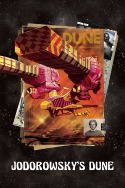
Review of Jodorowsky's Dune (2013) by Harry W — 21 Oct 2014
With an interesting concept behind it and a lot of interesting images in its trailer, Jodorowsky's Dune sounded like a great chance to get insight into a broken dream.
Before seeing Jodorowsky's Dune, it is important to see David Lynch's 1984 version of the film to compare what could have been to what actually was. I've never had the pleasure of reading the original novel Dune so I can't compare my own idea of Dune to the vision that Alejandro Jodorowsky had. But my interest would be more in comparing Alejandro Jodorowsky's intended vision to Dino De Laurentiis' which was disguised as David Lynch's. As a person who agreed with Alejandro Jodorowsky that the 1984 adaptation was incomprehensibly terrible, it just made me more fond of his vision. Regrettably, I didn't get around to seeing any of Alejandro Jodorowsky's films before seeing Jodorowsky's Dune, in particular The Holy Mountain or El Topo. But luckily, seeing as both are chronicled in the documentary, even viewers without any idea of who Alejandro Jodorowsky is will be able to get a sense of what he is all about as a filmmaker, both on projects he completed and on ones that fell through such as his titular intended adaptation of Dune. So Jodorowsky's Dune ensures that viewers get a brief understanding of Alejandro Jodorowsky's work, and it all unfolds in chronological order as the story progresses towards its section about Dune. The structure of events in Jodorowsky's Dune is very good because of how it goes back to the beginning of Alejandro Jodorowsky's career as a filmmaker and explores his films, the subject matter, his state of mind when working on them and how they created an audience for him. The way that Jodorowsky's Dune takes a look at his films The Holy Mountain and El Topo is straight to the point and moves along at a firm pace but also gives viewers more than enough time to comprehend how he crafted them and what makes Alejandro Jodorowsky tick. Within no time, viewers understand enough to proceed to the central focus of the film: the production of Dune.
Once the story reaches the titular section on Alejandro Jodorowsky's concept for Dune, the film has already established a lot of interest and so from there the only way it can go is up. The film goes back to where Alejandro Jodorowsky's Dune all started, discussing the relevance of the story and comparing it to his taste in surreal imagery and how the two intend to merge into the amalgamation of his dream project. The story explains in extraneous detail just how the film would look, who would be cast and how it would change cinematic history. It makes it all the more saddening when the project falls through. When the story reveals that it is not possible to make the film, there is no more hope. The atmosphere of the film becomes sentimentally saddening as it stops right there without any hint of optimism, with an understanding that the unpredictable nature of the film industry makes it a sure thing that Alejandro Jodorowsky's exact vision is one that will never grace the cinematic screen. Frank Pavich emphasises the sadness and loss of this all, how it resulted in Dan O'Bannon ending up homeless and the saddening effect it laid down on Alejandro Jodorowsky.
The film serves as both a tribute to Alejandro Jodorowsky's career and a sentimental tribute to his broken dream. It honours his path of work by revealing both the nature of his films and just what kind of a person he was, for better and for worse. One intense scene in particular depicts him talking about taking creative license with a lot of the material in Dune in order to make his film. He states "When you make a picture, you must not respect the novel. It's like you get married, no? You go with the wife; you take the woman. If you respect the woman, you will never have child. You need to open the costume...and to rape the bride. And then you will have your picture. I was raping Frank Herbert! But with love." As twisted and shocking as such a line is, he has a point. It's interesting how he chooses the word "Rape" as well, particularly as he was conceived as a product of his father raping his mother. This looks into both the madness and the beauty of Alejandro Jodorowsky's mind which is covered a lot over the course of the film but at no moment more powerful or shocking than this one. The film is very insightful into his obsessive power as a filmmaker and his massive ambitions, such as his intention for his film to be "The Coming of a God". It gets into the mind of him very well, isolating the elements of him which render him the mad genius of Chilean filmmaking that he has gained a legacy for.
The film ends on a more positive note however. It is explained that the failed production of Dune became a universe of influence for the world of cinema, with much of the imagery becoming seriously influential over countless later films. It reveals how elements of the production led Dan O'Bannon to creating his most popular success on the film Alien, and how Alejandro Jodorowsky persevered as a filmmaker, having just recently released his first film in 23 years entitled The Dance with Reality. Alejandro Jodorowsky also expresses hope that perhaps one day someone will take his concept art and turn Dune into an animated film or series, and that leaves the documentary on a note that perhaps Jodorowsky's Dune could still exist one day to his vision, even if not to be made by him. Alejandro Jodorowsky expresses sadness that he cannot create the film but also joy that David Lynch's version of the film turned out so awful, although not because of him. Audiences get a lot of understanding about what Alejandro Jodorowsky feels about filmmaking and the current status of his broken dream, and the documentary brings his legacy back for many people to see in an honouring tribute which is just beautiful. There is a lot to be learned from Jodorowsky's Dune, and Frank Pavich really does succeed in emphasising how beautiful the film would have been and that it is "The greatest film never made", so he succeeds in his ambitions. Although Jodorowsky's Dune doesn't tell the full story about Alejandro Jodorowsky as a person, it does a lot for expressing who he is as a filmmaker and therefore tells the story viewers are hoping to hear.
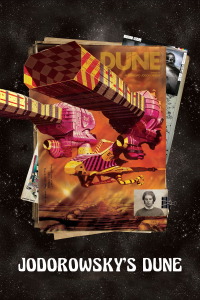
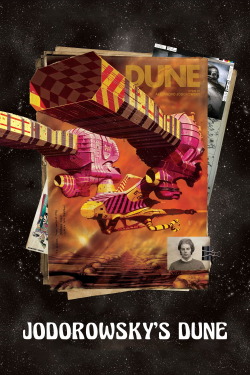
So Jodorowsky's Dune is a detailed and thought provoking look into a broken dream of cinema which informs audiences of who Alejandro Jodorowsky truly was as a filmmaker and precisely how good his adaptation of Dune would have been. And fuelled with his iconic imagery in the artistic storyboards, it makes for a colourful visual experience at the same time.
This review of Jodorowsky's Dune (2013) was written by Harry W on 21 Oct 2014.
Jodorowsky's Dune has generally received very positive reviews.
Was this review helpful?