Review of Jezebel (1938) by Veronique K — 27 May 2008
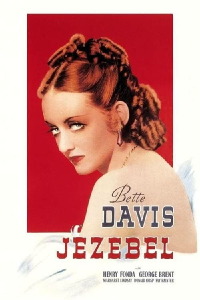
Bette davis often flatters herself in her elder years by claiming she could have played "gone with the wind" if she wants to, but she refuses it becuz it has too many similiarities with william wyler's "jezebel" and she's reluctant to play insolent southern belle all over again. and another reason would be she dislikes errol flynn so much that she doesn't wish him to be her "rhett butler"...could you imagine davis as scarlett instead of feline-eyed vivien leigh or flynn as rhett, not likable cad clark gable? I guess not.
Davis plays julie who is engaged to henry fonda's pres. julie is an egoist who wanna have her way at any cost, and she waywardly revenges her fiance for not attending her sailor shop by wearing a notorious reddish dress in the olympus ball where unmarried women are supposed to settle in white. she even challenges his manhood by implying he's afraid to defend her. then naturally their relationship seems terminated after this serious friction. one year later, pres shows up at her door with a yankee wife while she kneels on the floor in a chastely white dress to beg for his forgiveness. driven by bitter jealousy, julie makes provocative insinuation of her guests to insult pres but it ends up two men having a pistol duel, and one death. julie becomes the wretched witch who brings others misfortune. then her beloved pres gets infected with yellow fever, so she beseeches his wife to offer her the previledge to take care of him in the plague camp to purge her sins.
Wyler's perspective to tackle into the old south is thru the insistance of black slavery which its protagonists have furious disputes over so intensely that they would resort to fatal pistol-dueling. exclusive from black slavery, there's nothing else wyler tries to depict about old south, and the conversations are all centered upon their irreconciled gap of differences. then the flick ends abruptly with the plague strike, so the old south crambles....then what? perhaps "gone with the wind" is more concrete with the war sequence and the revival of its characters in their postwar state.
The character of pres would be the intellectual youth who struggles between his attachment to the old south where he gets nourished and the innovative land of yankees who've been more civilized and polished by industrialization. pres escapes the snobbish south and julie who stands for the south he used to cling to by marrying a simple-minded yankee woman with every obedient sense of puritanical virtues, who is much less difficult to deal with. at the scene julie attempts to seduce him back in the garden, she suggests the enchantment of south while the moon shnes brighteningly, crickets sings cozily and the smell of swamp, she utters "how could you desert all these things in your blood to go for your yankee woman? don't you love me?" dignified pres certainly resists julie's temptation but undeniably he's still conflicted with fascinations which he dislikes to confront. after all, life is simpler with a yankee woman to pres. he rebuffs her with a deadpan face "i love my wife" as if it's a fixed line a gentleman should have said in his manly honor whehter he means it or not.
It seems to be grandeur deed for julie to volunteer to be with pres in the plague camp, but does she do it for her own redemption of honor or she truly cares for pres? at the last scene, she sits on the wagon beside him, and her sight heads forward her surroundins emotionlessly. what is she thinking then? is she trying to summon up all the courage to face the perilous future? or she just feels lofty to restore her pride anf her reputation in the town by taking care of pres? it could be both. whether she chooses to do altruistic deed for her ego or not, it is still an admirable sacrifice just like man could go to the battlefield to get killed simply for his honor and his ego, why couldn't woman be egoistically contributive? after all, she's the jezebel who intends to pay the price for her misdemeanors.
Whether julie is a bitch or not, the judgement leaves to each single audience. should she be responsible for the dueling simply becuz she's malicious bitch? or she's just the catalyst which stimulates the long-existed feud between old south and yankee? even she seems ruthlessly calm by fiddling her flowers while the men are gonna have a pistol fight, but she only expects one of them to be injured instead of getting killed, she might just try to disguise her clamored inner self by acting with composure. there's no pure bitch but a flawed human being with moral ambiguities(or bankrupcy?). is "jezebell" about malice or repetence?
This review of Jezebel (1938) was written by Veronique K on 27 May 2008.
Jezebel has generally received very positive reviews.
Was this review helpful?