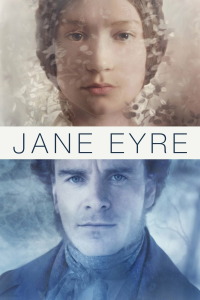
Review of Jane Eyre (2011) by Shiira — 30 Apr 2011
Speaking at length for a good duration in the farmer's native French, it's not for nothing that Hans Landa(Christoph Waltz) suddenly asks Perrier if they could conduct the rest of their conversation in English.
The opening scene in Quentin Tarantino's "Inglourious Basterds" is bilingual because the Nazi knows about the Jewish family hiding beneath the cottage floorboards, therefore he wishes to keep the interrogation of the resistance fighter under wraps from their monolingual ears in order to give them false hope for survival, just before he motions toward the Dreyfuss family's hiding place to an awaiting battalion of Nazi troops standing outside the Frenchman's house.
It's a creative choice, this switch in languages, and not an artistic compromise like in Franco Zeffirelli's 1996 adaptation of "Jane Eyre", when the governess(Charlotte Gainsbourg) suggests to her charge Adele that they only speak English in Mrs.
Fairfax's company. But even amongst themselves, the film shuns the little girl's native language, probably out of consideration for its English-speaking audience, who are largely resistant to subtitles.
According to her guardian Mr. Rochester(William Hurt), the "jeune fille" is not particularly bright, a remedial child without talent, and yet she speaks fluent English. In light of Adele being able to master a foreign tongue, it seems incongruous that she can't perform the simplest arithmetic problems.
In the new "Jane Eyre", Rochester's assessment about his adopted daughter's inferior intellect makes more sense, since this film has Adele speaking only a little English. The film doesn't dumb down.
Jane(Mia Wasikowska) is given the artistic license to converse with her pupil in French. Getting this small detail right is just one of the film's many pleasures. Better than any of the Victorian literature classic's twenty-seven(television and film) adaptations, this "Jane Eyre" seems to know its creator best.
Charlotte Bronte, who at the age of twenty-nine, published this roman a clef in 1847, had a pornographic mind, writing to a friend: "If you knew my thoughts; the dreams that absorb me; and the fiery imagination that at times eats me up.
..you would pity and I daresay despise me." It's commonly believed among scholars that Rochester's passionate love for his paid servant performed the function of wish fulfillment for the young aspiring writer whose literature master didn't love her back.
Bronte may very well have recognized herself in the twenty-one-year-old actress, whose crying can only be the result of a combustible mix of plaintive love and sexual longing. Recalling Stanley Kubrick's "Barry Lyndon", Thornfield Manor is lit solely by candlelight, creating an intimacy full of erotic possibilities that would be lost had there been a secondary light source.
The candle, in the context of its time and place, is more of a utilitarian object than a romantic one, but nevertheless, it sets the mood. Rochester leads the inexperienced girl into temptation through barely polite talk about "fresh pleasures", thereby flustering Jane with the word "fresh", an allusion to her virginity, which leaves the governess prone to suggestibility with his coded overtures for sex.
She ineffectually deflects his forwardness by feigning ignorance about the subject, claiming how their "conversation is out of my depth," and wishes "not to speak nonsense." Jane, as interpreted by Wasikowska, doesn't have "the air of a little nun,"(Gainsbourg's Jane); this Jane doesn't have Miss Temple(Amanda Root from the 1996 film), a teacher at the Lowood Insititute, to encourage in her a deep conviction of sin and repentance toward God.
She's the same Jane, who as a child, tells Mr. Brockhurst: "I must keep in good health, and not die," when asked by the despotic schoolmaster about how one goes about avoiding hell. She goes uncorrected.
Ms. Eyre is, unequivocally, curious about sex, exemplified by the scene where she steals a look at a nude painting during her clandestine patrol in the dark hallway as if the work of art was mere pornography.
Holding the taper to the canvas, the glow from the candlelight illuminates the full breasts and exposed crotch of a satiated Pre-Raphaelite woman, whose lover might have stepped out of the boudoir after some vigorous lovemaking.
Jane knows that her own genitalia replicates this experienced lady's exposed anatomy, so she looks for clues as to what one does with such womanly gifts which give "fresh pleasures" to herself, and, she hopes, to Rochester.
The subsequent fire that nearly engulfs the master, albeit a tangible action on Bertha's part, may very well be a metaphor come to life; a wet dream consequently made corporeally wet by Jane's dousing of water to arouse Rochester from his slumber.
In the NBC sitcom "Cheers", Sam Malone asks Diane Chambers, "Are you turned on as I am?" "More," replies the barmaid. Jane knows the feeling well.
This review of Jane Eyre (2011) was written by Shiira on 30 Apr 2011.
Jane Eyre has generally received positive reviews.
Was this review helpful?