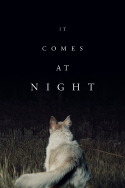
Review of It Comes at Night (2017) by Viddy W — 31 Aug 2017
It Comes At Night will have you gripping the edge of your seat and holding your breath through moments of great unease and tension. In a lot of ways, it's a study of distrust and paranoia, akin to last year's The Invitation, but wrapped in a creeping, slow burn pace, similar to The Witch, and executed with terrifying control by writer/director Trey Edward Shults.
Distrust and paranoia swallow the narrative and are present at all times, but these elements are taken to new levels when another surviving family enters the picture. As the families converge, the feelings of fear, suspicion, unease, paranoia and mistrust become more and more prevalent.
The red door is what keeps our characters protected -- or so they say -- from the dangers of the outside world, keeping them sealed securely inside their boarded up cabin. They only go out in pairs and do not go out at night, unless there's an emergency. Since the house is boarded, it remains pitch black, and the characters move through the dark with only the lights of their lanterns, which really turns the title on its ear, provided darkness seems to be lurking everywhere, even in the daylight.
However, the red door also has an alternate purpose, one that allows these survivors to cling to their illusion that the danger is outside, not locked inside, or within. Shults' handles a majority of the picture through tight shots, which help to create a very claustrophobic feeling, building the tension and paranoid dread to boiling point. After all, this is a film where no one's able to relax, and the suspicion of deceit engulfs and consumes all; the film begins with no signs of hope, and exits with even fewer.
The Triumph of Death is a representation of this hopeless, and the painting looms in the hallway leading to the red door. The painting features an army of skeleton's pillaging a village, slaughtering and mocking humanity in various ways, driving everyone to their certain doom; brutal and hopeless, fucked and futile. Between the narrative that unfolds and the metaphors of the red door and the painting, the story can take on a new meaning, which may service a better understanding with regard to what this sickness may actually represent.
Shults' direction is truly superb and flows with effortlessness. He uses the natural surrounds of the cabin to convey a feeling of twisted, sinister foreboding, much in the same way that Lars von Trier does with Antichrist. There are many slow pans, pushes and zooms, meticulous match-cut fades --my favorite being the melding of the burn pit into the boarded up cabin, which is flawless and serves as a reinforcement for the hopelessness and our characters misconception of the real danger. All of this, however, coalesces into an ending that doesn't exactly stick the landing, but should leave you with a lot to chew on. After knowing the story and its elements, I'd like to go through it again, as there are likely notes and chords that go unnoticed in the primary viewing.
Rating: 4 lanterns in a dark cabin out of 5.
This review of It Comes at Night (2017) was written by Viddy W on 31 Aug 2017.
It Comes at Night has generally received positive reviews.
Was this review helpful?