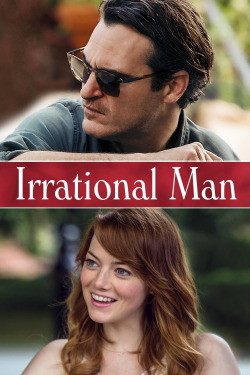
Review of Irrational Man (2015) by Spangle — 10 Apr 2017
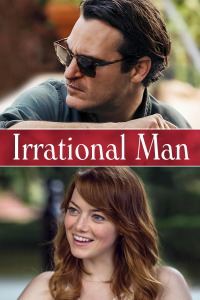
With each passing critically maligned modern Woody Allen film that I watch, it becomes readily apparent that I am an Allen apologist. Either that or his films are never as bad as many see them. Known as a legend in the world of comedy, Irrational Man finds Allen blending mystery - a genre who has some great affinity for - and blending it with straight drama. Though he is also certainly celebrated for his dramas, he had never really made a film that was a mystery and a drama with no comedy. Mysteries of his that come to mind include Manhattan Murder Mystery, Small Time Crooks, and Scoop, all of which included a heavy dosage of comedy. In his late period, Irrational Man stands alone as a film with no real comedy (Blue Jasmine is close, but can be categorized by some as black comedy). Yet, it comes with a plenty of that Allen philosophy that we have come to love over the years. Thus, though its genre may be a bit of a unique blend, it is always apparent that Allen is sitting there behind the camera, if the unique style and camera work did not tip you off right away.
Focusing upon a philosophy professor, Abe Lucas (Joaquin Phoenix), Irrational Man tells the story of his time at a small liberal arts school as a member of its philosophy department. Known for his affairs with students and having a rock-and-roll reputation upon arrival, Abe is now quite the classic Allen misanthrope. Detesting the world, having no reason for living anymore, and unable to perform sexually due to how lost he is, Abe Lucas is a man that just floats through the day and complains about the world to students. While teaching, he strikes up relationships with student Jill Pollard (Emma Stone) and chemistry professor Rita Richards (Parker Posey). Yet, neither satisfy him. He still experiences writer's block and drowns his sorrows in a bottle of alcohol constantly. It is only when he overhears a conversation in a diner about a crooked judge that is taking away a woman's children because he is friends with her deadbeat ex-husband's lawyers that he figures out what will make him feel alive again: murder.
Clearly inspired by the works of Alfred Hitchcock, Allen shows Abe Lucas planning out the perfect murder. A constant theme in Hitchcock's work, Abe takes pleasure in the artistry of planning out the murder akin to films such as Shadow of a Doubt or Dial M for Murder where men joyfully plot out what the perfect murder would turn out to be. Similar to Strangers on a Train, Abe reasons that he is the perfect man to commit this murder since he has no ties to the judge. Finally, similar to the murderers in Rope, he revels in conversations about the murder after the fact as people try to guess who did it and how it was done, all while Abe can sit there with a sly grin on his face knowing that he was the one who had taken out the judge.
This murderous pleasure may reinvigorate Abe's reason for living, yet the key to Allen's film is always the philosophy behind the killing. In particular, how it relates to Immanuel Kant's categorical imperative. In an extended classroom scene, Allen quickly briefs the audience on the concept that suggests lying, in any situation, is wrong. If you are asked a question, it is imperative you respond truthfully because one lie opens the door and a slippery slope begins where one must then determine, situation-by-situation, when to tell a lie. However, Abe interjects that it is a fairy tale situation described by Kant, one that has no basis in reality because any moral person would lie if the Nazis came to their home and asked if Anne Frank was hiding in their attic or not. Foreshadowing how Abe would defend his murder - that it was a net positive to the world for an immoral person to be killed by a moral one - the categorical imperative comes back when Jill references how one murder inevitably leads to another as he must then cover it up. This philosophical concept is what kicks off the climax once Abe realizes that he must cover it up as the police close in on a suspect. Anybody who knows must go and everything is on the table as his supposed superior morality and place of judgment are thrown into question once he realizes the full ramifications of his actions.
Though Allen is an atheist, this film is yet another late period work where he seems to contemplate death, religion, and what life means. Repeated references to existentialism adorn this film with Abe repeatedly declaring that life is meaningless, while also playing with death via russian roulette and alcoholism. Yet, the film's ultimate moral tale that we are not to judge others and damn them to death simply because they are immoral feels inherently Christian, what with the whole "he without sin cast the first stone" portion of the Bible.
This review of Irrational Man (2015) was written by Spangle on 10 Apr 2017.
Irrational Man has generally received mixed reviews.
Was this review helpful?