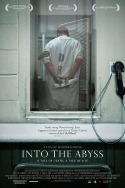
Review of Into the Abyss (2011) by Edith N — 09 Feb 2013
Seeking the Balance of Justice.
It does not surprise me to learn that Werner Herzog is against the death penalty. For one thing, killing people means ending their story, and Werner is interested in people's stories. He strikes me as one of those people who is fascinated by people in general and irritated by people in particular. Certainly his relationship with Klaus Kinski wasn't one of gentle appreciation. However, he seems to believe that all people have the right to live, even if the way they live isn't the way other people do. Of course, this is also a story about people who have taken away other people's right to live, so there is still a certain amount of distaste. But Werner being Werner, he doesn't dwell on his dislike. He actually does make it clear, and to one of the subjects, that he doesn't like the guy. He says that he doesn't have to, and that also seems to be something he has resigned himself to.
The men Werner is looking at this time are Michael Perry and Jason Burkett. In 2001, they decided that they wanted to steal a red Camaro belonging to Sandra Stotler. In the end, Perry ended up convicted of killing her. Burkett was convicted of killing two other people in connection with the crime--one of whom was Stotler's own son. Werner interviews the two men, the younger victims' siblings, the woman who married Burkett in prison, and people connected with the case and the penal system. Burkett's own father is in prison for murder as well; he spoke at his son's trial and believes that it is why Burkett only got life in prison while Perry is on death row, despite the fact that Burkett was convicted of two murders and Perry of only one. At the time that the film was made, Perry was days away from execution, and indeed he was executed before the film was complete. Burkett will not be eligible for parole until forty years after his conviction, when he will be in his early sixties.
Honestly, I think Werner is okay with that, would be okay with it in Perry's case, had that been how things turned out. One of the people he interviews used to conduct executions for the very prison in which Perry was killed, and he quit before he was eligible for a pension. He just couldn't take it any more. Texas was, at the time, executing as many as two people a week. He is not himself sure of how many executions he oversaw. He does not say that the people should not be punished. However, he could no longer be responsible for their executions. The last straw for him was the woman who thanked him for everything he'd done for her just before she got the needle in her arm. After that, he had to walk away. Oh, now, it's someone else's job; that he left does not mean that the executions ended, and he knows that. However, it is no longer his job, and he no longer has to be one of the last people to look the condemned in the eye. That is someone else's burden.
Werner does not appear on camera in this film, but he is a constant presence nonetheless. He interviews the subjects, though he does not ask such pointed questions as he might. I suspect he was more interested in getting as much of their stories as possible than in getting the answers to tough questions. I do not believe he asks any of the family members if they agree with Perry's execution--and that Burkett will not be. Burkett's wife manages to duck most of his questions about how, exactly, she is pregnant; she says her child will legally be her husband's, but of course the wife's child is always legally the husband's. She refuses to give details; she refuses to state definitively that the child will be his biologically as well as legally. Werner also does not pursue her disgust that women send letters to Scott Peterson. That is probably also because he respects his audience's intelligence; he knows that we will catch the irony, and he knows, too, that she will not.
I don't think this film is going to persuade anyone one way or another about the death penalty, but I don't think it's intended to. I think Werner is just presenting us with how things are and leaving us to draw our own conclusions as to whether or not they are how things should be. Probably he knows how hard it is to change anyone's mind. If he wanted to convince people that the death penalty is an unalloyed bad, he wouldn't have put in the part about how Perry forgave the relatives of the victims for not seeing how obviously innocent he was, or the part about how there was no doubt in his mind that everyone knew he was innocent and that the State of Texas was just murdering him. However, by showing us the impact on the people in the prison system, he reminds us that the executions of criminals do not just affect the criminals and their victims' families. As is so often the case with Werner Herzog films, the issue is too complicated to put simply. He himself admits that the name he has given this film could be given to pretty much every other movie he's ever made.
This review of Into the Abyss (2011) was written by Edith N on 09 Feb 2013.
Into the Abyss has generally received positive reviews.
Was this review helpful?