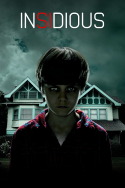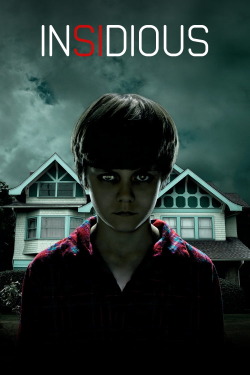
Review of Insidious (2011) by Mark L — 11 Aug 2018
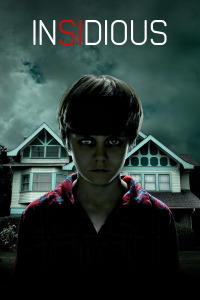
In film, the horror genre has been known for mass-producing movies that can easily be summed up as either gore-filled massacre frenzies or an exhausting series of jump-scares. Very often do we find movies that genuinely cause us to experience the true emotion of fear, but Insidious is one that causes us to actually be afraid. With a new take on the classic haunted house trope, director James Wan is able to create an exciting atmosphere that will leave any audience-member paranoid about the smallest things around your home and daily routines.Insidious.
Characters: Josh and Renai Lambert, played by Patrick Wilson and Rose Byrne respectively, have just moved into their new house along with their three young children. Throughout the duration of the film, there was absolutely no discussion surrounding their backstory or even why these characters had decided to move to begin with. The most that we get is when Renai wishes things would be different this time, which leaves the entire audience wondering, what happened last time? Despite that fatal flaw in the characters' backstory, Wan is able to redeem these characters by presenting a very deep and elaborate family dynamic. With Josh away at work for long hours each day and not being present for his stay-at-home wife, we quickly become aware of the amount of stress that is plaguing Renai. We are constantly reminded that she must already be tired and overwhelmed from having to take care of three young children, even before the paranormal events begin. It's this isolation from the rest of her family that sets the audience up to sympathize with her helplessness and feel the same amount of fear that she must be feeling, which only becomes more magnified once the creepy events begin. Now, for the children, we don't actually get to learn much about them at all. The two younger children, Foster and Cali, simply serve as plot devices that help set up vital scenes and dictate small details that might not have been easily captured by a camera. Even Dalton, who is the eldest and the main subject of this supernatural torment, is unable to escape this exploitation of plot progression since he was unconscious for a majority of the film. Also, it might just be my own personal qualm, but I felt that the actor that portrayed Dalton was a little too old for how the whole family treated his character, which just made things feel a little less authentic. The final main character of the film was the well-experienced demonologist, Elise Rainer, played by Lin Shaye. For the majority of her screen time, she was able to command a strong, yet collected presence as she essentially "walked through the basics" of confronting these evil entities. But once the conflict escalated to drastic levels, Lin's performance was able to leave the audience feeling overwhelmed by fear each time she expressed even the slightest amount of concern towards the growing threat. Speaking of this supernatural threat, the evil entities of the film were all very well done, yet very simple. By relying almost solely on make-up and practical effects, these demons felt real and even caused me to briefly believe that there might be some of these entities with me in the room at any given moment during the film. Finally, the remaining members of the cast are the two geeky and tech-savvy demonlogists, Specs and Tucker. These were brought on as the comic relief for the film and felt extremely out of place for this kind of movie. I understand that it is nice to have a break from the building anxiety that most of the movie caused, but choosing to introduced two nerdy paranormal hunters felt extremely forced and didn't mesh well with the rest of the cast.
Overall, I was impressed with the main cast and I felt that their performances helped to manifest our fears that had grown throughout the duration of the film. Even the evil entities felt absurdly convincing and truly brought out our fears. However, the minor characters were exactly that: minor. I am convinced that the film would remain the same, if not improve, if they were removed entirely. Therefore, I would give the characters of Insidious a 7/10.
Plot: For this film, James Wan seems to have chosen a very simple plot that never really creates new mini-arcs for us to get tangled into, which inadvertently works for the overall atmosphere of the film. This extremely linear plot progressions is simple enough that it takes away the distractions of having to really think about what is going on and allows us to focus on underlying elements of fear that seemingly linger in the backdrop of each scene. By doing so, the audience is left on the edge of their seats (quite literally) as they are constantly anticipating the next big scare. Wan also seems to be very aware of the pacing of the film and even understands the way that the audience perceives particular scenes. For example, one of the most frightening scenes in the film occurs during a long conversation. Almost any veteran horror-movie fan will tell you that long periods of conversation means that you are safe from being scared and that you can relax, but Wan knows that this is exactly what the audience must be thinking and therefore takes advantage of it to provide an even stronger scare. However, despite this impressive knowledge of plot progression and audience expectations, there were a few scenes that were either incomplete thoughts or just felt forced into the narrative. First, the prelude to the impending haunting, which revolved on the evil entities moving and throwing around Renai's books and sheet music, were never really resolved or discussed after it happened. It left me wondering why it seemed that all of these spirits hated Renai and her music and I was never given a proper satisfactory answer. Also, the biggest flaw in the plot, in my opinion, came when Josh Lambert discovers the solution for the main conflict. To keep this review spoiler-free, I won't go too far into the details of this, but the solution felt almost way too convenient and I'm sure some would argue that it felt like just a cop-out answer for a major issue. But even though this solution seemed extremely far-fetched, the process of carrying out the solution was extremely impressive and actually presented a new approach to dealing with the supernatural. As the film came to an end, the final scene became quickly divisive for me and I was, and still am, unable to decide whether I appreciated the ending or felt that it was the same cliche horror movie ending. Either way, the last few moments were clearly designed to set up a sequel to Insidious, which actually ended up become a full-blown series with four installments now.
Overall, I thought that even though the plot began in the same way that every other horror movie begins, the remainder of the film was impressively unique. Even though there were a small handful of issues with it, everything seemed to be believable and authentic, excluding the resolution to the conflict. That moment clearly became a distraction and left the audience wondering why James Wan chose this direction, but were immediately pacified with the way that this choice played out. Therefore, I would give the plot of Insidious a 6/10.
Visuals: In this film, the director had a very clear understanding of the importance behind the visual atmosphere and how it contributes to the overall tone of the movie. Since the film clearly fits within the horror genre, the choice for having the majority of the film shot with drained, washed-out colors easily became a smart move. By doing so, all of the characters and settings seemed pale and drained of all life, which perfectly embodies the atmosphere of a horror movie. Also, the fact that the only bold and clear color present was red all seemed to point towards the main antagonist, making the audience feel as if this evil entity could be lurking anywhere, just waiting to surround and overtake you at any moment. By setting this pattern for the film, we were unknowingly being trained to search for any trace of the color red, which brought all of our attention on the antagonist and made him the sole subject of our focus. Also, the camera work for this film aided in creating a thoroughly realistic and intimate experience that made you feel that you were in the rooms with the other characters. At some points, you might have even felt that you have been watching the plot unfold from the perspective of the evil entities themselves, which just added to the tension of the film. Also, the second half of the movie takes place in the Further and the representation of this new world was absolutely fantastic. This new setting was very well-established and was extremely well captured in this film. The combination of darkness, shadows, and very limited light came together to create a thoroughly creepy and unsettling environment.
Overall, I was very impressed with the entire visual atmosphere and felt that this was one of the strongest factors of the film. The lighting and the simplicity of practical effects helped to lay the groundwork for the horror that was about to ensue. Once the tension picked up, the visuals just continued to lead the tone of the film along as the audience delved deeper into their own fears. Therefore, I would give the visuals of Insidious a 10/10.
Audio: Typically, the audio for a film gets easily overlooked and overshadowed by other cinematic elements, but that is definitely not true for Insidious. The soundscape that filled the "emptiness" of the movie prevented the audience from ever receiving a rest from the tension that the film had worked so hard to build up. With every dissident note and shrill noise, you could definitely feel shivers shoot down your spine or even make your skin crawl. Even the music that was chosen for the film was carefully placed in vital scenes to bring up small thematic elements that might not have been highlighted without the use of these songs. For example, the songs that were written by Renai in the film all tend to be apathetic, tired, and even depressed. Each time that Renai sings, the audience almost always feels that she is drained of all hope and overwhelmed with tiredness and stress, which only becomes further amplified by the events that unfold in the film. But the audible highlight of the entire film would easily be Tiptoe Through the Tulips by Tiny Tim. This song can very easily make you feel eerie and slightly uncomfortable, which elicited these exact emotions during climaxes in the plot.
Overall, I believe that the audio of the film provides the perfect ambiance that really provides the groundwork for the rest of the film. Instead of making the music and soundscape the main selling point of Insidious, James Wan skillfully chose to make the audio a strong supporting element that greatly contributed to the rest of the film. Therefore, I would give the audio of Insidious a 10/10.
Impact: James Wan's horror film was one that definitely accomplished what it set out to do, which was to instill horror. Although each individual aspect of the film wasn't necessarily scary or frightening, it was the combination of each of these elements that came together to create a genuinely creepy and off-putting film. Often times, I would feel my pulse sharply increase and even feel small droplets of sweat build on my forehead because of the fear this film was giving, even though it was only a PG-13 film. As a whole, this film has incredible re-watch value because it will continue to instill fear in the audience, even if you already know what is going to happen. Actually, I would argue that by re-watching the film, you would be even more afraid because you know what is going to happen. Even the way that film ends, it perfectly sets itself up for a sequel. Therefore, I would give the impact of this film a 10/10.
Final Score: 8.6/10.
This review of Insidious (2011) was written by Mark L on 11 Aug 2018.
Insidious has generally received positive reviews.
Was this review helpful?