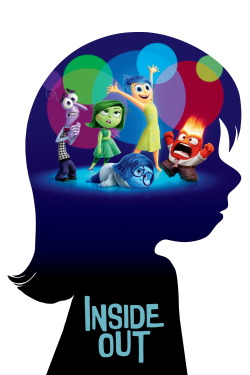
Review of Inside Out (2015) by Kelsey P — 18 Nov 2016
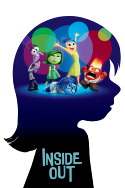
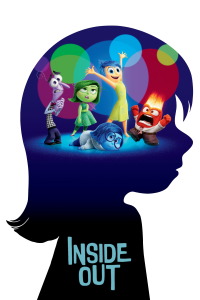
Inside Out, a film directed by Pete Docter and Ronnie Del Carmen, is about an eleven-year-old girl named Riley, and more importantly, the emotions that live inside of her head. The film depicts the struggle of growing up, moving to an intimidating unknown city and the collapse of a child's youth. But we are granted with another point of view, that being from her "air-traffic control" like emotions. Those including; Joy, Sadness, Anger, Fear and Disgust. While the story of Riley's adolescent life persists to fall into an agitated state, we have a characterized version of the happenings inside of her brain, with connections to her situation and experiences. The demolish of values, the corruption of memories and the loss of control is described with characters and settings existing inside of her brain. We get to explore the contents, mechanics and dynamics of Riley's mind as a representation of our own. As the film comes to an end, the character Joy realizes, that as pleasing as happiness is, the character and feeling of sadness is the only emotion powerful enough to heal Riley. This and many other aspects of the film strikingly resemble the perceptions produced from the harshness of growing up, the erosion of our youth, the acceptance of our pain and the inevitable significance of our vulnerability.
This film has the capabilities to unify its indirectly intended mature audience. It explains the unavoidable brutalities of adulthood with psychological concepts of mental destruction, that in turn, lead to the rebuild of our strength and the understanding of the impact that our emotions have on our lives. The film is truly an emotional roller coaster. With a strong identification to not only Riley, but to all five of her distinct emotions, we commemorate the pain and confusion of adolescence all over again. Although this film is a tear jerker for adults, its nostalgic tendencies are effortlessly masked from the child audience. For a child who lacks the wisdoms from experience as described above, the film is disguised as a highly humorous and whimsical story. With its deep sentimental roots, its plentiful comedic fun and its versatile ability to cause emotional reactions to people of all ages, Inside Out truly stands out among children's fiction as a conceptually complex film.
On top of its emotional pull, the film presents sound structural criteria, further contributing to the solidarity of its positive response. The soundtrack, by Michael Giacchino, is undoubtedly in tune with the lifts and falls of the plot line and should not go unnoticed. Although, the character build and setting of the film are the master piece components that are worth discussion. Pixar is an animation studio well known for playful characters and their exploration through creative settings. The animators were unsurprisingly transcendent with the creation of Inside Out. The characters were built to emulate psychological concepts, and brain functions, those of which include; emotions, imaginary friends, employees (represented as brain functions), actors and directors of dreams, and as well as all of that, there are dynamic characters that exist independently from the brain, like Riley herself. The film also executes the difficult task of constructing a setting that plausibly reflects the science and psychology of brain functionality, as a materialistic systematic world. This includes depicting the concepts of the conscious, the unconscious, personality, value, knowledge, memories, dreams and even the train of thought. In fact, this film creates an environment that nurtures a basic intellectual understanding of our minds, all while keeping the youngest of children interested.
The genre of children/family film is bountiful with examples of innocent amusement, adorable animation and feel-good plot lines. These include admirable, successful films such as Frozen, Toy Story and Monsters Inc., just to name a well-known few. Some of these films may have the capacity to influence strong emotional responses in mature audiences, but their foundations generally consist of stories that do not require authentic academic representations or complex concepts. Their moral lessons are made to be good examples for children, but they are predictable and do not inspire critical thinking in adults. Therefore, this genre often limits their true appeal, to their obvious audience of children. This is a generally customary tendency in children's film because the mature audience compromises their incentive to think deeply, for gratification of youthful enjoyment. Inside Out rejects the anticipation of adult exclusion by defying cliché moral lessons, by providing erudite content and by influencing universal emotional reactions.
Inside Out is by far the most balanced and influential film in its genre. It administers an adventurous plot line, lovable characters and comedic pleasure, all that effortlessly entertain wide scopes of diversities. It harbors profound poignant connections that consistently lead its audience to tears. It caters to children with guidance and lessons in growth, and replenishes adults with a new insight of ourselves as individuals and as collective thinkers. It possesses a sturdy grasp on the abstract notions of our minds, it is credible, and educationally valuable. Inside Out is raising the standard for not only children's film, but all film to come.
This review of Inside Out (2015) was written by Kelsey P on 18 Nov 2016.
Inside Out has generally received very positive reviews.
Was this review helpful?