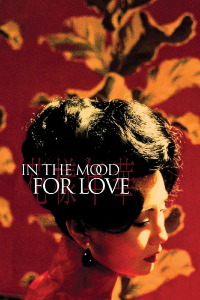
Review of In the Mood for Love (2000) by Sindri — 17 Feb 2011
Enchanting cinematic art.
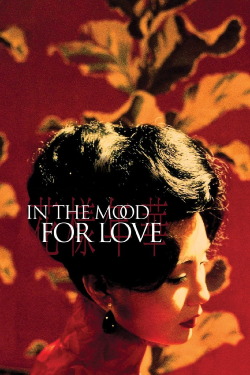
Love has it's own erratic language in Wong Kar-Wai's masterful love-story which is set in Hong Kong 1962 and tells the story of news editor Chow Mo-Wan who has recently moved in to a crowded apartment complex with his wife, and at approximately the same time the beautiful secretary Su Li-Zen moves in to that same place with her husband. Chow and Sus spouses are often away on foreign travels due to their jobs which eventually leads to Chow and Su becoming more and more lonely. After numerous coincidental meetings in the neighborhood a conversation occurs and the news editor and secretary realizes the kinship of their situations. One night Chow invites Su to dinner confiding her in his suspicion about their spouses having an affair. Su admits that she's had similar thoughts, but none of them has any solid evidence. Their intimate conversation gradually turns to regular dinner meetings where these two modest individuals find a unifying chemistry, and in time a subtle romance comes to life.
The two leading characters are portrayed as introverted, somewhat static and well educated people with high morals, and brought to life through Tony Leung and Maggie Cheung's low-keyed and emotionally demanding performances. Wong Kar-Wai wants us to emphasize with our hero and heroine even though we are aware of the fact that they are about to commit the same deception as their spouses have done. That one feels emphatic towards Chow and Su is hardy unavoidably considering what they are coming to terms with, but Wong Kar-Wai's real masterpiece is that he has us sitting through most of the film wishing for the main characters to become lovers. The esoteric dialog is convincingly communicated and Shigeru Umebayashi's theme song "Yumeji's Theme" is like a hymn to Chow and Su's tranquil and romantic friendship.
"In the Mood for Love" is a film that lives on it's on terms and invites the viewer into a dreamlike, poetic and hypnotically beautiful universe. It's without clichés, filled with hope and contains lyrical shades that makes the film seem like one great love poem or an exploration of human behavior affected by love.
This unforgettable slow-moving tale from one of the greatest visual storytellers in modern cinema stands alongside "The Piano" (1993) as one of the most profound love stories i've ever seen.
This review of In the Mood for Love (2000) was written by Sindri on 17 Feb 2011.
In the Mood for Love has generally received very positive reviews.
Was this review helpful?