Review of In a Lonely Place (1950) by Bayard B — 01 Aug 2008
"Charlie, my friend who speaks but poetry and borrows but money," says Dix. "The better to drink but brandy," Laurel adds. I will but steal dialogue of this quality.
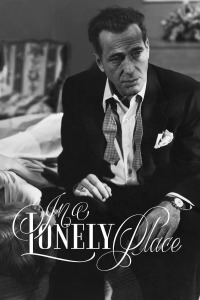
The film is a noir romance between Bogart's Dixon Steele, a long uninspired screenwriter with a sardonic wit, an ugly temper, a generous streak, and a heavy fist, and Grahame's Laurel Gray, a starlet of small budget features with a verbal wit to match and a recent relationship with a wealthy real estate developer she'd just as soon forget. As Dix is accused of murdering a coat-check girl he invites over to brief him on a book he can't stand to read but must adapt as a screenplay, Laurel splits the difference between a shot at a role and a romantic interest in backing his claims of innocence as an exculpatory witness. Dix is the kind of guy who can get in the head of a killer and then crack jokes about the whole affair, so the police are willing to release him without being wholly convinced of his innocence.
The film becomes a study in ambiguity: on a good day, Dix just isn't that kind of guy, but he doesn't take it well when someone says the wrong thing and crosses him or a friend. Even as she's cleared his name and taken up a romance with him, the view she gets close-up shows that there's something in Dix that might have been capable of doing such a thing.
As the police cannot decide whodunnit and the investigation drags out, it begins to weigh on her that he might have, whether virtually or in fact. Is that a distinction without a difference for purposes of their relationship?
This review of In a Lonely Place (1950) was written by Bayard B on 01 Aug 2008.
In a Lonely Place has generally received very positive reviews.
Was this review helpful?