Review of House of Wax (1953) by Adam R — 10 Jun 2011
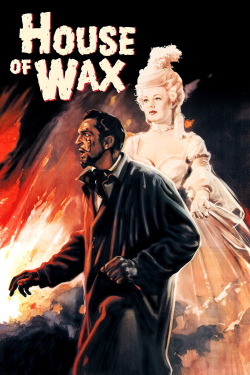
"House of Wax" is one of those Vincent Price movies not remembered for its exceptional quality, or for demonstrating its iconic lead's little-revealed acting ability. Instead, "Wax" is perfectly content augmenting Price's creepy legacy, demonstrating his peerless ability to inhabit a menacing, mostly one-dimensional character with aplomb. That Price inhabits deranged sculptor Henry Jarrod with gusto like the consummate showman he is goes without saying.
After being betrayed by a mercurial, greedy investor, Jarrod abandons his efforts to recreate beauty and history in wax for the shallow pleasures of gory spectacle, turning the titular museum into a hall of ghastly grand guignol spotlighting recent crimes alongside historical atrocities. Needless to say, sensationalism makes the artiste's new vision a hit, drawing massive crowds and even necessitating a show-boating, hollering, paddle ball-wielding carnival barker (Reggie Rymal) to usher in the crowds.
Unbeknownst to visitors, however is Jarrod's secret for verisimilitude: He uses freshly deceased bodies to replicate the victims in his gruesome scenes, often times the very people who perished in the crimes on display.
There's also a plot in there about a young naif falling afoul of Jarrod's artist's eye and a police investigation, but the main reason to see "Wax" is Price's consistently dependable work as an antagonist one can root for. The movie's influence on other films is also observable, albeit rarely mentioned: Jarrod's burned form -- complete with black cape and wide-brimmed hat -- anticipates "Dark Man" by nearly 40 years, while the cheesy use of primitive 3-D effects recalls the same in-your-face qualities of "Friday the 13th Part III.".
This review of House of Wax (1953) was written by Adam R on 10 Jun 2011.
House of Wax has generally received positive reviews.
Was this review helpful?