Review of Holy Motors (2012) by Chuckpalantine — 07 Apr 2013
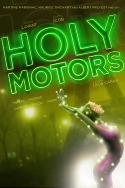
Part of the brilliance of this film is that it could mean one thing to one person, and something entirely different to another. I’m sure that’s true of all films that have little narrative drive and are labeled “bizarre,” but this film has elements that clearly, to me, are statements intended by Carax. It’s a film about film, but also about life and how people interact within it. Apparently, this is way above my head, the film makes several cinematic references including to those of the actors in the movie as well as Carax’s own filmography. This, and the opening sequence of Carax opening a door that leads to a movie theater, is an indication that the movie is making a statement about film. Carax stands above an audience who appear like zombies, and it seems that Carax is present to change their engagement with the film. Sure enough, a toddler walks down the aisle and a very large dog does as well as the title “Holy Motors” is plastered over the zombie-like audience. The limousine that drives Oscar around is a machine (as referred to in the film) that might be symbolic of the machinery of the current film system. Inside are the director (driver who supplies Oscar with scripted material) and the actor who is literally preparing for different roles. Much as the audience is unsure of what will happen next, it seems this could be symbolizing actors often not understanding certain material as he/she is dragged from scene to scene, not in any sequential order. The man who visits Oscar in the car could of course be some type of producer. At the end, the limousine pulls into a garage called “Holy Motors.” It’s the machine that made the film that of course pulls into a garage that is the title of the film. When the driver exits, the limos are left alone as they speak to one another. It seems they’re worried that “they” won’t need “us” anymore. One limo concurs with that sentiment. It seems Carax is commenting on how soon people won’t need the machinery that creates modern films. Just as the old studio system in Hollywood no longer exists, neither will the current one. In this day of Netflix with exclusive “television” series, and the opportunity to place works on YouTube, filmmakers won’t need these same machines.
Holy Motors is about life too. In life, people play different roles throughout a day a parent becomes a spouse, a co-worker, a neighbor, a parent, and back to a spouse. While none of us are probably playing the role of angry leprechaun (is that what that thing was?) who eats flowers as well as fingers and steals models, that act is seemingly as monstrous as those of atrocities committed on a daily basis. These characters that Lavant becomes are not meant to be literal, none of the film is, but perhaps symbolic of people we can become or represent. At one point a man in the limousine asks Oscar how he keeps going to which Oscar replies for the beauty of the act. Is this Carax asking his audience, why do we continue to live? Maybe it’s for the beauty and for the pursuit of love. One of Lavant’s characters says something to the affect of ‘death is good but it doesn’t have love.’ And of course throughout the film are beautiful shots of Paris. It seems that if one has his/her eyes open he/she must be depressed or at least cynical (as MGMT would put it), but if one has his/her eyes open they also can’t resist the beauty of cities, people, or love itself.
8.
This review of Holy Motors (2012) was written by Chuckpalantine on 07 Apr 2013.
Holy Motors has generally received positive reviews.
Was this review helpful?