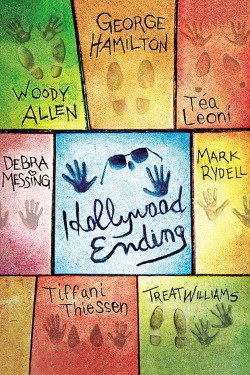
Review of Hollywood Ending (2002) by Brian P — 17 Apr 2004
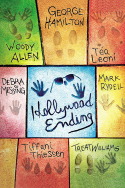
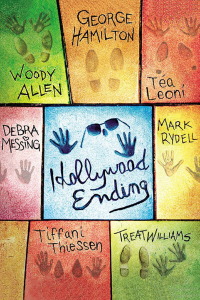
Meet Val Waxman (Woody Allen), a has-been director packed full of neuroses, whose second full-time job is being a hypochondriac. He hasn't worked on anything serious in over a decade, and it's only the firm support of his ex-wife Ellie (Tea Leoni) who gets him a final big-deal, $60-million film to helm. Something he could hit out of the ballpark with his eyes closed. Ahem. The metaphorical becomes literal, almost, when Val goes psychosomatically blind before he even starts work on the picture. As he bumbles through the filming, first with the help of his Chinese cameraman's translator (Barney Cheng) and then with Ellie's assistance, the horrors mount as the full-time journalist on-set gets clued in on what's happening.
It's easy to dismiss this film as Allen flipping the bird to critics for what they've tended to say about his recent films. In a surrealistic parallel of the reception his films seem to be receiving in real life, Val's film is reviled in America, but hailed as genius in France. (Allen's latest film, if I'm not mistaken, was taken to Cannes, where Allen said he was appreciated as he was nowhere else.) And the film seems to be a walk in the park for Allen. Nothing demanding, and it certainly doesn't anywhere near approach his earlier masterpieces (yes, from the 70s and 80s). The criticism that Allen hasn't quite evolved beyond his general film fetishes will stand as well: as usual, he depicts New York cloudy and romantic, and gets about seven dozen or so digs into the perils of LA living. His score is unabashedly old-school, opening with Bing Crosby welcoming the audience to sample Hollywood. And when Allen brings in his drugged-up punk-rock son (played by Mark Webber, green mohawk and all), it would be hard to believe it's an Allen film, except Allen himself is sitting on the couch trying to win his son back.
So there most certainly is a question about whether Allen's films are relevant any longer as social criticism, as they used to be in the 70s and 80s. His finger on the pulse of social satire does falter somewhat, and there's no denying that Hollywood Ending is rather indulgent. But for an Allen fan, Hollywood Ending still has its funny moments and witticisms (tm Allen, of course), as well as Allen's typically acerbic observances about human behaviour. One of the funniest moments is probably when Val's leading lady (played by Tiffani Amber Thiessen) tries to seduce him in her dressing room. His inept response ("I fondle walls") was a genuinely hilarious set-piece. Allen also gets to show off his own comedic prowess, which is often forgotten when people wax lyrical about his talents as writer or director. As he stumbles around, literally blind, pratfalling and praising posters he can't see, Allen is a joy.
Too bad the film's more than a little half-hearted. Accomplished, beautiful and still warm. But half-hearted for certain.
This review of Hollywood Ending (2002) was written by Brian P on 17 Apr 2004.
Hollywood Ending has generally received mixed reviews.
Was this review helpful?