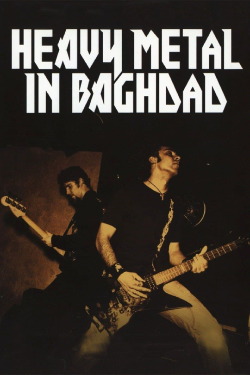
Review of Heavy Metal in Baghdad (2007) by Edith N — 02 Jul 2009
Not All Culture Transfer Is What We Expect.
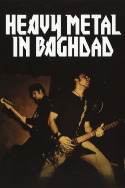
When we think of new exposure to Western culture, probably what we think of is the classics. Bringing the foreigners Shakespeare and Bach. Monet. Hitchcock, maybe. What we consider the high points of our culture. After all, wasn't one of the first things we brought to the people who were in America before us Bibles? As soon as Europeans learned the languages, even. Of course, in the process, we destroyed their own culture--to say nothing of the millions of deaths from disease, naturally--but we don't do that anymore, right? We respect Arab culture--look at how much we like Persian rugs! Oh. Persians aren't Arabs? Well, anyway. We're probably getting something out of the exchange. But they're getting democracy, and that's important. Democracy and the great classics of the Western world. Only what we want to transfer is not all that we do. Reports of the current situation in Iran are sent out via Twitter, possibly one of the most inane inventions we've come up with in a long time. And there, in Baghdad, sprang Acrassicauda.
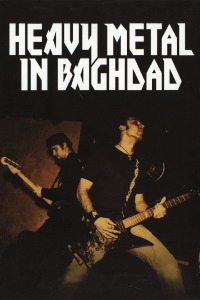
Acrassicauda is a heavy metal band. When they formed, they were the only heavy metal band in all of Iraq. They did gigs around Baghdad--under the Hussein regime, they even did a song about Hussein. Of course, they were under orders to. They now say it was full of lies. Still, the regime put up with them, even if odds are quite good that they didn't really understand or like the music. And then, when the Americans came, the guys thought, well, great! Metal is an American art form. Things will get easier for us now. Only it didn't. If anything, things got more difficult. For one thing, day-to-day life for anyone in Baghdad is no picnic. They were under constant threat, as was everyone else in the city, and finally, they felt they had to leave. They moved to Damascus, joining the Iraqi community there. And in Damascus, the situation was not unlike what they'd had when they first started playing in Baghdad, only worse. In Baghdad, at least, there was already a heavy metal subculture. In Syria, nothing.
The thing is, in my head, I am just as American as anyone else, because the first thing I think is that they could maybe move here. (Which apparently they have.) They're pretty good, as metal bands go, and they'd get a lot of fans. Even just the nature of their history would bring to the concerts, as a curiosity factor if nothing else. (I have at least one friend online who's looking forward to their first album with great eagerness.) They also speak very clear English. Better, I suspect, than some of their metal mentors. You could, by listening, just think they're American-born to Arab parents. On the other hand, late in the movie, they're shown footage shot in Baghdad after they'd left, and there is that suspicious shine in their eyes. (I have to admit that I didn't really catch which one was which.) They want to go home. They want it more than anything. They want to take their music and their families and return. Sure, they could become sensations in the West, but they don't want to. If they're going to be sensations anywhere, it's by-Gods going to be at home.
It's never easy being the outlier. These men cannot grow their hair long, as metal rockers do. One of them is growing a goatee, but he knows that he will have to grow it out to a full beard in order to avoid censure. They tell us, these three, about neighbours who don't appreciate their music and how they can't really practice. They tell us that the vision presented on the news isn't how things really are, but I have to tell you that the image shown in the documentary isn't much better. The filmmakers had to smuggle themselves into Iraq to try to find the members of Acrassicauda again. They had received no word. They had to blur the face of their guide/translator, because he could possibly be in great danger if they did not. Even in Syria, things were not really safe for the band. The Syrian government is none too fond of its sudden Iraqi population, and for all Iraqis there, there is the constant threat of being forced out of the country and back into the situation they'd fled.
Acrassicauda is really [i]A. crassicauda[/i], the scientific name for the fat-tailed scorpion. It is an exceptionally lethal species, and it is apparently quite common in the Middle East. In this, at least, the guys show that they're quite aware of heavy metal tradition. (They seem to be in many other places, but as [i]I[/i] am not, this is something I can actually be certain about.) I am actually kind of amused by the whole thing, though it's not out of a lack of respect for these men and the conviction and passion they have regarding their music. I'm just thinking about all those people who are so determined that we are doing the right thing in Iraq, including those who, for example, have gotten in serious trouble for breaking the military's anti-proselytization regulations. The thing is, these guys want to partake of the fruits of American freedom--the freedom to play the Devil's Music.
This review of Heavy Metal in Baghdad (2007) was written by Edith N on 02 Jul 2009.
Heavy Metal in Baghdad has generally received very positive reviews.
Was this review helpful?