Review of Harlan County U.S.A. (1977) by Siobhan O — 30 Oct 2013
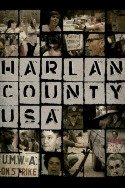
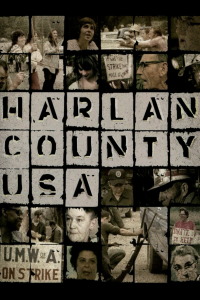
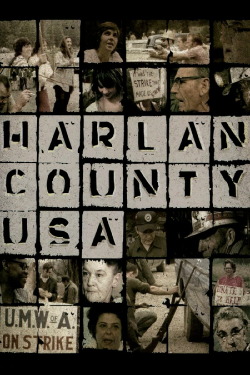
Barbra Kopple's 1976 Oscar-Winning documentary, Harlan County U.S.A., takes you on an emotional rollercoaster as it brings you straight into the heart of Harlan County, Kentucky, a small American mining town. Kopple strategically places herself in the midst of the action, creating a strong relationship with the people in Harlan County that sets the empathetic tone of the film. She brings us along, as she stands besides the striking miners in desperate pursuit of a contract that would give them preferable working conditions. She stands in protest as Basil Collins unlawfully intimidates the innocent strikers as he directs his "scabs" (miners who opted to work despite their comrade's strike) through the picket line unscathed. Kopple sits alongside Lois Scott as she urges the women of Harlan County to rise up next to their men. She mourns the death of poor Lawrence Jones, a stimulating union man mercilessly murdered by a scab. Koepples direct involvement in the action forces us to open our eyes to the wretched world that became the norm for miners of Harlan County since the 1930's; displaying in full the heinous conditions forced upon them.
In June of 1972, the mineworkers of the Brookside Mine in Harlan County, Kentucky went on strike demanding fairer hours, wages, and working conditions in the hopes of drafting a contract with the Duke Power Company. The strikers went so far as to refuse work until they gained the contract. Kopple gathered a camera crew and took them into the heart of Harlan, finding the strike on every citizen's tongue. This segment shows a passionate, heroic perspective on the inner workings of the strike and lives of the miners desperately fighting for a better life. Kopple then takes us into the union meetings, the meetings of the women of Harlan, the mines, the homes of miners, and the strikes in order to fully develop this perspective that truly depicts the struggles of Harlan County's citizens. We see scabs bring guns to intimidate the strikers, which leads to a shocking incident resulting in gun-fire, screams, and a jarring view as the camera becomes a victim of this skirmish.
Throughout the film, Kopple digs into the lives of these miners, uncovering more and more traumatic facts about their lives as the interviews go on. The conditions of the mines inevitably lead to the miners acquiring what is called 'black lung'. We then see see the result of this horrific condition during an interview with an elderly coal miner as he gasps hopelessly for air after every word. Finally, the result of these frequent skirmishes becomes readily apparent as the deaths of several men occur, most notably that of an innocent union man that traumatizes the county and the audience. Kopple captures the harsh reality of these skirmishes in a brief glimpse of an unwatchable and paralyzing funeral service. These deaths result in a settlement that no one saw coming, a settlement that without a doubt angered me.
The mise-en-scene of the film compels the viewer to engage fully through its plentiful use of captivating, yet jarring images. Harlan County as a setting sets the tone for the film. The semi-deserted, rural, depressed town's eerie and somber feel never fails to remind us of the tragic circumstances that have been placed on Harlan. Of course, Kopple's set was unaltered by the crew allowing us to see Harlan as it is, reminding us of the reality of this unfortunate situation. The repeated use of jarring images also serves to highlight thematic elements of the film. Take, for example, the opening scene depicting an anonymous miner as he blows up the inside of a mine at night. Kopple's use of low key lighting combined with minimal key, fill, and back lighting creates an effect where the minimal light outlines the miner's silhouette, leaving his face completely dark. This effect exemplifies the underlying moral of the documentary-that all of the miners are the same; all faceless workers with the same skin tone, age, purpose, and goal.
The props, also completely within the reality of Harlan, additionally serve as a constant reminder of the danger this county faces. Kopple constantly fixates on the guns and other various weapons through the use of extreme close-ups and shallow focus, stressing the risk that these miners face each moment they stand on the picket line. Furthermore, these props keep us on our feet at all times throughout the film, making it one of the most suspenseful documentaries I've seen.
Kopple also highlights the different figure expressions and movements of the individuals of Harlan County - aspects of the film that touch the viewer most. The old men gasping for air, the fearful faces on the miners, the determined yet angry attitude of the women, and the hopelessness of the town... All of these come together to make the film so engrossing and emotionally challenging. Even the memory of listening to the old men gasping for air with expressionless looks on their patchy, wrinkled faces makes us internalize the harsh reality and its incumbent struggles on a deep level. In all, these unbelievably harsh images and situations, most of which are foreign to the majority of the viewers, really draws us in. The compilations of the sounds produced in the mines, combined with the trembling voices of the miners and the shockingly deteriorated images of the town provide for a foreign and compelling storyline for the viewers. This air of the unfamiliar stems from the inability to comprehend what the interviewees are saying, the multitude of foreign sounds, and the attitudes held by most of the individuals. This forces the viewer to attempt to understand these lives, resulting in a total immersion experience. As this happens, we can easily feel ourselves becoming more fascinated with this world as the lives of these people become more interesting, vibrant, and inspiring.
The cinematography of the film is another compelling aspect of the documentary. Unlike many of her contemporaries, Kopple interacts fully with the people of Harlan, adding a more personal feel to the documentary. Close-ups exaggerate the poor physique of each of the older miners, outlining the spots and wrinkles on their face indicative of a lifestyle that is surely anything but leisurely. The high-speed motions of the gun-fire scenes provide an adrenaline-laced experience, much like what the feeling would be like if we were actually present. The hand-held camera effect forces the audience to place themselves in the action, something that happens notably in a scene where gunfire breaks out on the picket line, creating a dizzying feel for the audience because of its canted camera level. The shallow focus combined with the close-ups enables the audience to examine closely all of the finer details and consequences of working in the mine- such as the dirt on men's faces and hands, the bags under their bloodshot eyes, the bones on their malnourished skin, the cuts on their hands, and the unbelievable environment they have been forced to work in. According to Crowdus, many of these best scenes "work on a basically emotional level" (46). This emotional level lends to the films success in accessing the viewer's total attention.
Through each of these aspects, Barbara Kopple illustrates the impeccable strength and determination of these inspiring Americans as they fight for their right to a better life. This film shines a light on the strength of these individuals, on human rights, on the importance of strong women in a community, and on the importance of community as a whole. This film exposes the inequality in Harlan County and the lengths to which its citizens will go in order to achieve their goals. Additionally it "offers a compelling presentation of the bitter struggle between workers and company owners" (Crowdus 46), highlighting the injustice of these large corporations. Crowdus, however, also highlights this one-sidedness as a weakness, because the film fails to provide us insight from "the other side," ignoring important social injustices such as "racism and anti-communism" (46). I disagree with his notion because I believe that the major strength of the documentary comes from Kopple's loyalty to the miners, characterized by this "one-sidedness". If the film had touched upon all of the sides, we might have been able to potentially sympathize partially with the companies, scabs, and so forth. I, however, believe that if Kopple touched on these aspects, the film would not have nearly been as emotional or compelling. This one-sided approach allows Kopple to focus on the strength and determination of these people rather than all the political aspects of the conflicts.
If it isn't already apparent, I find this film to be truly inspiring. It provides a culture shock for those who live comfortably, or and who have never fathomed unfairness at this level. It is an incredibly emotional depiction of the strength of people when they stick together. In my opinion, if you have yet to see this movie, then see it as soon as humanly possible.
Works Cited.
Crowdus, Gary. "Harlan County, U.S.A." Cineaste. 1 8 1977: 46,47. Print.
Kopple, Barbara, dir. Harlan County, U.S.A. Prod. Barbara Kopple. First Run Features, 1976. Film. 30 Oct 2013.
This review of Harlan County U.S.A. (1977) was written by Siobhan O on 30 Oct 2013.
Harlan County U.S.A. has generally received very positive reviews.
Was this review helpful?