Review of Hacksaw Ridge (2016) by Adk D — 06 Dec 2018
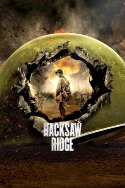
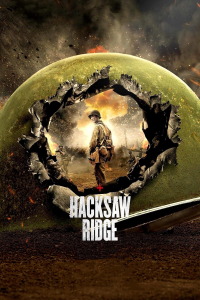
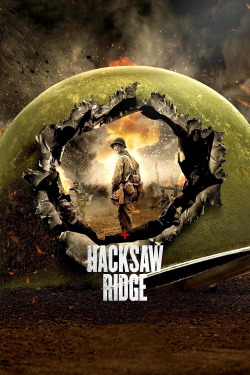
Hacksaw Ridge.
Hacksaw Ridge isn't your typical war movie. Director Mel Gibson takes the clichés of heroism from other war movies and portrays them in an entirely different yet effective way. Ardent patriotism and religious conviction are the central focuses of Mel Gibson's film Hacksaw Ridge. The main character, Desmond Doss - a conscientious objector - refused to carry a weapon into battle yet his bravery in doing so saved the lives of many men during World War II at the battle of Okinawa.
Hacksaw Ridge begins by depicting an ordinary family who have deeply imbedded religious beliefs with two competitive and rambunctious brothers - Desmond and Howard Doss. Their father - once a World War I veteran - grieves from survivors' guilt, Post Traumatic Stress Disorder, and is a raging alcoholic who is inclined to have violent outbreaks. Outbreaks which are often directed towards Rachel, Desmond's mother. One night during his childhood, Desmond witnessed his father violently abuse and attack his mother at gun point at which point he intervened, grabbed the gun, and pointed it back towards his father. This traumatic experience, along with his spiritual convictions (thou shall not kill), lead Desmond to enlist as a combat medic and to become a conscious objector in World War II, shortly after the attack on Pearl Harbor. Desmond's enlistment drove a greater wedge between him and his father. He was angry with his son because he had no desire for either of his sons (both of which ended up enlisting) to serve in the military.
Once enlisted, Desmond attended basic training where he was ridiculed and begged to leave due to his religious beliefs and his standpoint on carrying a weapon. Shortly into his training, Desmond was Court-Martialed and thrown into a war prison for disobeying a direct order from his commanding officer. Eventually, with the help of his father (which was surprising due to their relationship), Desmond was released from prison and granted the right to enter the war zone as a conscientious objector. At this point in the movie Desmond proves his worth at Okinawa by participating in the attack on Hacksaw Ridge where he saves the lives of many soldiers who would have otherwise died.
Mel Gibson separates from the clichés of heroism by showing the internal struggle of an individual (Desmond Doss) rather than the outward struggle many soldiers face on the battlefield. The internal struggle in Hacksaw Ridge is between Desmond's religious beliefs to not kill under any circumstances, and his ardent patriotism - the desire to serving his country during the war. Many directors of war movies focus only on the outward struggles soldiers face during war by depicting the skirmishes they face on the battlefield. Gibson however, portrays both the struggle on the battlefield, as well as in the mind and heart of one specific soldier.
Take for example another popular war movie Saving Private Ryan. In this film, the director Steven Spielberg portrays the external struggles of a group of soldiers to represent their heroism and willingness to serve their country. Gibson opted to divert from this cliché by portraying the heroic struggle within an individual who wanted to serve his country despite the fact his religious beliefs (to not kill) went against what was optimal for soldiers fighting at that time. This internal struggle Desmond faces makes Hacksaw Ridge more relatable than any other war movie because it is personal and portrays the struggles many of us face between our internal beliefs and the external stimuli we're surrounded by. Although many of us aren't fighting in a war, we face things daily that challenge our internal beliefs just like Desmond.
While the story and messages portrayed in Hacksaw Ridge alone make for a great film, the effects used throughout create a sense of realism which in turn make the internal struggles that Desmond faces appear more severe. As the war progresses, Desmond witnesses many of his friends die painfully around him without the capability or resources to protect and defend them from their enemies. In many cases, individuals who witness traumatic events (such as the events Desmond faced during the war) become more inclined to stray from their internal (religious or emotional) beliefs in order to defend and protect themselves as well as those they care about. This however wasn't the case when it came to Desmond Doss' internal struggles. Not only did Desmond stay true to his religious beliefs by remaining a conscious objector throughout the duration of the war, he took those beliefs and used them to help save the lives of many soldiers.
One night after the US military retreated from Hacksaw, Desmond made the heroic decision to stay on the ridge, where he beseeched God asking, "What is it you want of me; I don't understand; I can't hear you." Alone, and without any way of defending himself, Desmond stayed on the ridge begging and pleading to hear God's voice. As he sat there praying to hear God's voice, he heard someone faintly scream for a medic. Unwaveringly, Desmond got up and ran into the battlefield because he knew it was God's voice in someone who needed his help. All night Desmond continued asking God to help him save one more and one more and one more... Taking each opportunity given to him (by God), Desmond continued to hoist injured, dead, and even enemy soldiers off Hacksaw Ridge. All the while, his only protection was asking for God's help in getting each soldier off the ridge.
Against all odds, and despite the ridicule Desmond Doss faced from fellow soldiers in the opening scenes of the film, Desmond changed the lives of many soldiers including those who tormented and begged him to quit from the start. He displayed countless acts of heroism in a different way than any other soldier at that time. Gibson did an immaculate job of portraying how one individual soldier's countless acts of selflessness impacted the lives of many individuals who would have otherwise died. It was because of Desmond's patriotism that many soldiers were able to make it home to their families rather than dying on Hacksaw. Although Desmond Doss was a conscientious objector and went into one of the bloodiest battles of World War II without anything to protect himself, he survived. Not only did he survive, he helped many individuals live to see another day. Because of his bravery and heroism Desmond Doss received the Medal of Honor and is now known as one of the greatest war heroes of all time.
This review of Hacksaw Ridge (2016) was written by Adk D on 06 Dec 2018.
Hacksaw Ridge has generally received very positive reviews.
Was this review helpful?